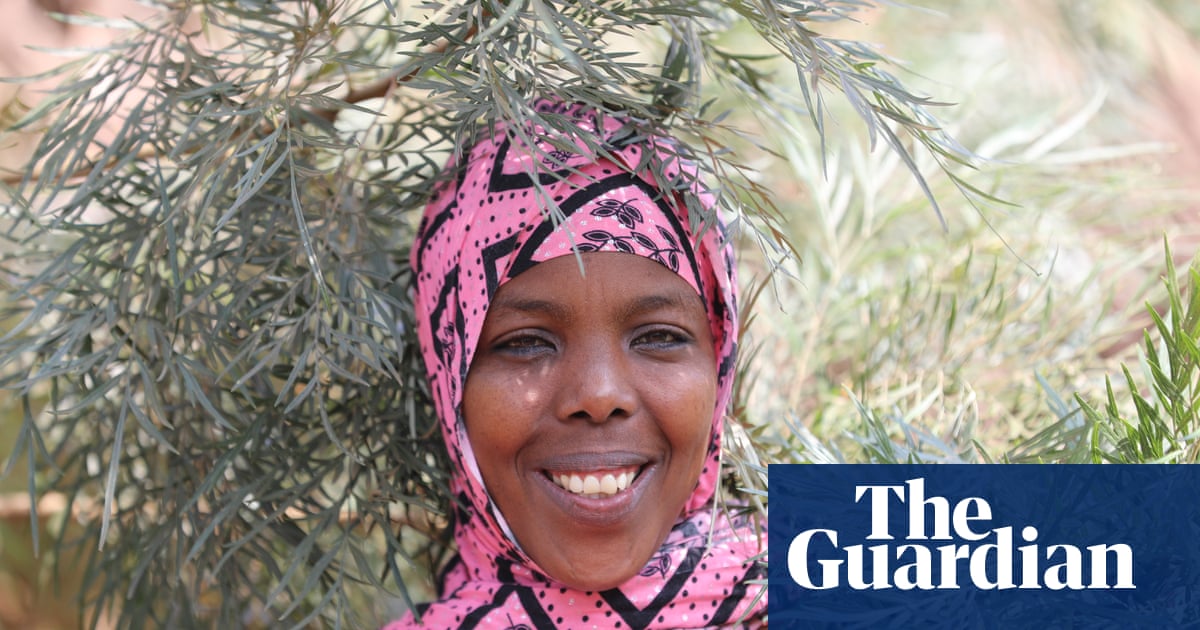
When Halima Kedir first started planting trees in her Ethiopian village, her neighbours laughed at her. "They thought I was striving for nothing," she says, sitting among the banana, olive and grevillea trees that now fill her garden. But the 35-year-old from Berbere district in Oromia region kept going, losing count of the thousands of saplings she has put in the ground. Today, those same doubters have changed their minds. "Now, everything has changed. Those who tried to dissuade me are envious of my effort and commitment."
Kedir's story sits at the heart of a nationwide push to bring Ethiopia's forests back. From the turn of the century to 2025, Ethiopia lost 560,000 hectares (about 2,160 square miles) of tree cover to expanding farms, commercial logging and charcoal made for cooking fuel. That loss battered wildlife, soil and water supplies in one of the world's most climate-vulnerable nations">2019, the government launched the Green Legacy Initiative, or GLI, a massive tree-planting scheme. The results have been striking: between 2013 and 2023, the annual deforestation rate fell from 92,000 hectares to 27,703 hectares, while forest cover climbed from 15.5% to 23.6%.
Through the GLI, the government reports planting 48 billion trees in seven years — including a record 353 million seedlings in a single day — with a goal of 50 billion by 2030. Kedir's neighbour Fate Abdulahi was once among the sceptics. "She proved us wrong and she has become a role model," Abdulahi says.
Many in the community believe Kedir's success comes from her Oromo culture, which practises guddifachaa, the tradition of adopting a child into the family. She describes her seedlings the same way. "Just like we adopt a child in our tradition, I see them like my own children," she says. To keep them alive in a region with severe water shortages, she walks about an hour each way to fetch waterarke her 13-year-old son, Anwar Hassen, plans to carry on her work. "I want to make a lifelong commitment in the fight against climate change," he says.
The effort reaches far beyond one garden. Thousands of households in nearby kebeles, or neighbourhoods, have joined in, supported by WaterAid Ethiopia. Director Alebachew Adem says about 55,000 indigenous tree seedlings have been handed out to households and community institutions, with 85% growing successfully. "In dry land and climate-vulnerable areas such as Berbere, these efforts help communities build resilience against the increasing impacts of climate change," he says.
Still, experts urge caution. Survival rates are what truly count, and good data is hard to find. One study in Asia found nearly half of all reforestation trees did not survive five yearsangs across Ethiopia achieved less than half their targets. The GLI's own committee put average seedling survival at 83.4% in 2019 and 79% a year later, though some doubt those high numbers. Yitebitu Moges, who co-ordinates a deforestation scheme at the UN Environment Programme in Ethiopia, says the greatest success has been in the highlands and that a careful study of survival rates is now under way. For Kedir, the work is simple: keep planting, keep caring, one tree at a time.