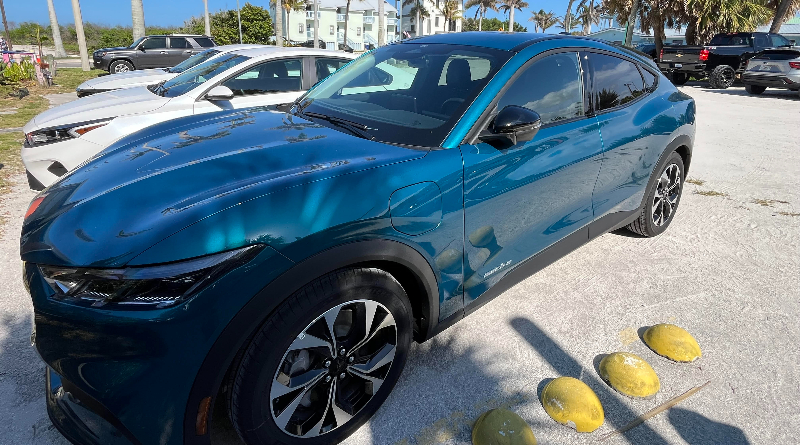
When drivers plug in their electric vehicles, they may be sparking an energy revolution they'll never see happening in their rearview mirrors. New research reveals something counterintuitive: the act of EV adoption itself—the simple choice to buy and charge a battery-powered car—is actually reshaping how electricity gets generated across the nation, pushing grids toward cleaner sources of power whether policymakers intend it or not.
The insight comes from researchers studying how increased EV adoption in the United States triggers cascading changes in infrastructure investment and power generation. The logic is elegant: more EVs on the road means higher electricity demand, which incentivizes massive investments in renewable energy capacity. Those investments ripple through the entire power system, shifting the generation mix toward wind, solar, and battery storage, with natural gas filling gaps along the way. The result is a feedback loop where cleaner transportation doesn't just reduce emissions directly—it makes the entire grid greener in the process.
This matters because transportation remains the largest source of greenhouse gas emissions in the United States, accounting for emissions largely from road transport, which derives over 90% of its energy from petroleum. Light-duty vehicles like cars and small trucks alone generate roughly 57% of transportation emissions. For decades, tackling this sector felt like an either-or proposition: either swap out your car, or wait for the grid to decarbonize first. The new research suggests those changes can happen simultaneously and reinforce each other.
The numbers tell a compelling story. About 15% of new cars produced in 2024 were plug-in EVs, and researchers estimate that as prices fall and range improves, EVs could reach 50% of new car sales by 2030—potentially without any government subsidies pushing the market forward. Battery electric vehicles already reduce greenhouse gas emissions by 25–40% compared to gasoline vehicles, even when charged on today's electricity mix that still relies heavily on fossil fuels. By 2032, according to research published in the Proceedings of the National Academy of Sciences, the grid emissions created per additional EV will be an order of magnitude lower than the combustion emissions from gasoline vehicles they replace.
The researchers who modeled these scenarios examined how different levels of EV adoption would shape infrastructure investment, generation mix, and emissions over time. They compared those findings across multiple adoption trajectories to isolate the effects of EV growth itself. What emerged was clear: the greater the adoption rate, the lower the per-vehicle charging emissions become. High EV adoption is likely to drive regionally tailored renewable expansion—more solar in the Southeast and Southwest, wind capacity in the Central US, for example—each optimized by market forces responding to where electricity demand is growing fastest.
The finding arrives at a pivotal moment, even as political winds shift. While the incoming Trump administration's policy changes have undermined some climate initiatives from the previous administration, EV adoption trends show no signs of slowing. Global EV market share exceeded 20% in 2024, with several individual countries pushing above 40%. That momentum appears largely decoupled from subsidies alone, suggesting a shift in consumer behavior and technology maturity that may prove durable regardless of federal policy.
The path forward doesn't require waiting for perfect conditions. Communities adopting more EVs today aren't just buying cleaner cars—they're building the cleaner grid that justifies those purchases in the first place.