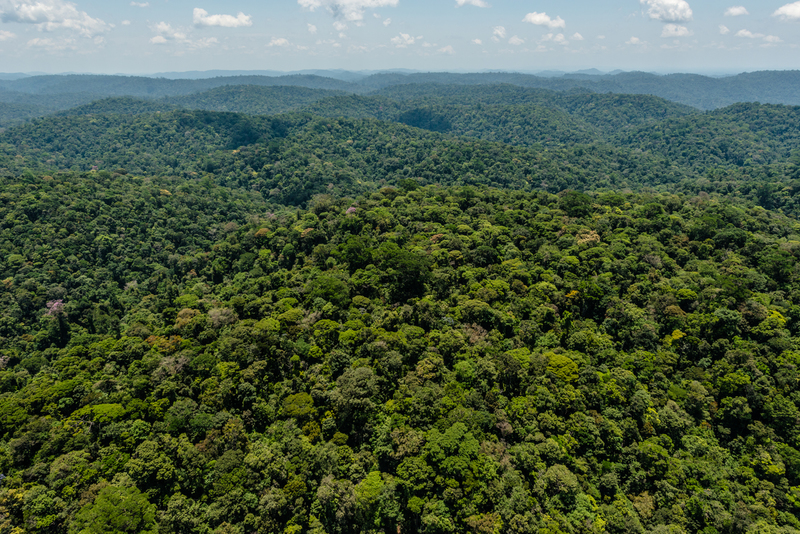
Deep in the Brazilian Amazon, something remarkable is happening. More than 80 percent of the rainforest's protected lands saw zero forest clearing during the first half of 2026, according to Imazon, a research institute that has monitored the region through satellite images since 2008. That is 588 territories — including 330 indigenous lands and 258 conservation units — where the trees still stand untouched.
Brazil's Amazon region recorded its lowest deforestation for any first half-year in eight years. Between January and June 2026, just 1,145 square kilometers of forest were cleared across the entire region — a 10 percent drop from the same period last year, and a staggering 76 percent lower than the record-breaking destruction seen in the first half of 2022.
The vast majority of this remaining damage did not happen in protected areas at all. Protected territories accounted for only 97.37 square kilometers of clearing, which equals just 8 percent of all Amazon deforestation during those six months. Of that small portion, indigenous lands saw only 9.38 square kilometers cleared, while conservation units lost 87.99 square kilometers.
"We need to keep reducing deforestation until we reach the goal of zero clearing by 2030," said Larissa Amorim, who coordinates Imazon's Deforestation Alert System. The data suggests Brazil is moving in the right direction.
The progress extends beyond just the first half of the year. Looking at the broader "deforestation calendar" — which runs from August to July, accounting for the Amazon's rainy season — the region lost 2,258 square kilometers of forest between August 2025 and June 2026. That is 28 percent less than the previous 11-month period, and 75 percent less than the catastrophic destruction recorded between August 2021 and June 2022. Environmental damage from logging and fires dropped even more sharply, falling 93 percent over the same stretch.
Not everything is cause for celebration. The Environmental Protection Area of Triunfo do Xingu in Pará state was responsible for nearly half of all deforestation recorded in protected areas — 47.85 square kilometers, roughly equivalent to 5,000 soccer fields. The National Forest of Jamanxim, also in Pará, lost 3.45 square kilometers of forest. Earlier this year, Brazil's Senate passed a bill that would reduce the Jamanxim's protected area, sparking concern from researchers.
"Conservation units are extremely important for stopping deforestation and fighting the climate crisis," said Brenda Brito, coordinator of Imazon's Law and Sustainability Program. "This project needs to be vetoed by the presidency."
Still, the broader picture offers real hope. Seven of nine states in the Legal Amazon saw deforestation fall, with drops ranging from 27 to 67 percent. Protected lands — created to shield the forest — are delivering on that promise for the vast majority of the territory they cover.