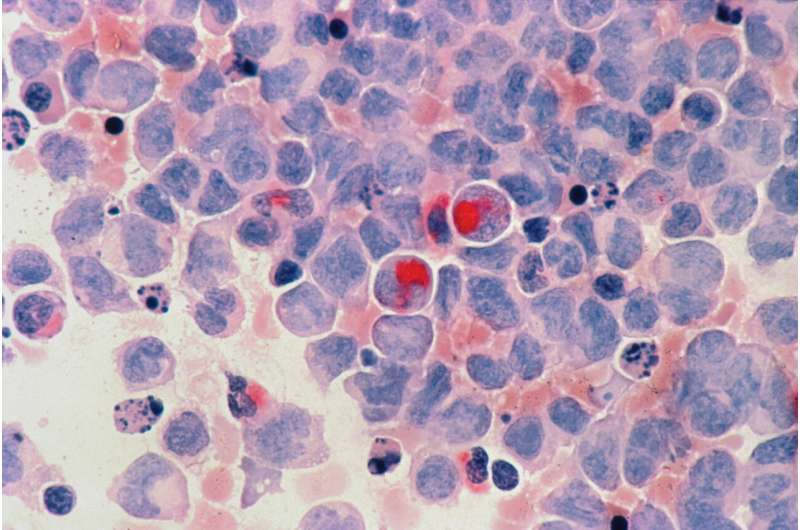
When researchers at the University of Texas MD Anderson Cancer Center in Houston started investigating why certain leukemia cells seemed especially vulnerable to attack by the body's immune system, they stumbled onto something unexpected: a brand-new way that disease-fighting T cells can destroy cancer cells.
The team, led by Dr. Cassian Yee and Dr. Kapil Saxena, made the discovery while studying acute myeloid leukemia, or AML, an aggressive blood cancer that starts in the bone marrow and can spread quickly. Their findings, published in the journal PNAS, reveal a pathway that scientists had never seen before—one that depends on a protein called CD64 and a specific part of the T cell called the T-cell receptor, or TCR.
Normally, T cells identify and attack harmful cells by recognizing markers called MHC molecules sitting on the cell surface. Cancer cells often hide from T cells by reducing or losing these markers. The researchers expected that removing MHC from AML cells would shield them from attack. Instead, the T cells kept killing the leukemia cells anyway.
This surprised the scientists. They initially suspected another type of immune cell, called natural killer cells, might be responsible. But disrupting known NK cell pathways didn't stop the attack. After months of testing different immune pathways, the team used a powerful tool called a genome-wide CRISPR screen, which let them search through all of an AML cell's genes to find which ones mattered for survival.
The screen pointed to CD64, a receptor found on early myeloid cells. When the researchers removed CD64 from AML cells, the cells became resistant to T cells. When they added CD64 to normally resistant cells, those cells became vulnerable again.
The discovery matters because it suggests T cells have another way to fight leukemia beyond the MHC-dependent pathway scientists have understood for decades. This may help explain why AML patients who receive stem cell transplants—a type of immune therapy—sometimes see remarkable results.
"By chasing a simple, unexplained observation, we challenged a basic assumption about how T cells can recognize and kill tumor cells," Dr. Yee said. "This contrarian finding has broad implications for overcoming immune resistance in leukemia and possibly other cancers."
The team is now studying exactly how CD64 and the T-cell receptor work together in this new pathway, with the goal of eventually developing new immunotherapies that harness this mechanism to help more patients.