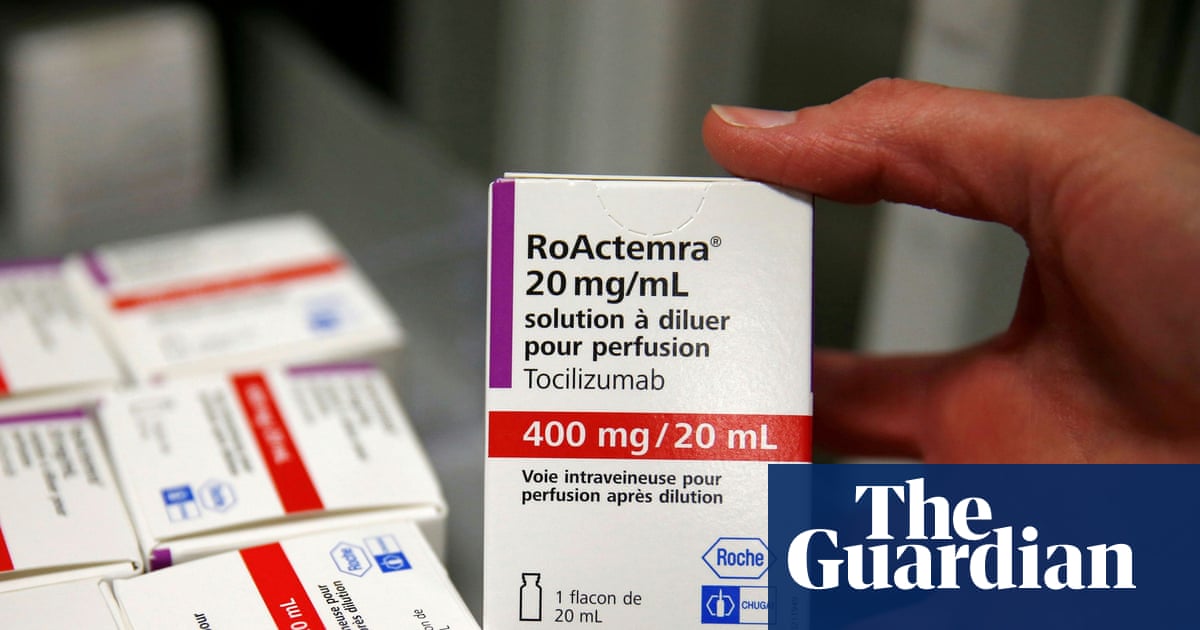
For roughly one in three people with depression, the standard medications stop working. Researchers at the University of Bristol wanted to know if an anti-inflammatory drug used for rheumatoid arthritis could change that.
The challenge of treatment-resistant depression runs deeper than most people realize. While about one in six adults in the UK will experience moderate to severe depression in their lifetime, those whose symptoms don't respond to conventional antidepressants face a grim calculus: the medicines designed to help them don't work, and the options narrow quickly. This is why a small clinical trial testing tocilizumab—an immunotherapy drug that blocks inflammatory signals in the body—matters more than its modest size might suggest.
Professor Golam Khandakar and his team at Bristol's medical school conducted a four-week trial with 30 people whose depression had not improved with standard antidepressants. Half received tocilizumab, which works by blocking the IL-6R receptor and preventing inflammatory signals linked to immune conditions. The other half received a placebo. While the raw numbers were small enough that statistical significance remained elusive—as expected in early trials—the direction of improvement told a compelling story.
Those who received tocilizumab showed greater improvements across multiple measures compared with the placebo group. They experienced better overall depression severity, less fatigue, reduced anxiety, and improved quality of life. Most strikingly, 54% of the tocilizumab group achieved depression remission compared with just 31% in the placebo group. That difference translates into a number needed to treat of 5—meaning five additional patients would need to receive the drug for one more person to recover. For comparison, SSRIs, the most commonly prescribed first-line antidepressants, have a number needed to treat of about 7. Tocilizumab, in other words, showed a faster path to relief.
What makes this trial particularly significant is what it represents methodologically. Khandakar emphasized that this was the first randomized controlled trial testing immunotherapy for depression, the first to target the IL-6R pathway specifically, and crucially, the first to use a targeted approach to select patients most likely to benefit based on their biology. That last point deserves emphasis: the researchers didn't simply test the drug on everyone with depression. They identified patients whose condition appeared linked to inflammation, then checked whether blocking that inflammation could help.
Dr. Éimear Foley, a co-author and senior research associate in immunopsychiatry at the university's MRC integrative epidemiology unit, framed the finding's larger significance: "This moves us closer to more tailored depression care, where treatments are chosen to better fit a person's biology." She noted that depression affects 10-20% of people worldwide during their lifetime, yet many patients struggle because current treatments simply don't work well enough for them personally.
The trial opened a door rather than solved the problem. With only 30 participants, larger studies will be needed before tocilizumab becomes a treatment option. But the results hint at a future where depression care becomes less like trying universal keys on locked doors and more like understanding the specific biological mechanisms behind each person's condition—then choosing the right intervention accordingly. For the one in three people for whom conventional antidepressants fail, that possibility alone offers hope.