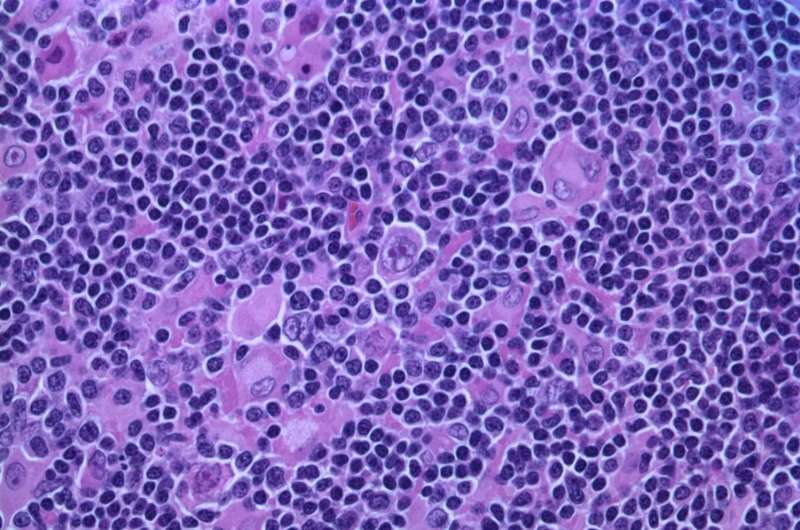
When Patricia Johnson was diagnosed with a type of blood cancer called large B-cell lymphoma, she learned it was one of the most aggressive kinds out there. After standard chemotherapy failed her, she ran out of options — or at least, she thought she had.
New five-year results from a major clinical trial show that an immunotherapy drug called lisocabtagene maraleucel (liso-cel) kept 38% of patients like her alive half a decade after treatment. For patients whose cancer responded well enough to continue in a follow-up study, that number jumped to 78% — with 92% of them alive without their lymphoma returning.
"What we're seeing is that beyond two years, the chances of a relapse are very low," said Dr. Leo I. Gordon, a professor of oncology research at Northwestern University's Feinberg School of Medicine who co-authored the study. "In that group of patients, it's considered to be a curative therapy when there were previously no other options."
The therapy is a type of CAR T-cell treatment. Doctors collect a patient's own immune cells — the T cells that normally fight infection — and genetically reengineer them to recognize and attack cancer. In this study, the modified cells targeted a protein called CD19, which sits on the surface of lymphoma cells. The enhanced cells are then infused back into the patient, where they become what Gordon called "very activated killer cells" that hunt down the cancer.
The study followed 257 patients with relapsed or refractory large B-cell lymphoma — people whose cancer either came back or stopped responding after earlier treatments. Historically, this group faced grim outcomes. After chemotherapy and a stem cell transplant both fail, patients often have almost no alternatives left.
"In the third line, after patients had already had a transplant and progressed, there were very limited options," Gordon said. The new data changes that picture. Among all treated patients, half were alive without disease at five years — far exceeding what doctors had seen before.
The research, published in the journal Blood, also found no new safety concerns with longer follow-up. Rates of severe infections and second cancers stayed low, easing worries about delayed side effects from permanently altering the immune system.
Looking ahead, Gordon and his team are exploring whether CAR T therapy could someday replace chemotherapy entirely for certain high-risk patients — potentially improving cure rates even further.
"Should this be the only treatment people get instead of chemotherapy?" Gordon asked. "That is a legitimate question."