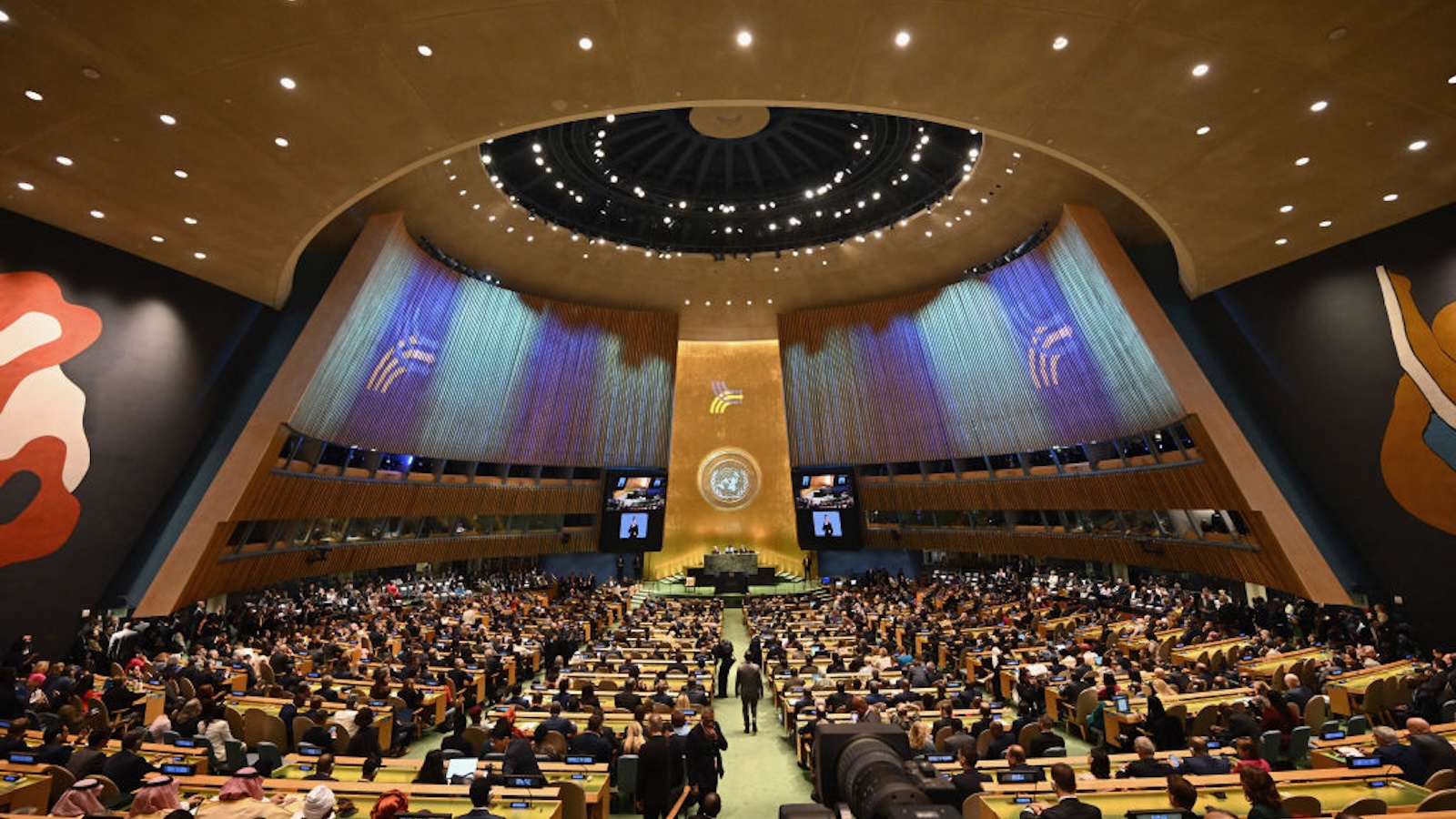
Six years ago, law students at the University of the South Pacific planted an audacious idea: that climate change should be treated as a human rights violation, and that the world's highest court could force global accountability. Now, that seed has grown into an extraordinary moment of international unity. On Wednesday, more than 140 countries voted to adopt a United Nations resolution backing the International Court of Justice's landmark 2025 ruling that climate inaction is a "wrongful act" and that nations harmed by others' failure to act may seek reparations.
The journey began when these Pacific Islands students convinced their government, Vanuatu, to take the case to the ICJ. Their persistence paid off: the court sided with them unanimously, issuing an advisory opinion that reframed climate change as a matter of legal responsibility rather than mere environmental concern. Now the U.N. vote signals that this legal finding has genuine political weight behind it—a rare moment when the world's nations have spoken with near-complete clarity.
The resolution's passage is striking in its breadth. Only eight countries voted against it—the United States, Iran, Israel, Saudi Arabia, and Russia among them—while 28 abstained. The near-universal support suggests that despite recent fractures in global climate cooperation, there remains overwhelming consensus that countries have a duty to act on climate change. "The journey of this idea from classrooms in the Pacific to The Hague and the United Nations gives us continued hope that when people organize, the world can be moved to act," said Vishal Prasad, director of the Pacific Islands Students Fighting Climate Change and one of the law students who championed the case.
The timing of this victory makes it even more remarkable. Over the past year, multilateral cooperation on climate has grown fragile. The Trump administration withdrew from the Paris Agreement and has actively opposed climate action on multiple fronts—derailing efforts to set a carbon tax on the shipping industry, which accounts for about 3 percent of global emissions, and helping block a cap on plastics production. Yet even in this hostile environment, the U.N. resolution gathered overwhelming support, suggesting that global momentum toward climate accountability cannot be completely reversed.
The resolution itself reiterates the court's core findings and calls on countries to limit global temperature rise to 1.5 degrees Celsius while transitioning away from fossil fuels. It affirms that nations must fulfill their climate obligations and that those harmed by inaction have a right to seek redress. The U.N. secretary-general has been asked to submit a report next year on implementation pathways. While the resolution, like most U.N. measures, is not legally binding, experts say it carries real weight as a signal of political commitment.
"The unity and clarity expressed by the vote was striking," said Nikki Reisch, director of the Center for International Environmental Law's climate and energy program. "It puts political weight behind legal norms and will help translate the international court's conclusions into practical action." For students and activists who have fought for years to make climate accountability a legal reality, the U.N. vote represents something precious: proof that persistence can move the world, even when the odds seem overwhelming.