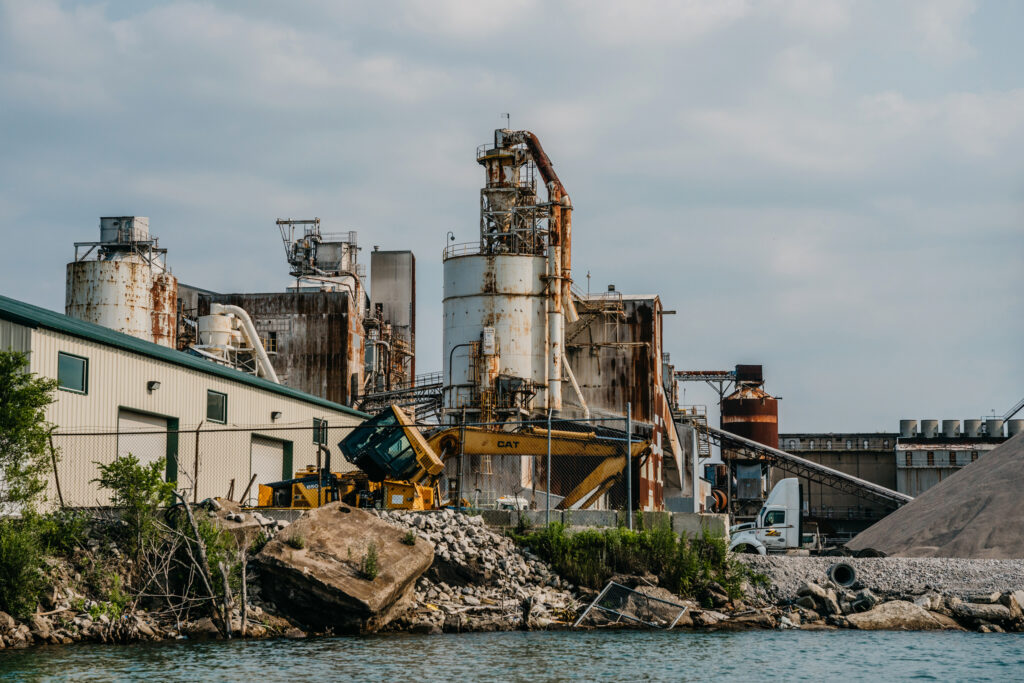
On Chicago's Southeast Side, residents staged a month-long hunger strike to stop a metal scrapping facility from moving into their neighborhood—and they won. After years of protests, federal complaints, and community investigation, Illinois has now passed landmark environmental justice legislation born directly from that fight, a victory that activists say will protect countless families from toxic industrial pollution.
The bill amends the Illinois Environmental Protection Act to fundamentally reshape how the state evaluates industrial air permits in communities already overburdened by pollution. Beginning next year, the state's Environmental Protection Agency will be required to consider cumulative pollution and other existing environmental burdens when reviewing certain air emission permits for construction. The law also allows regulators to examine an applicant's past environmental violations when approving permits and to enforce stricter requirements for air monitoring and pollution prevention.
The Southeast Side, a predominantly Black and Latino neighborhood, has long been nationally recognized as one of the most pollution-burdened areas in the country. The General Iron proposal would have relocated a metal scrapping facility from Lincoln Park, an affluent predominantly white neighborhood, to this already struggling community—a decision the state EPA initially approved in 2020. What followed was a remarkable grassroots campaign. Residents staged protests and investigations, filed a federal civil rights complaint, and completed a month-long hunger strike that ultimately stopped the relocation and triggered settlements with the U.S. Department of Housing and Urban Development and the U.S. Environmental Protection Agency.
Gina Ramirez, director of Midwest environmental health at the Natural Resources Defense Council and a resident of the Southeast Side, watched the broken permitting process up close during the General Iron fight. "I'm excited about this because it's going to put more mechanisms in place so other families who live in environmental justice communities in Illinois don't have to go through what we went through," she said.
The bill identifies "areas of environmental justice concern" by weaving together environmental data—average air pollution, vehicle traffic, drinking water violations, and proximity to hazardous facilities—with social vulnerability metrics including poverty rates, race, employment, and English proficiency. It also establishes a new office of environmental justice within the state EPA, embedding environmental justice into the agency's structure.
State Senator Celina Villanueva, a Democrat representing Little Village, a majority Latino neighborhood that has suffered disproportionate environmental harm for decades, co-sponsored the bill. "This bill will save lives in my district," she said in a statement. "While there is so much more work to do to protect public health in our neighborhoods, we'll all breathe a little easier knowing that we finally took this important first step."
Jen Walling, chief executive officer of the Illinois Environmental Council, acknowledged the legislation as incomplete—she had pushed for a broader definition of environmental justice areas that might better protect downstate communities—but framed it as essential progress. "It's more relief than joy to have it passed," Walling said. "We're taking a step in the right direction."
In Chicago, environmental groups now hope the state victory will energize the Hazel M. Johnson Cumulative Impacts Ordinance, a city-level effort to curb industrial pollution in environmental justice neighborhoods that has faced repeated delays. Activists also note that the state's action carries symbolic weight amid federal rollbacks, from environmental justice staffing cuts to weaker enforcement under incoming administration policies. Illinois, they say, is choosing a different path.