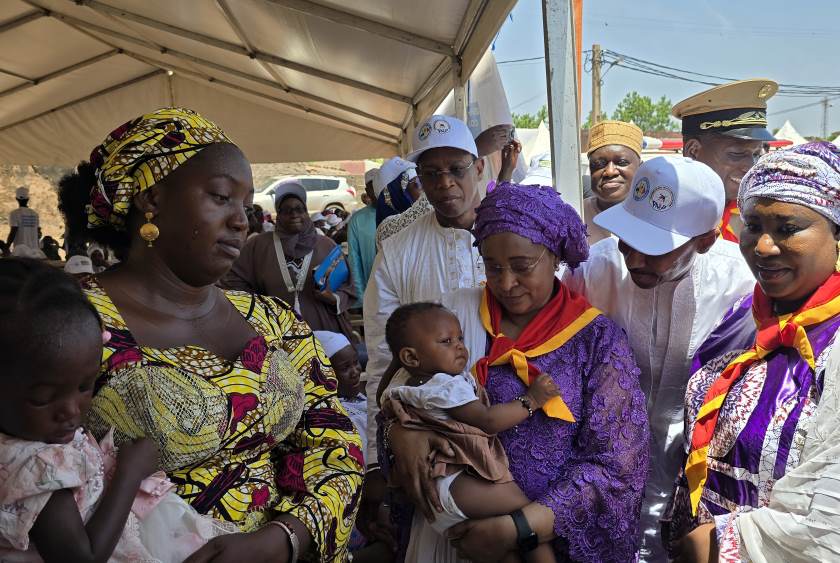
In Kalaban Coro, a densely populated district on the outskirts of Bamako, parents who once knew malaria as an inescapable childhood threat are now bringing their children for a vaccine—one year in, with results that have caught even health officials off guard.
Mali launched its hybrid malaria vaccine programme in April 2025 across 19 priority districts, reaching communities where the disease has long been a brutal fact of life. In 2023, according to WHO data, Mali was among the 11 countries carrying the world's highest malaria burden, with 8.15 million cases and 14,328 deaths linked to the disease. The burden falls hardest on the youngest and poorest, making vaccination a matter of life and dignity. But rolling out a new vaccine in a country already stretched thin requires more than hope—it requires strategy, trust, and the willingness of families to return again and again.
What struck Dr Issa Guindo, chief medical officer of Kalaban Coro's health district, was not just the launch itself, but how quickly people showed up. "The presence of the authorities reassured people," he recalls. "And above all, everyone knows the devastation caused by malaria. People were waiting for this vaccine." Demand so far outpaced supply that women came to health centres saying the vaccine had run out. By the end of March 2026, more than 67,000 children in Kalaban Coro alone had received at least a first dose. In Mopti district, the pattern repeated: over 20,000 first doses administered, alongside more than 11,000 second doses and over 7,000 third doses by April 2026.
Maimouna Coulibaly, a homemaker in nearby Sénou, speaks for many when she says simply: "If it can prevent my child from becoming seriously ill, I would rather they receive all the doses." That willingness to protect her child reflects something deeper—a community that recognizes malaria's toll and is hungry for solutions.
Yet initial enthusiasm can fade. Mali opted for what it calls a hybrid approach: a five-dose schedule for children aged 5 to 36 months, with the first three doses given throughout the year as part of routine immunisation, and the fourth and fifth doses administered in May or June, timed to the peak transmission season. The vaccine, R21/Matrix-M, was integrated into existing health systems rather than delivered as a one-off campaign—a choice that demands consistency.
Here lies the real test. Dr Guindo explains the challenge plainly: "Many parents thought it was a single-dose vaccine. But because there are five doses, some struggle to come back for the booster doses." The gap between those who received a first dose and those completing the full schedule reveals both the programme's strong start and the fragility of that momentum.
The vaccine is not working alone. Mali's strategy weaves it into a broader tapestry of prevention—insecticide-treated nets, seasonal chemoprevention during high-transmission months, and routine immunisation all working together. Mohamadou Kébé, the Malaria and Immunisation Focal Point for Kalaban Coro, sees this as essential. "These are combined efforts that have shown satisfactory results," he says.
One year in, Mali's malaria vaccine programme has proven that families will embrace protection when it is offered with transparency and embedded in communities they trust. The year ahead will test whether that initial momentum can be sustained through every dose, and whether the vaccine can finally shift the arithmetic of a disease that has stolen too much for too long.