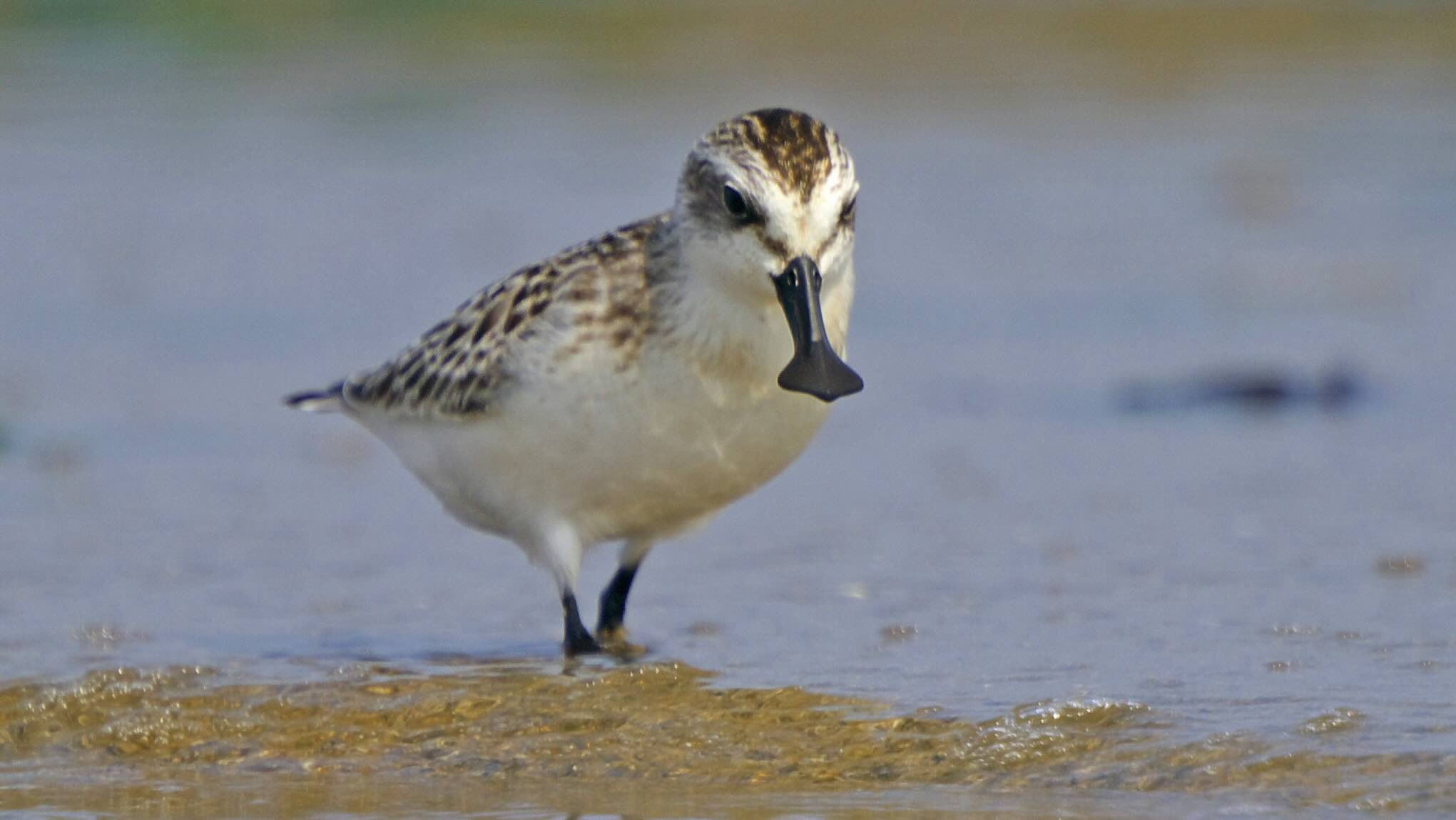
Li Jiahe was studying in the Netherlands when he first learned that a 27-mile highway project in Guangxi province would bulldoze through mudflats critical to one of the world's rarest birds. He had never set foot in Xichang, the town where the spoon-billed sandpiper makes its precarious living, and he had never seen the bird itself. Yet within days of learning about the threat, the university student did something remarkable: he skipped the usual route of grassroots campaigning and went straight to the top, emailing Ramsar Convention authorities at the United Nations to explain that China's own environmental protections were being sidestepped.
The spoon-billed sandpiper exists in a state of elegant rarity. Fewer than 500 of them remain on Earth, making this migratory shorebird one of the most critically endangered animals on the planet. The birds travel faithfully between distant territories—some journeying from Siberia as far south as Thailand—returning year after year to the same patches of wetland for feeding, resting, and overwintering. The mudflats near Xichang, where a recent survey counted 14 of these extraordinary birds, had been designated a site of international importance under the Ramsar Convention, which protects ecologically significant wetlands. Yet when highway planners submitted their proposal on April 30th, they argued the road was exempt from China's wildlife protection laws because it was a nationally important infrastructure project.
Li was not alone in his concern. Other activists in Guangxi contacted environmental authorities, and Bird Life International became involved, referring the matter to its Chinese chapter. A birdwatcher named Liu added his voice to the campaign. The online movement became known as the "Little Spoon" campaign, a name that captured both the bird's distinctive anatomy and its vulnerability. But by early May, after authorities had approved the project, the effort seemed lost. Correspondence between the activists and international groups fell silent.
Then, unexpectedly, a central environmental inspection team arrived in Guangxi for their monthly rotation reviewing regional compliance with environmental regulations. This nomadic authority, which moves through China enforcing standards and accepting public comment, became the pivot point. They heard extensive complaints about the highway. An environmental investigation followed, and on May 25th, Guangxi authorities announced their conclusion: the original environmental impact assessment lacked "scientific basis." The project was suspended.
The victory reveals something often overlooked in narratives about environmental protection in large nations: ordinary people can shift outcomes, even when the odds appear overwhelmingly stacked. The mudflats that would have supported the road actually hosted approximately 20,000 birds from 49 species. Alternative routes are now being evaluated, and local government has pledged to consider public concerns about the birdlife. There remains, as Liu acknowledged, a real tension between the genuine needs of nearby villagers—who would have benefited from a faster route to the city—and the irreplaceable loss that would have occurred. Yet the campaign suggests that when advocates persist, when they engage both grassroots and institutional channels, and when they anchor their case in hard science and international law, even infrastructure momentum can be paused. For the spoon-billed sandpiper, a bird that exists in numbers smaller than the population of many towns, that pause may mean survival.