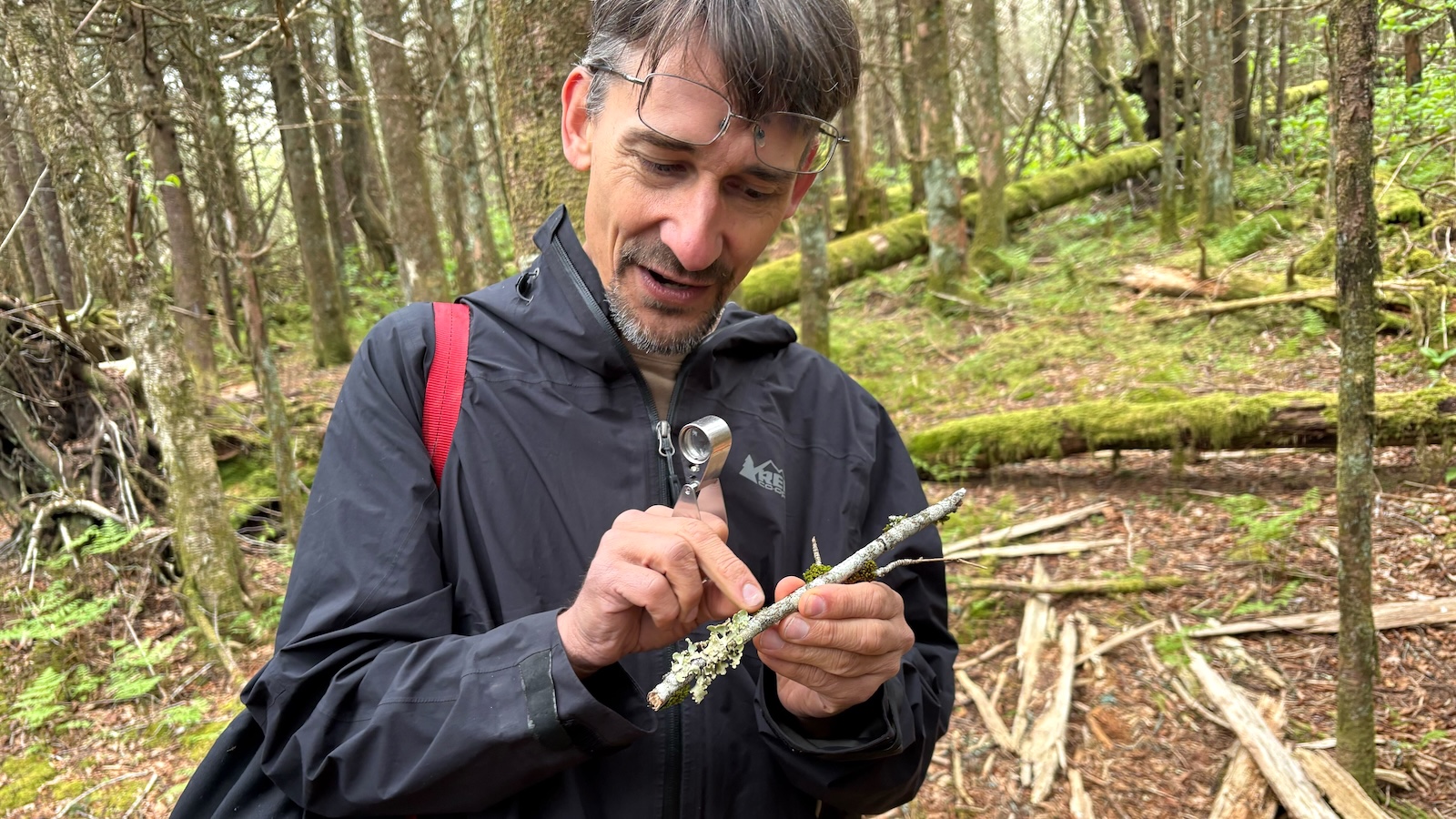
A gentle shower fell as James Hollinger, a retired computer scientist turned amateur lichen scientist, ducked beneath bright green underbrush in Great Smoky Mountains National Park and spotted something remarkable: a rare, spongy lichen clinging to an aging yellow birch tree, documented only about a dozen times in the park and absent from any botanical guidebooks. Just one side of that single tree yielded more than 17 other moss and lichen species, a reminder that every square foot of the Smokies teems with life most visitors never notice.
The biodiversity of Great Smoky Mountains National Park is staggering and increasingly urgent to document. As the most biodiverse site in the national park system and a global hotspot for salamanders, fungi, mosses, and lesser-known organisms, the park faces mounting pressure from climate change reshaping its ecosystems through invasive insects, dying trees, more frequent floods, fires, and violent storms. Volunteers and scientists say there is no time to waste in cataloging species before they disappear.
Hollinger is part of the Gang of Retirees in Search of Life's Diversity, or "GRISLD," a volunteer group that contributes to the all taxa biodiversity inventory, or ATBI, a decades-long partnership between the National Park Service and the nonprofit Discover Life in America. Will Kuhn, who leads scientific research for that organization, hikes the park's remote corners with groups like GRISLD, conducting what is one of the oldest and longest-running all taxa biodiversity inventories in the country. Their findings are remarkable: over 22,000 species documented in the Smokies, with more than 1,000 of them discovered since 1998 being entirely new to science. Yet Kuhn believes this figure represents only a third to a quarter of the park's actual diversity.
Finding new species happens regularly, not rarely. Larger, charismatic animals are well documented, but tiny creatures—mites, mosses, microscopic rotifers—remain understudied. Much of the park's data collection occurs during spring and summer when academic researchers typically visit. Volunteers are present year-round, however, tracking species active in colder months or migrating through seasonally. As Hollinger observed while turning over a log where a red-cheeked salamander scampered into wet leaves, "What about the things that are off-period?" This off-season monitoring has proven invaluable for understanding the park's full ecological story.
The work matters beyond academic curiosity. The Smokies' varied elevations and countless microclimates may help some species survive a warming world by providing pockets of cooler habitat—a potential refuge as climate change accelerates. Yet volunteers also document how ecosystems are changing in visible, troubling ways. Documenting this baseline of biodiversity now, before further loss, becomes an act of scientific preservation.
The Park Service cannot manage this work alone. Its partnerships with nonprofits and community organizations allow the agency to support ecological research that would otherwise languish underfunded. These relationships proved vital during the 2025 government shutdown, when organizations helped keep the park open and salaries flowing. In an era of tight federal budgets and deep research cuts, the dedication of volunteers like GRISLD sustains the long-term monitoring essential to understanding how one of Earth's most biodiverse places adapts to an uncertain future.