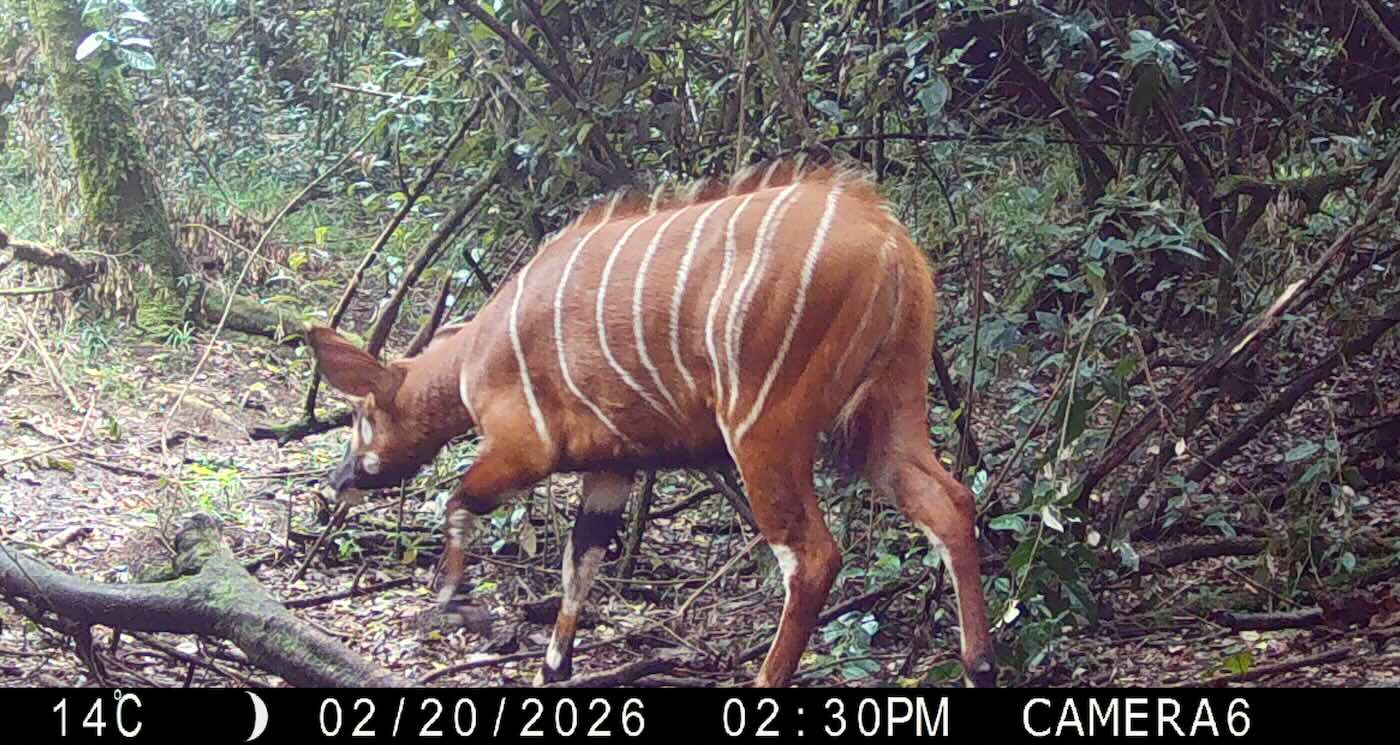
Trail camera images captured in Kenya's remote Maasai Mau forest have revealed something conservationists barely dared hope for: three mountain bongos moving through the woodland, a species thought to have vanished from the region long ago. The photographs show a mature male and two younger animals—a male and a female—proving that these magnificent forest antelopes have somehow survived in one of Africa's most inaccessible places, roughly 200 kilometers from where scientists believed the last wild population clung to survival in the Aberdare mountains.
For more than six years, the world's remaining mountain bongos seemed to exist in only four isolated pockets across Kenya. The latest AI survey conducted by Chester Zoo estimated just 28 individuals in the Aberdares stronghold, though the Mountain Bongo Project suggests the true number could reach 40 in the wild—already a precarious count for any species. The reappearance of bongos in Maasai Mau reshapes that grim picture and signals that conservation work, however grueling, can yield unexpected breakthroughs.
"The excitement in camp was unbelievable when we first looked through the photos," said Oscar Dyer, Director of Operations for the Mountain Bongo Project, capturing the profound moment when rangers monitoring this fragment of forest realized they were looking at evidence of survival. The mature male photographed by the trail cameras may have been first spotted back in 2018 by Chester Zoo's Dr. Tommaso Sandri, suggesting the animal had remained hidden in the forest for years—a sign that other bongos might still be there, waiting to be found. That intuition proved right when additional camera images confirmed the presence of the younger pair.
These discoveries matter because Maasai Mau, unlike the Aberdares, is not a national park. The reappearance of bongos could prompt organizations to expand protection efforts across the broader landscape. "This is huge news," Sandri noted, recognizing that conservation success often depends on securing the right legal and institutional support.
The mountain bongo is Africa's largest forest antelope, but its extreme rarity and elusive nature make it extraordinarily difficult to track. Finding these animals is a testament to the persistence of Mountain Bongo Project rangers—Maasai people who work in difficult, isolated conditions, drawing on generations of knowledge about their local ecosystem to locate and protect the species.
Hope for the species is not limited to wild populations. About 900 mountain bongos live in zoos and wildlife sanctuaries around the world, including Kenya's Mount Kenya Wildlife Conservancy. The recent translocation of four European-born males to the Kenyan sanctuary will help preserve genetic diversity vital for long-term survival. "The Mau population represents a significant genetic pool for mountain bongos and it is therefore vital for long-term conservation," said Robert Aruho, who heads the conservancy. This coordinated work between organizations—Chester Zoo, the Mountain Bongo Project, and sanctuaries across continents—offers a pathway forward: strengthening wild populations while maintaining genetic diversity in captive herds that could one day reinforce those living freely.
The challenges remain real. Historically hunted for their striking striped coats, bongos today face habitat destruction from logging and farming. They thrive only in areas with volcanic soil and reliable water supplies—the very land in highest demand for agriculture. Yet the discovery in Maasai Mau proves the species is not beyond saving. With sustained collaboration and protection, mountain bongos may yet flourish again in Kenya's forests.