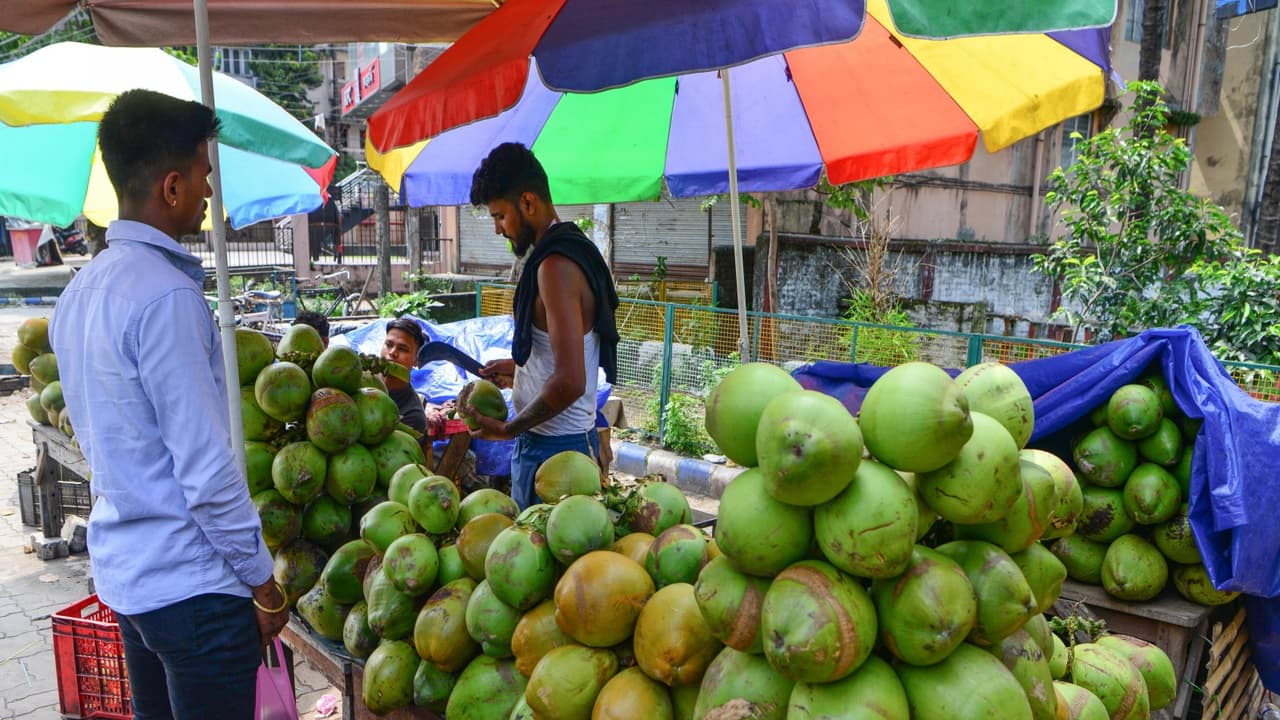
Eshansh Singh Rathore used to work in the corporate world. Now the 36-year-old MBA graduate from Bakawand block in Chhattisgarh spends his days among 2,500 coconut palms, and his farm has become a model other farmers want to copy. Rathore is part of a quiet revolution in India's coconut sector — an industry that supports nearly 30 million people, including about 10 million farmers, and makes India the number one coconut producer on Earth.
The coconut has a long and honoured history here. Indians call it the "Kalpavriksha," the tree that provides all the necessities of life. For nearly three thousand years it has given people food, drink, medicine, fibre, timber, fuel, and raw materials. Today, in the Bastar Plateau of Chhattisgarh, farmers who once relied only on paddy, millets, maize, and forest produce are learning a new way. The Coconut Development Board trained them to plant crops in the empty spaces between young coconut palms, bringing in income before the coconuts themselves start producing.
Rathore took that guidance and ran with it. He planted mostly dwarf coconut varieties, and about 500 of his palms are already bearing fruit. But the real magic is in what grows beneath them. Under his coconut canopy, he cultivates 4,000 pineapple plants, 800 dragon fruit plants, 1,000 mango trees, 600 citrus trees, plus banana, guava, papaya, litchi, coffee, strawberry, and seasonal vegetables. This multi-tier system makes his land work at every level. His coconuts bring in ₹5-6 lakh a year, while the intercrops add another ₹10 lakh — proof that coconut farming can be genuinely profitable.
India's dominance is hard to overstate. The country grows 31.24 per cent of the world's coconuts — about 20,301.22 million nuts in 2024-25 from 2.19 million hectares. Keralam has the largest growing area, Tamil Nadu leads in production, and Andhra Pradesh has the highest productivity per hectare. Meanwhile, exports have moved beyond traditional products to include virgin coconut oil, coconut milk, and activated carbon, helping India chase ambitious export goals.
The government is backing this growth. During 2025-26, about 2,175 hectares were added under cultivation and 1,672 hectares were rejuvenated. A new Coconut Promotion Scheme from the Union Budget 2026-27 aims to strengthen sustainability, exports, and farmer incomes. For families across rural India, the humble coconut is more than a crop — it is a path to a better living, one tree at a time.