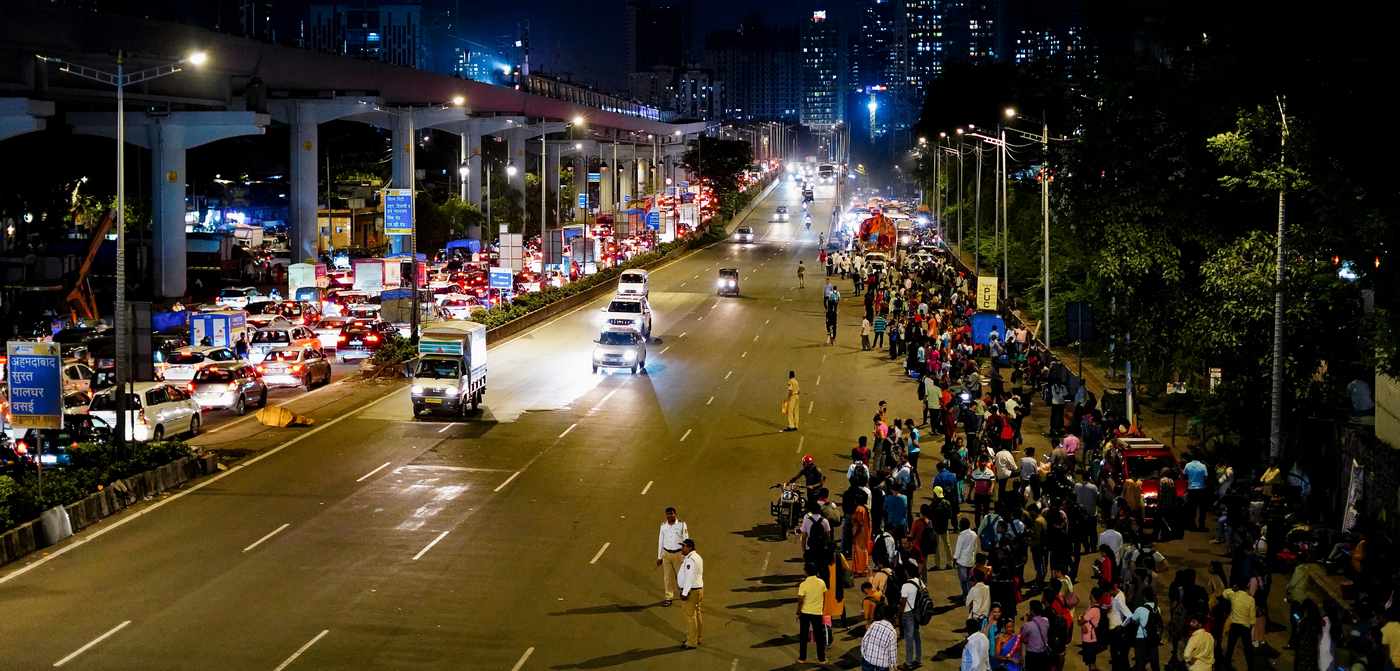
On the chaotic Indian roadways where traffic flows with barely contained urgency, a stranger's willingness to stop and help has become a matter of life and death—and now, recognition and reward. India's newly created Rah-Veer program is transforming the economics of compassion by paying citizens ₹25,000 (approximately $250) for stopping to assist victims of road accidents during the critical first 60 minutes after injury.
The stakes are urgent. India experiences more road deaths and injuries than nearly anywhere else on the planet, making every minute during what emergency responders call the "golden hour" the difference between survival and tragedy. During this window, proper first aid—a tourniquet, a splint, or simply placing someone in the recovery position—can fundamentally alter whether an accident victim lives or dies. Yet in the very places where help matters most, it often doesn't arrive in time. Ambulances in rural India must frequently cover enormous distances, sometimes failing to reach patients within that critical hour. Without a Good Samaritan nearby to intervene, a badly injured motorist can slip beyond the point of no return.
The Rah-Veer program operates with elegance precisely because it removes barriers rather than creating new ones. Open to all citizens regardless of medical training, the reward is shared among multiple helpers if more than one person stops. The Ministry of Road Transport and Highways designed the program to shield helpers from the legal complexities that once discouraged intervention: no requirement to disclose personal information, no risk of detention, full privacy protection, and any necessary statement given quickly, simply, and at a time and place of the witness's choosing.
This protection matters. In a country where legal entanglement and bureaucratic friction can derail good intentions, the program's explicit shielding of helpers from complications sends a clear signal that intervention is not just welcome but officially protected.
The financial incentive—$250 in a nation where median household income hovers around $2,000 annually—is substantial enough to honor the act without trivializing the moral commitment it represents. Every year, the Ministry selects the 10 most vital or courageous interventions for special recognition: a bonus $1,000 and a certificate of appreciation. These awards elevate the narrative beyond transactional payment to genuine honor for extraordinary courage.
Yet the program's impact extends far beyond individual rescuers. The legislation that created Rah-Veer simultaneously restructured how hospitals handle road accident victims, guaranteeing cashless treatment for the first seven days regardless of a patient's ability to pay upfront. Hospitals cannot demand advance payment or refuse admission. Where payment is required, the costs flow through insurance companies for insured vehicles or through a dedicated government fund for uninsured vehicles and hit-and-run cases—removing the devastating equation where serious injury becomes compounded by financial catastrophe.
Together, these changes represent a philosophical shift: India is explicitly betting on human capital as its greatest resource for saving lives. By making it easier, safer, and more rewarding to stop and help—and by ensuring that help leads to actual medical care rather than a billing counter—the program acknowledges something fundamental about public health in developing nations. Sometimes the most critical intervention happens not in a hospital but on the roadside, administered by an ordinary citizen with courage and a tourniquet.