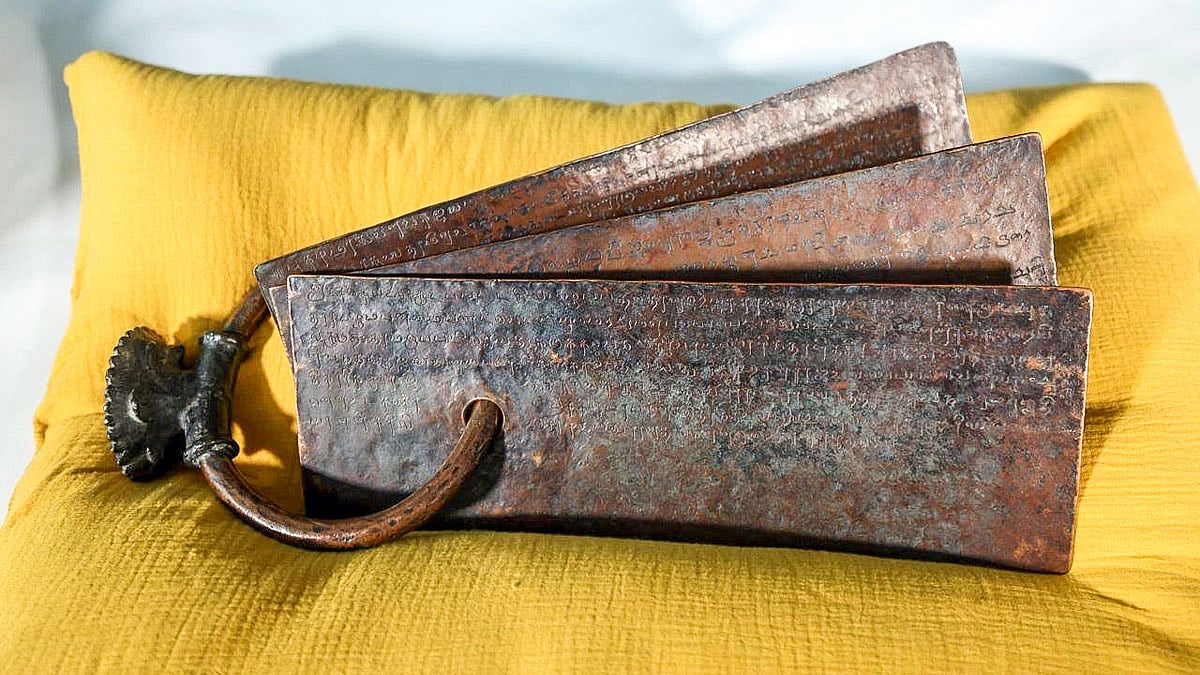
In a red-roofed room in New Delhi last week, Prime Minister Narendra Modi and Dutch counterpart Rob Jetten stood together as the Anaimangalam Chola plates—ancient copper-plate records from a Hindu emperor who once endowed a Buddhist monastery—crossed back into Indian custody after fourteen years abroad. The moment was ceremonial, visible, and deeply symbolic. But it was also part of something much larger: a transformation in how India is recovering its scattered cultural inheritance that has moved from trickle to torrent in barely a decade.
The numbers tell the story starkly. Between 1955 and 2014—a full six decades—India repatriated just thirteen antiquities. Since 2014, that figure has jumped to 642. In eleven years, India has brought home nearly fifty times as many cultural objects as it did in the previous sixty. This is not merely a statistical curiosity. It represents one of the country's most measurable foreign policy successes of the past decade, built quietly through bilateral agreements, patient diplomacy, and infrastructure created specifically for this work.
The United States has been the largest source by far, accounting for roughly 578 of the 642 repatriated pieces. The journey began with the bronze Nataraja from the 12th century that returned during Prime Minister Modi's 2021 visit, followed by 297 antiquities handed over in 2024 on the sidelines of the Wilmington bilateral. Most strikingly, in April 2026, the Manhattan District Attorney's Office announced the transfer of more than 650 additional antiquities to India—the deepest single bilateral repatriation pipeline the country has ever had. A formal India-US Cultural Property Agreement, signed in July 2024, has now formalized this cooperation. Other nations have contributed too: Australia has returned around 40 pieces, the United Kingdom roughly 16, and the Smithsonian returned three South Indian bronzes just months ago, including a 9th-century Shiva Nataraja that researchers traced back to the Sri Bhava Aushadesvara Temple in Thanjavur district.
None of this has happened by accident. Behind each return stands patient, structured diplomatic effort willing to take long-term horizons—the Anaimangalam plates themselves required fourteen years of negotiation. The Netherlands' broader restitution policy for colonial-era objects, adopted in 2022, crystallized only after a generation of internal debate. India's machinery for managing these returns has been built slowly and mostly invisibly: the Ministry of External Affairs handles bilateral negotiations across changes of administration; the Archaeological Survey of India receives objects and maintains a dedicated gallery for repatriated pieces at its Central Antiquities Collection; the India Pride Project traces and documents items from civil society; and the 1970 UNESCO Convention provides the legal foundation.
What emerges from this quiet work is a second strand of India's "Vikas Bhi, Virasat Bhi" doctrine—development together with heritage—that goes largely unnoticed. Beyond temple corridors and infrastructure modernization lies the careful work of recovering what was taken. The Anaimangalam plates exemplify this deeper purpose. They are not merely a Chola artifact; they are a record of a Hindu emperor endowing a Buddhist monastery with Southeast Asian devotees, with text moving between Tamil and Sanskrit. Each returned object corrects a flattened historical narrative, allowing Indians to see their civilizations as maritime, syncretic, and administratively complex—a more accurate inheritance than the one most grew up learning.