When the nearest power line is hundreds of miles away, you find another way. For the Navajo Nation — a 27,000-square-mile territory spanning parts of Arizona, New Mexico, and Utah — electricity was once a luxury many families simply did without. That changed when the Navajo Tribal Utility Authority (NTUA) was established in 1959 to address this very gap. Today, NTUA has grown into a self-sustaining, tribally-owned enterprise that provides off-grid residential solar services at reasonable costs, along with electric, water, natural gas, and wastewater services.
But the innovation does not stop there. NTUA is now piloting next-generation, non-flammable zinc battery technology with Urban Electric Power — technology that could reshape how distributed electrification works across the country.
Across Indian Country, tribes are building energy futures on their own terms. The San Pasqual Band of Mission Indians in California has installed nearly 100 EV chargers, paired with solar generation and battery storage, all organized around a resilient community microgrid. The project lets the tribe draw power from the sun during the day and rely on stored energy during emergencies — a feature that proved critical during recent wildfire seasons when the broader grid went down.
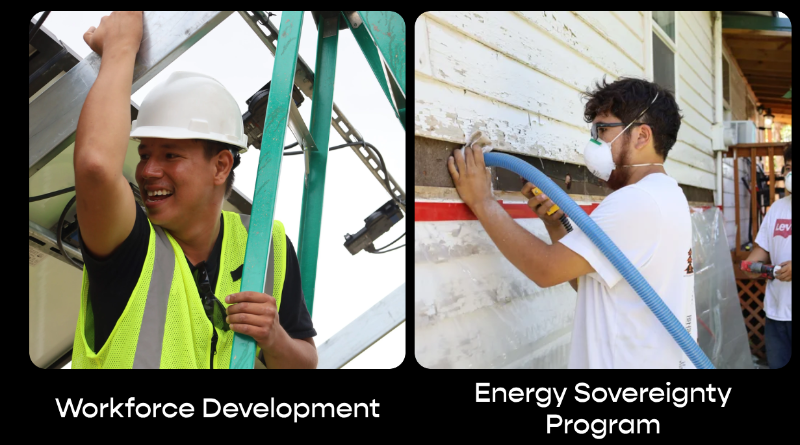
In South Dakota, Red Cloud Renewables operates the nation's only Indigenous-led renewable energy training campus on the Pine Ridge Reservation. More than 1,100 Native students have learned solar installation, sustainable building, and weatherization techniques there — skills that create jobs and strengthen communities at the same time.
Back on Navajo Nation land, Navaho Power is simplifying the complex process of building utility-scale solar projects. Partnering with Vroom Power, they have expanded access to distributed solar by reducing the cost and complexity of installation through a battery-free approach designed to grow. The company works side-by-side with investors, developers, and tribal communities to create projects that honor sovereignty and drive prosperity.
This energy momentum is also drawing national support. The Electric Innovation Initiative (EII), a 10-year effort created by California Energy Commission Chair David Hochschild and Hawaii State Senator Chris Lee, has been directing resources toward Indigenous-led clean energy projects. The goal is to advance electrification across the country by 2035 — and tribal communities are helping set that agenda, not just following it.
What unites these efforts is a simple idea: communities know their own needs better than anyone outside. Rather than waiting for federal policy to catch up, these tribes are proving that clean energy can be affordable, reliable, and rooted in local values — and showing the rest of the country what is possible.