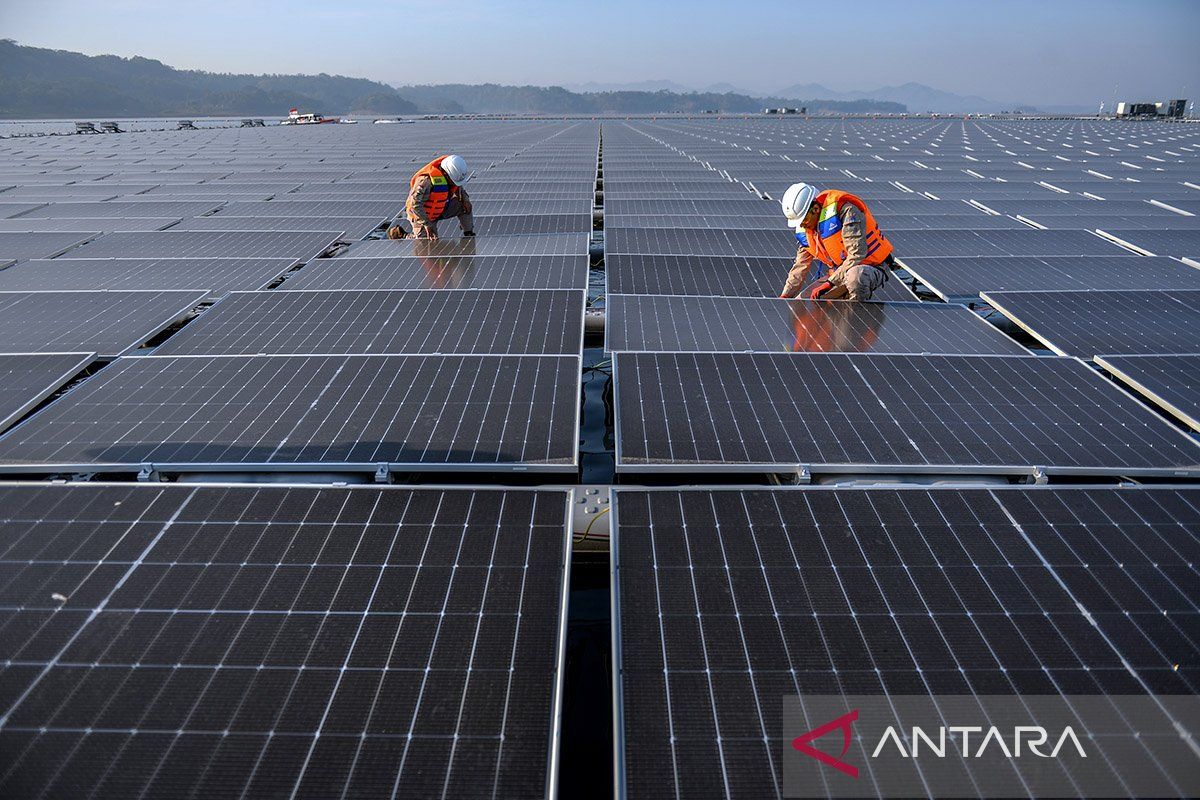
At the Cirata Dam in Purwakarta, West Java, sunlight glints off a vast expanse of floating solar panels — a shimmering preview of Indonesia’s clean energy ambitions, funded in part by the Just Energy Transition Partnership. This is more than a power project; it’s a symbol of a country stepping into a pivotal global role. With the world’s largest nickel reserves and the second-largest tin deposits, Indonesia is not just supplying raw materials — it’s redefining how they fuel the global shift to clean energy. “Indonesia’s position as a major producer of various minerals makes it strategically important in supporting the success of the global energy transition,” says Cecep Mochammad Yasin, Director of Mineral Business Development at the Ministry of Energy and Mineral Resources, speaking from Jakarta. This isn’t just about geology — it’s about strategy, sovereignty, and sustainable growth.
Critical minerals are the invisible engines of the green revolution. Solar panels, wind turbines, electric vehicles, and grid-scale batteries all depend on them. Copper enables electrification; nickel, cobalt, and lithium power the booming battery industry. Indonesia, sitting atop vast reserves of these materials, has a rare opportunity — and responsibility — to shape how the world transitions to low-carbon energy. But the government isn’t settling for exporting raw ore. Instead, it’s pushing deep downstream processing: transforming nickel ore into Mixed Hydroxide Precipitate (MHP), then into nickel matte, precursors, and cathodes — and ultimately into batteries and electric vehicles. This value chain, once completed domestically, could unlock billions in economic value for Indonesia.
The numbers speak to both abundance and foresight. Indonesia’s nickel reserves are the largest on Earth, sufficient to last about 31 years at the current annual production rate of 190 million tons. Its tin reserves rank second globally, projected to last 22 years at an output of 65,000 tons per year. These aren’t just statistics — they’re foundations for industrial transformation. By extending the domestic value chain, Indonesia aims to capture more than just export revenue; it’s building a clean tech ecosystem that can power jobs, innovation, and energy security.
The ministry’s vision is clear: sustainability must go hand in hand with development. As Cecep emphasized, “The longer the value chain built domestically, the greater the economic added value that can be enjoyed by Indonesia and its people.” From the floating solar arrays at Cirata to the nickel refineries of Sulawesi, Indonesia is proving that resource wealth, when guided by long-term planning, can become a force for global and local good. As partnerships with countries like Germany deepen and collaborations between Pertamina and ERIA accelerate, Indonesia is not just part of the energy transition — it’s helping to lead it.