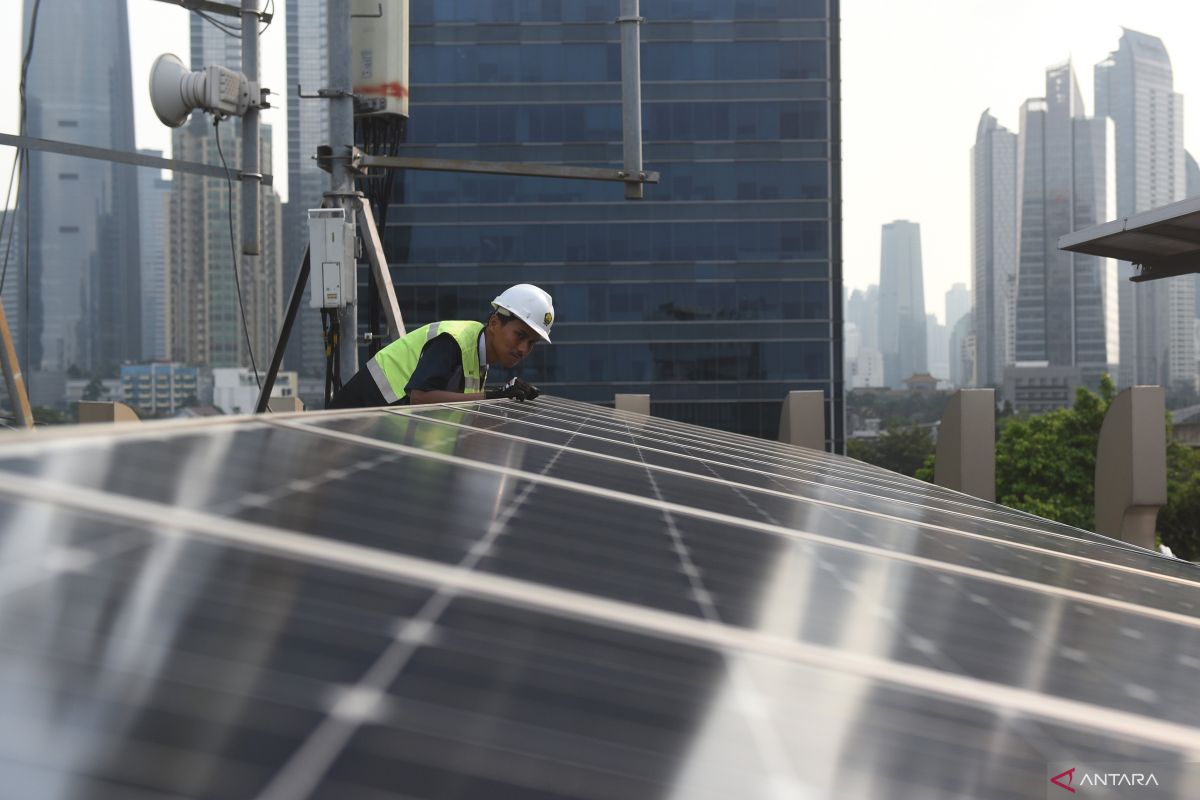
When Tri Winarno stepped before Indonesia's House Commission XII in Jakarta this April, he carried news that quietly rewrote the country's energy story: renewable electricity had hit 17.89 percent of the national grid, breaking through the government's 16.46 percent target with room to spare. It was a moment that crystallized years of policy work and billions in infrastructure investment into a single, undeniable fact—Indonesia's energy transition is accelerating.
The milestone matters because Indonesia is the world's fourth-most populous nation and a crucial test case for how developing economies can reshape their power systems. For decades, coal has dominated, a legacy of cheap fuel and entrenched infrastructure. That dominance persists: coal still generates 64.87 percent of Indonesia's electricity across the 165.51 terawatt-hours produced in the reporting period. Yet the 17.89 percent renewable figure signals that the grip is loosening, and in unexpected places, it's loosening fast.
Sumatra has become Indonesia's green powerhouse. The island produced 32.42 TWh of electricity, and remarkably, renewables accounted for 41.76 percent of that mix—pushing coal into second place at just 38.40 percent. It is a reversal that seemed unimaginable a decade ago. By contrast, Java and Bali, which together handle the lion's share of national demand at 87.43 TWh, remain heavily fossil-dependent, with coal generating 70.99 percent and renewables managing only 10.01 percent. This regional split matters: it shows both the possibility of transformation and the scale of work ahead.
State-owned utility PT PLN is betting decisively on that transformation. Under its 2025–2034 Electricity Supply Business Plan, the company is committing to add 52.8 gigawatts of solar, hydro, wind, and geothermal capacity over the next decade, with 76 percent of all new generation coming from clean sources. PLN President Director Darmawan Prasodjo emphasized the pace of execution: in just the first year since the roadmap launched, 43 percent of those targeted projects—22.57 GW—have already moved into active development, and 0.78 GW is fully operational.
What distinguishes this effort is its specificity and accountability. Prasodjo noted that PLN reports progress "every two weeks," turning what could have been another aspirational announcement into a measurable commitment. Battery storage and pumped-storage hydropower are woven into the plan, addressing one of renewables' persistent weakness: inconsistency in supply.
Yet even as Winarno called the renewable milestone "an encouraging indicator," he sounded a note of realism. Fossil fuels still dominate, and energy transition efforts, he cautioned, "still require acceleration to reduce the dominance of fossil fuels in the national electricity system." Sumatra's success proves it can be done. The challenge now is replicating that transformation across Java, Bali, and the rest of the archipelago—where the density of demand and the weight of existing coal infrastructure create real barriers to change.
Indonesia's 17.89 percent renewable achievement is genuine progress, worth celebrating. It is also just the beginning.