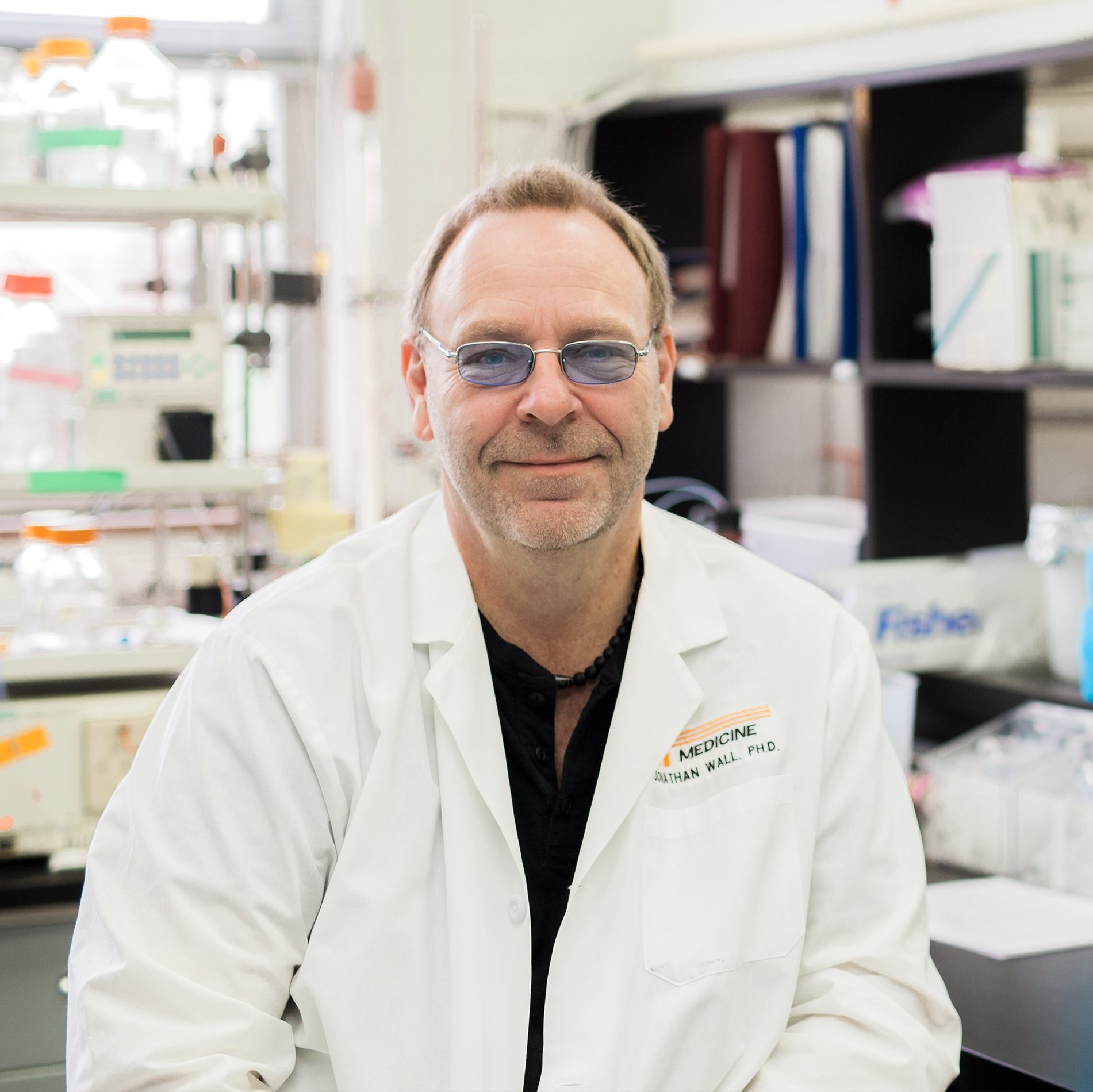
When Jonathan Wall, PhD, and his colleagues at the University of Tennessee Health Sciences set out to make the invisible visible, they were chasing a disease that had eluded physicians for decades — one that hides in plain sight, camouflaged as common heart failure.
Cardiac amyloidosis is a progressive and frequently underdiagnosed disease caused by abnormal protein deposits in the heart. Patients with it have historically spent two to four years bouncing between specialists before receiving an accurate diagnosis, by which time significant and sometimes irreversible organ damage may have already occurred. The disease mimics the symptoms of more familiar forms of heart failure, and until recently, clinicians had no broadly effective molecular imaging tool to directly identify and quantify amyloid deposits across disease subtypes.
Now, a breakthrough from Wall's Amyloidosis and Cancer Theranostics Program at the College of Medicine in Knoxville has changed that trajectory. On May 7, 2026, Bayer announced successful results from the Phase 3 REVEAL study, a large multisite clinical trial that evaluated an investigational PET imaging tracer called iodine-124 evuzamitide. The tracer — a radioactive molecule that, when injected into a patient and scanned, lights up amyloid deposits in the heart — detected cardiac amyloidosis with strong sensitivity and specificity. The trial spanned 19 U.S. centers and compared the tracer's performance against standard clinical diagnosis methods.
What began as academic research at UT Health Sciences has followed an increasingly common path to real-world impact. Wall worked alongside colleagues Emily Martin, PhD, Steve Kennel, PhD, Alan Stuckey, and Tina Richey to co-found a UT startup that advanced the technology toward clinical application. The company, now known as Attralus, Inc., shepherded iodine-124 evuzamitide through clinical development before the compound was acquired by Bayer AG.
The first-in-human study took place at UT Medical Center in collaboration with the Cancer Institute and the Department of Nuclear Medicine, drawing patients from across Tennessee and beyond. Wall reflects on that pivotal phase with gratitude. "Our first-in-human study of iodine-124-evuzamitide brought patients from all over Tennessee and the U.S.," he noted. "We are so grateful for the enthusiastic involvement of the patients and their families, without whom we could not have achieved this milestone and hopefully approval of this imaging agent by the FDA."
The implications extend far beyond faster diagnosis. The tracer is designed to visualize amyloid deposits throughout the body with greater precision than existing diagnostic approaches, offering clinicians a direct molecular window into a disease process that was previously difficult to see clearly in living patients. Investigators believe the technology could eventually help clinicians monitor disease burden over time and distinguish between amyloid subtypes — capabilities that could meaningfully expand its role in patient care and open the door to timely intervention and more personalized treatment strategies.
This trajectory — from academic discovery to startup, to acquisition, to successful Phase 3 trial — illustrates how academic-industry partnerships are increasingly translating scientific breakthroughs into tangible patient benefit. It also reflects a broader shift in medicine toward precision diagnostics, using highly targeted molecular tools to detect and characterize disease in ways that were not previously possible. For the patients and families facing cardiac amyloidosis, a disease that remains significantly underdiagnosed worldwide, that shift means hope for earlier intervention and the chance to change the course of their care.