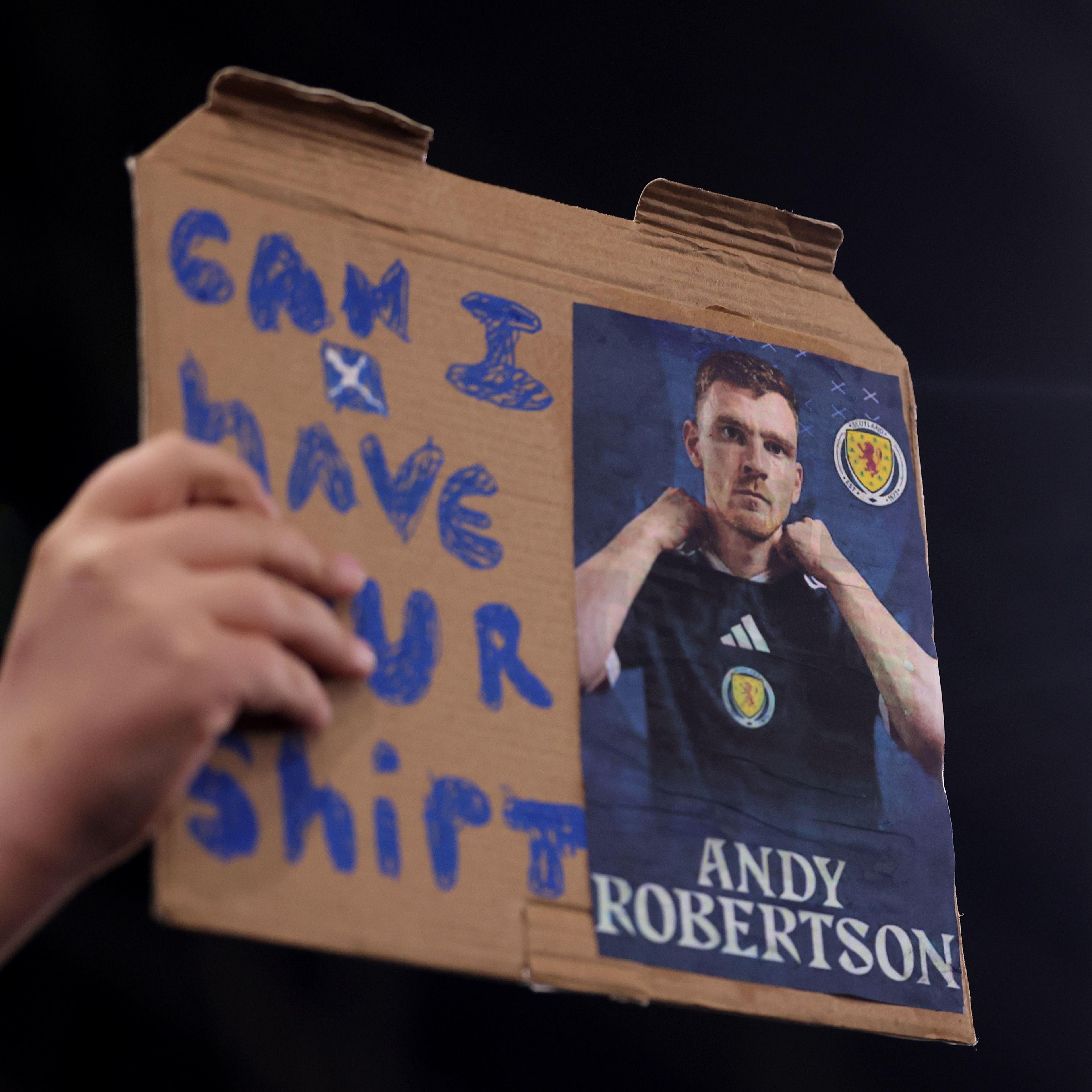
Andy Robertson turned into Claudia Winkleman in a Turkish training camp, orchestrating an elaborate Traitors-style game where Scotland's squad plotted each other's elimination between World Cup qualifiers. It was a small gesture, but it captures everything about the 32-year-old captain: his ability to leaven crushing pressure with warmth, to bind teammates not through authority alone but through genuine connection.
Robertson's rise from the Hampden ticket office to captaining Scotland to their first men's World Cup in 28 years reads like the kind of story that feels almost too neat. Yet here it is, real enough to touch. His journey matters because it speaks to what happens when talent meets relentless humility—when a player refuses to let circumstance or ego shrink his presence in a room.
At Liverpool, Robertson became one of the world's best left-backs, a transformation Jürgen Klopp oversaw personally. The manager arrived in 2017 convinced Robertson "could not defend," but alongside Trent Alexander-Arnold, Robertson set new Premier League assist records and collected two league titles and one Champions League trophy. Some have called him the club's greatest-ever left-back, which at a club of Liverpool's stature carries its own weight. Yet Robertson himself once wrote to a Liverpool fan after they'd donated to a foodbank: "Because nobody wants the left-back's shirt."
That quip—self-aware, funny, true—reveals something fundamental. Left-backs are not the stars. Scotland's songs celebrate Scott McTominay's goals and John McGinn's flair. Robertson's 93 caps (only Kenny Dalglish has more) tell a different story: consistency so absolute it becomes invisible. He has averaged 84 minutes per game, barely missing a match in his 12-year international career. His runs, crosses, and full-blooded tackles have been the architecture upon which Scotland's recent resurgence has been built.
Alex McLeish named him captain in September 2018 after just 22 caps, an unusual choice that proved obvious almost instantly. Now Robertson has captained Scotland more than any other player in history. Steve Clarke, Scotland's head coach, describes him as both "demanding" and "understanding"—a balance most leaders never find. His teammate Scott McTominay puts it simply: "He's got that good balance between being one of the senior players and saying you need to wake up if you're not playing well. Then he's also got the personable side, organising things with the manager, helping young players."
The Traitors game in Turkey exemplifies this philosophy. Robertson and other senior players had noticed the squad wasn't celebrating each other's individual moments enough. So they started awarding personalised Scotland shirts to mark successes. The games, the gestures, the careful attention—these are not ornamental. They are how a leader makes himself felt without ever needing the spotlight.
"I've always just tried to give 100% and also tried to enjoy it," Robertson told the BBC recently. "We're in the small percentage that are very lucky to go and achieve their dreams. And I think I've always carried that with me."
It's the creed of someone who remembers the ticket office, who knows how close he came to never becoming a footballer at all. That memory has made him generous—with his time, his humour, his presence. It has also made him essential. Scotland's first World Cup in 28 years was not won by Robertson alone, but it is difficult to imagine it happening without him.