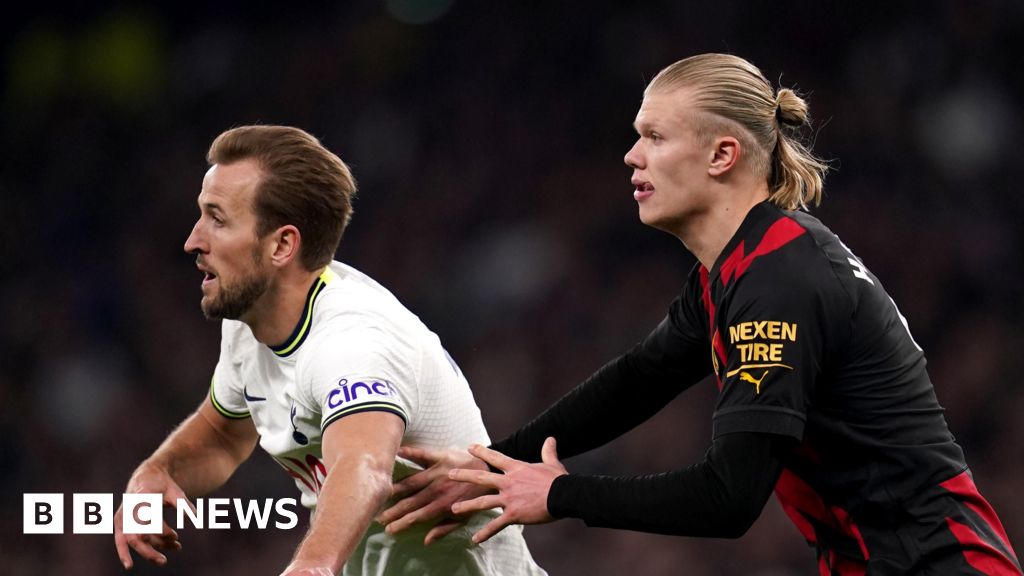
The UK's Advertising Standards Authority has banned two Instagram advertisements featuring football superstars Harry Kane and Erling Haaland, ruling that an online betting company irresponsibly targeted young people through the world's most recognizable players.
The decision, announced after an investigation into ads posted in November by Oddschecker, marks a significant moment in the ongoing tension between social media platforms, betting companies, and regulators trying to protect children. This matters because betting firms have increasingly turned to famous athletes to promote wagers on major football tournaments and awards, blurring the line between sports content and marketing—and making it harder for young users to distinguish the two.
The first banned ad featured Kane with the caption "Harry Kane is the most backed player to win the Ballon d'Or in 2026 (32% of bets)," complete with a trophy emoji. The second showed Haaland alongside text reading "In the last 24 hours, Norway to win the 2026 World Cup is the most-backed bet placed through Oddschecker." To anyone scrolling through their feed, these looked like engaging sports statistics—exactly the kind of content fans share and discuss. But the ASA concluded they were advertisements designed to promote gambling, not editorial content.
Cyan Blue Odds Ltd, the company trading as Oddschecker, defended itself by saying the posts were "primarily editorial in nature" and that it had restricted the account to users aged 18 and above. The company acknowledged that featuring top footballers could appeal to children, but argued this precaution was sufficient protection. The regulator rejected this reasoning entirely. The ASA found that "at least a significant number of children had not used their real date of birth when signing up" to Instagram—a reality that anyone familiar with young people's online habits will recognize immediately.
The investigation began after a complaint from a researcher at Bristol University, who understood what regulators are increasingly grappling with: that age restrictions on social media are only as strong as users' honesty about their age. The ASA determined that Kane and Haaland posed "a high risk of strong appeal to under-18s," and therefore the ads breached the advertising code, which requires companies to avoid marketing gambling to minors and to include responsible gambling messages when they do advertise.
Interestingly, the ASA ruled that a separate Betway advertisement featuring Thierry Henry, the retired Arsenal striker and current pundit, did not violate its code. The difference, the regulator said, was that Henry was unlikely to have the same "strong appeal to under-18s"—a distinction that underscores how the watchdog is trying to draw clearer lines around which athletes can be used in betting promotions.
This decision signals that UK regulators are willing to act when betting companies test the boundaries, using celebrity appeal as a workaround to reach younger audiences. For Oddschecker and others in the industry, the message is clear: relying on social media age gates alone won't protect you from scrutiny when you use players whose global fame reaches far beyond their adult fan base.