John Carriage had been in court four times defending his right to dive for abalone and lobster—practices his ancestors had carried out for thousands of years. Each time, he risked jail time for practicing his cultural heritage in the waters of his homeland. But something shifted. Instead of prosecution, the state of New South Wales recognized that it needed him.
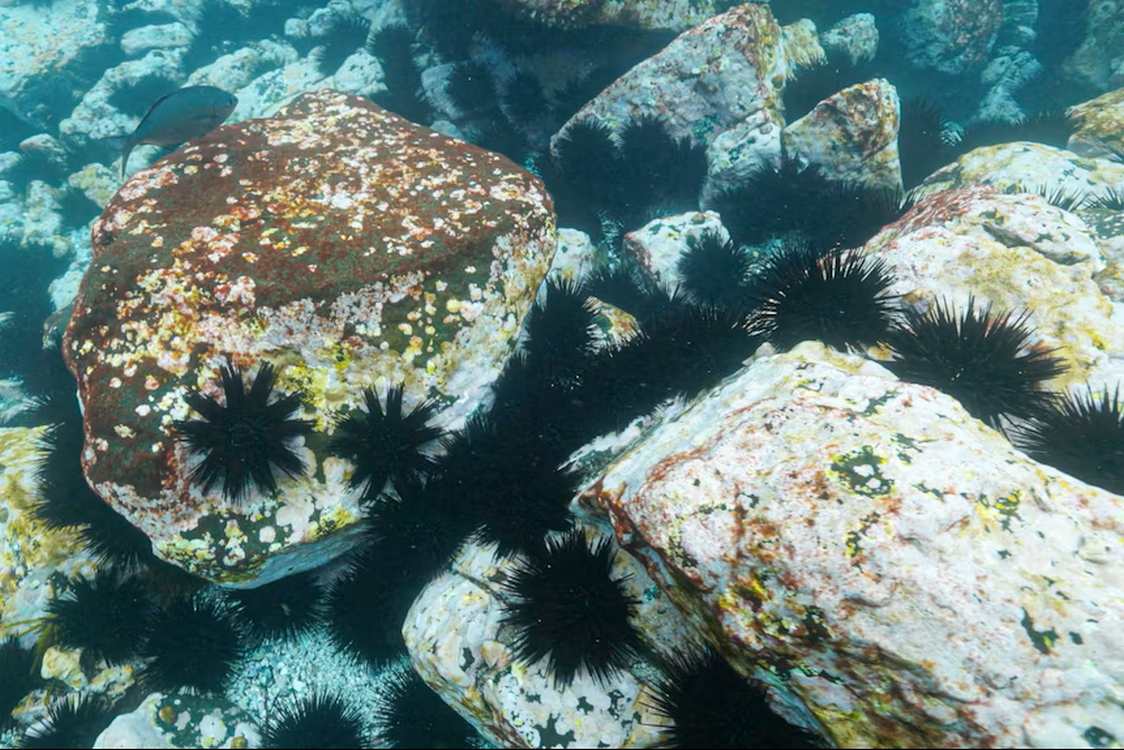
The reversal reflects a fundamental truth about conservation: sometimes the answer to ecological damage lies not in isolation or control, but in restoring the people who once maintained the balance. Long-spined sea urchins, an endemic species native to Australia, have exploded across southern NSW reefs in recent decades, devouring seagrass and kelp forests in what marine scientists call "urchin barrens." Decades of overharvesting the predatory fish that once kept urchins in check, combined with rising ocean temperatures, created perfect conditions for the invertebrates to flourish unchecked. The solution is both practical and restorative: harvest the urchins and sell them to Australasian seafood markets.
Now Carriage and his brother Denzel, both from the Walbunja indigenous community, are among the first cohort of young people training to establish New South Wales's first Aboriginal-led fishing industry. The Joonga Land and Water Aboriginal Corporation has organized the program with support from an AUD$1.48 million government grant—the same state that once sought to imprison them now funding their livelihoods. The trainees are learning to pilot boats, dive with supplied oxygen, select premium urchins, and prepare them for export. As Carriage told ABC News, "Every time we're taking a sea urchin out, we're allowing the weed to regrow. We should be able to have more fish, more lobster, more abalone, and better quality sea urchins."
Marine biologist Cayne Layton, who has documented the positive impacts of urchin harvesting on marine vegetation, frames the moment in terms of justice and opportunity. "The urchin industry is relatively new in Australia, and there's a real opportunity for traditional custodians to be at the center of this industry, rather than at the margins of it as we've seen with other fisheries in the past," he said. What makes this shift remarkable is not just that it solves an ecological problem—thousands of sea urchins will be removed annually from stressed reefs—but that it does so by centering indigenous knowledge and sovereignty rather than sidelining them.
For Walbunja elders, watching youth reconnect with their "sea country" represents something deeper than economic opportunity. They see it as a necessary step toward healing both the ecosystem and their community, restoring relationships to the water and land that sustained their people for millennia. The urchins that once represented a threat to the reef now represent a pathway home. The same diving practices that once made young men criminals now make them pioneers of a new industry. It is a rare moment when ecological restoration, economic development, and cultural healing move forward together—and when the state chooses to invest in the people it once criminalized.