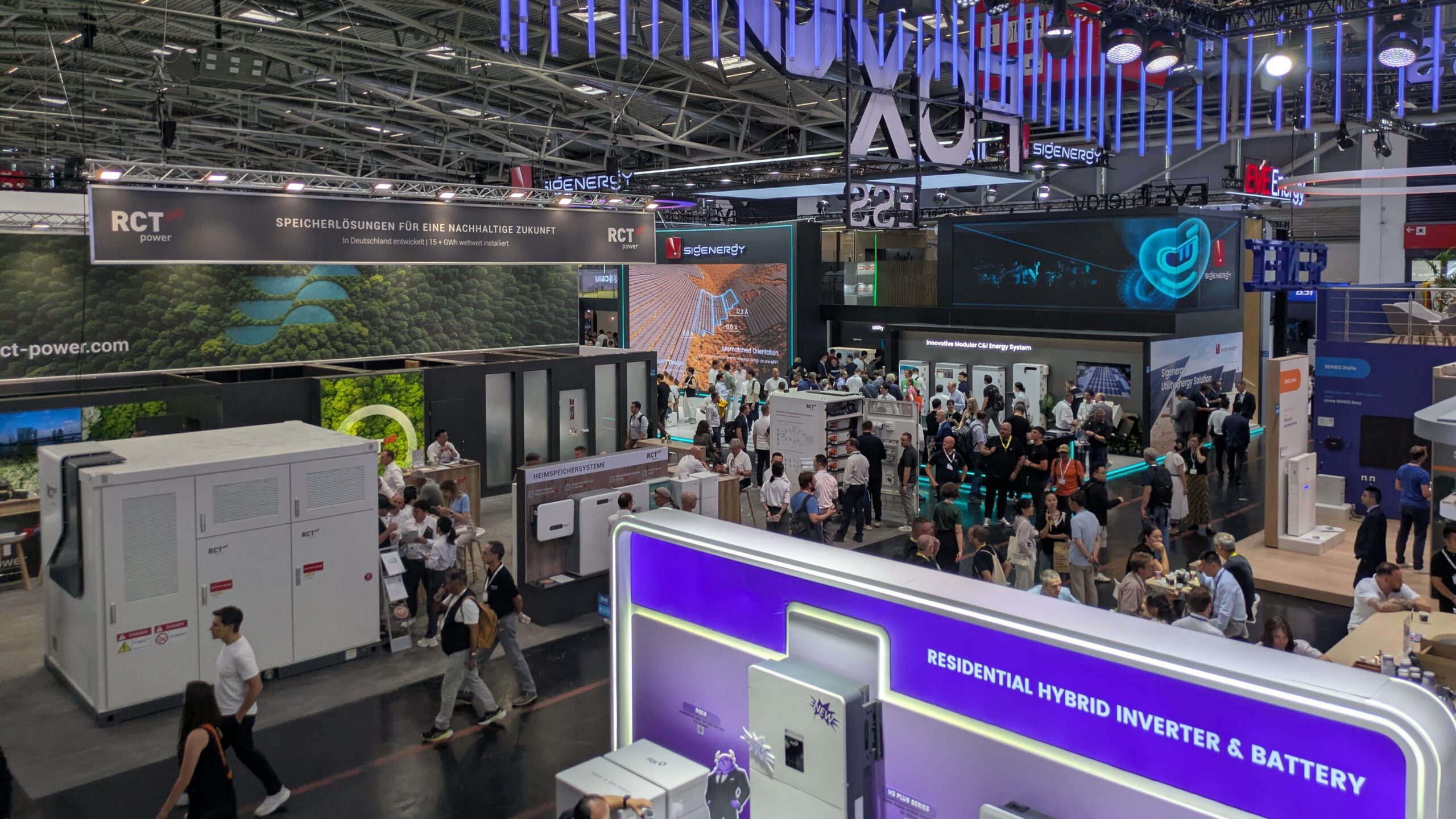
Imagine living in an apartment with no yard and no big roof — and still being able to power your home with sunlight. That future is arriving faster than many people realize, and it's one of the biggest stories coming out of Munich this week.
The smarter E Europe 2026 brought the continent's largest clean energy trade show to Messe Munich, the massive convention center in southern Germany. The event combined InterSolar Europe with three other energy conferences — ess Europe, Power2Drive, and EM-Power — all under one roof. Walking through the 18 exhibition halls, journalists and industry insiders discovered a transformation happening in real time: solar panels alone are no longer enough. Battery storage is now the star of the show.
A recent Bloomberg NEF study put it bluntly: battery storage is the future of home solar. In Germany, that future has already begun. Energy storage systems let homes and businesses save solar power for later, rather than wasting it when the sun is brightest. Utilities are installing massive battery farms to capture cheap solar energy during the day and release it after dark — helping grids run smoothly without relying as heavily on old-fashioned power plants.
The scale of competition at the event was staggering. Organizers reported that more than 28,000 companies exhibited at the show, many of them fierce rivals fighting for the same markets. Companies from Germany, China, South Korea, Turkey, Spain, Italy, and beyond were all showcasing similar products: solar panels, battery systems, EV chargers, and smart energy management tools. One attendee noted that many offerings looked remarkably alike, and experts expect some companies will merge or disappear as the market matures.
For everyday consumers, though, this competition is good news. Companies are working hard to make solar products that look better and work easier. Jackery, one of the companies showcasing its wares, displayed solar panels designed to look like traditional clay roof tiles, slate roofing, and even copper — so homes don't have to sacrifice style for clean energy. The company also introduced a new product called the SolarVault 3, specifically designed for apartment dwellers who want solar but lack space for bulky equipment. Other companies showed solar panels in various colors and textures, and some even demonstrated solar panels built into car hoods.
The balcony solar trend is particularly exciting. Detached homes in Germany have had access to rooftop solar for years, and commercial buildings have well-developed supply chains. But apartments? Those were mostly left out. Balcony solar with built-in storage changes that equation, bringing clean energy benefits to millions of urban residents who rent rather than own. As designs improve and installation becomes simpler, this market segment could explode.
So what does all this mean? It means solar energy is spreading far beyond the traditional homeowner with a pitched roof. From apartment balconies to sleek building facades, the clean energy revolution is finding new places to grow. And with thousands of companies racing to improve their products, the future just got a lot brighter.