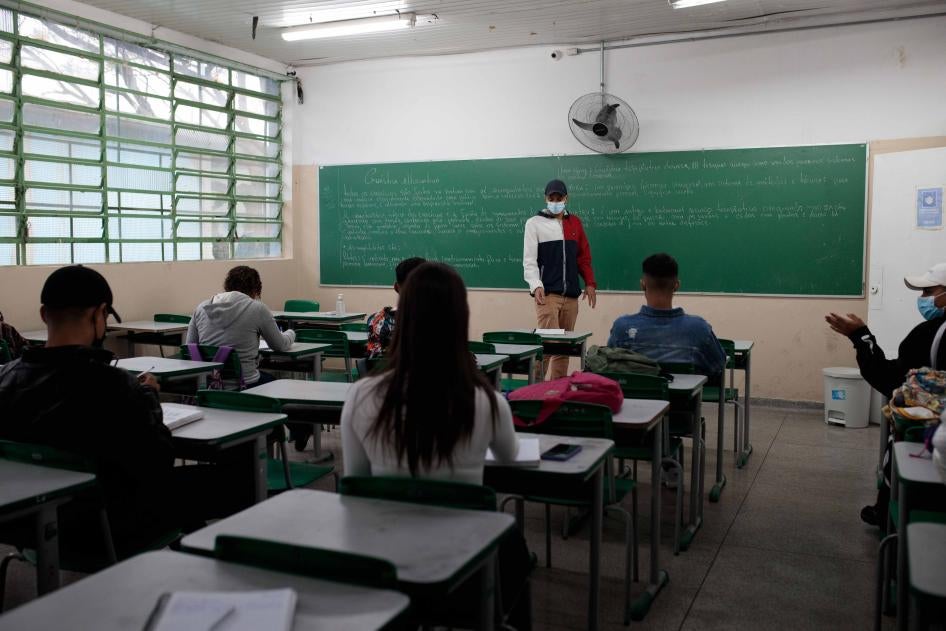
When a teacher in Florida closes their classroom door and decides not to discuss racism, the silence speaks louder than words. That silence—mandated by discriminatory laws and amplified by fear—leaves Black students without their history and LGBT students bearing psychological wounds that policy makers rarely see.
Education systems and justice systems are not separate worlds. They are interconnected pillars that either reinforce or erode a society's commitment to human rights. A new UNESCO report highlights this essential truth: when teachers can effectively educate children about justice and their fundamental rights, entire communities gain the tools to hold power accountable. But this only works when governments actively protect and support educators rather than restrict them.
The evidence is stark. In Brazil and multiple US states, discriminatory laws have censored school curricula, creating what Human Rights Watch describes as a chilling effect on teachers. The documented consequences in Florida alone reveal the real human cost: teachers complying with restrictions inflicted psychological harm on LGBT students, while suppressing racism education discriminated against Black students by erasing their history. Some teachers who refused to capitulate faced reprimand, investigation, termination, or harassment from parents and community members. Others abandoned teaching altogether, worsening already critical teacher shortages and leaving students doubly deprived.
The problem extends far beyond the classroom door. In Ecuador, schools have witnessed a quieter but equally devastating failure: inadequately trained teachers and staff have re-traumatized child survivors of violence. When educators lack proper training on sensitive topics—particularly sexual and reproductive health—they often avoid discussing them altogether due to stigma or fear. Students then graduate without the knowledge to recognize sexual violence or the confidence to report it. Ignorance becomes a cage.
These are not abstract problems. They are failures of institutional responsibility. Governments seeking to strengthen rule of law and build fairer societies cannot expect results by simultaneously hobbling the very people tasked with teaching rights and justice. Nor can they expect victims to navigate broken systems alone.
The solution requires investment, not restriction. Governments must fund and empower teachers to effectively educate about justice, rights, and human dignity—including difficult conversations about racism, identity, and bodily autonomy. Simultaneously, justice systems need equal commitment: judges, prosecutors, and police officers require training and support to uphold children's rights when they are violated. These are not competing priorities; they are complementary necessities.
Children must first know they have rights. But knowing is only the beginning. Access to justice and recourse when those rights are violated—that is what transforms knowledge into protection. When education and justice systems work together, backed by genuine government investment and political will, communities become stronger and societies more resilient. When either system is gutted by restriction or neglect, the most vulnerable pay the price first.