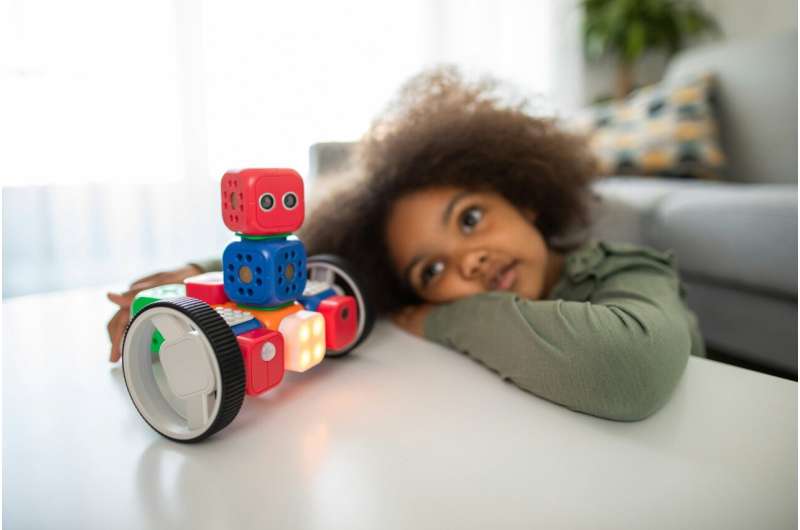
In 2025, approximately 22 million AI-integrated toys found their way into children's hands around the world—yet researchers know almost nothing about what those interactions are doing to developing brains. That striking gap between market speed and scientific understanding is now drawing urgent attention from ethicists, developmental psychologists, and policymakers, according to a new report in the Journal of Medical Internet Research.
The numbers reveal a phenomenon outpacing its own investigation: 22 million devices sold globally, with no substantial body of research examining how they shape young children's cognitive and socioemotional growth. While pediatric cochlear implant surgeon Dana L. Suskind notes that nurturing human talk and interaction is known to build a child's brain, it remains genuinely unclear whether AI-powered toys that mimic human speech deliver the same developmental benefits—or different ones entirely.
Some answers are beginning to emerge, and they're instructive. A study by the University of Cambridge's AI in the Early Years project examined Curio Interactive Inc's Gabbo, an AI-enabled toy designed for young children. The results were sobering: Gabbo missed the mark when it came to pretend and social play, activities that developmental psychologists consider crucial for early childhood growth. "The AI toy they selected missed the mark with pretend and social play," the study found—crucial developmental activities for its young users.
Beyond developmental questions, privacy advocates are raising alarms about an industry that operates, in the words of bioethicist Łukasz Kamieński, in a "totally unregulated area." Many AI toys come equipped with cameras, microphones, and facial recognition features but lack robust privacy safeguards. Researchers also warn of risks that these devices could engage minors in inappropriate conversations or subtly introduce misinformation and propaganda to young users.
Yet amid these concerns, a constructive consensus is taking shape. Developmental psychologist Emily Goodacre, who co-authored the Cambridge study, advocates for mandatory labeling on AI toys—detailing the underlying language models, training data, and safety guardrails—so parents and educators can make informed choices. Some educators remain optimistic that AI interactivity could eventually prove beneficial in the right context. For now, experts across disciplines are converging on a shared message: we need deeper understanding and stronger safeguards before these devices can be deployed safely at scale.
The good news, perhaps, is that the questions are being asked now—before AI toys become so ubiquitous that answers become obligatory rather than aspirational.