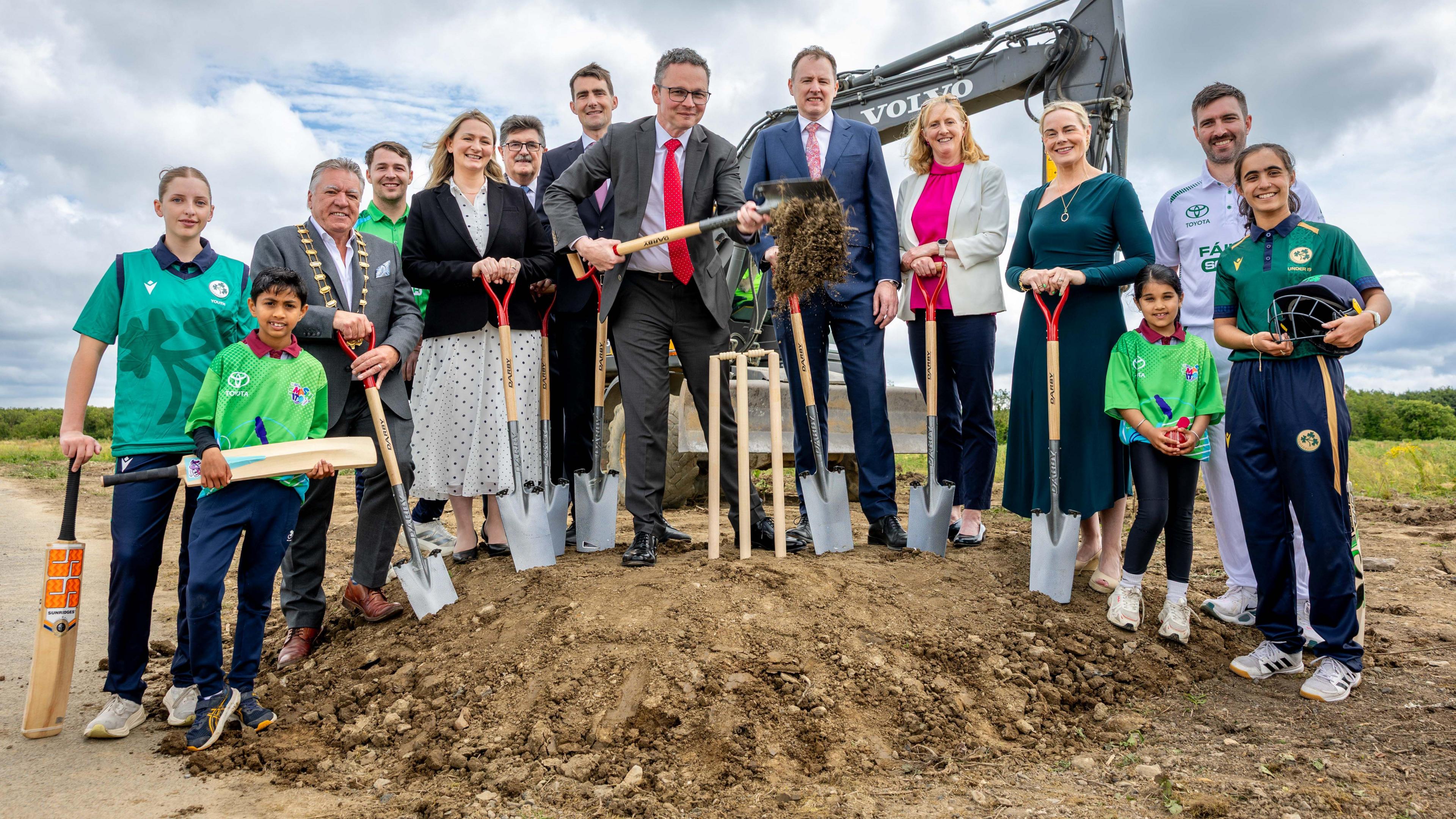
The first sod was turned at Abbottstown, Dublin, on a crisp Tuesday morning, shovels cutting into the soil where Ireland’s cricketing future will take root. With permanent seating for 4,240 and the capacity to swell to 12,000 for major events, Ireland’s first dedicated cricket stadium is more than a venue—it’s a declaration. Set to open in time for the 2030 Men’s T20 World Cup, which Ireland will co-host, the stadium marks a turning point for a sport long reliant on temporary setups and borrowed grounds. Cricket Ireland CEO Sarah Keane stood beside Sport Ireland’s Dr Úna May and chair John Foley, their boots on the site that will soon house a high-performance centre, pavilion, and a playing square to be installed this autumn—giving the pitch vital time to settle before international eyes arrive in 2030.
For decades, Ireland’s national teams have played across four grounds—Malahide, Clontarf, Stormont, and Bready—each requiring costly, short-term infrastructure for every series. That ends here. “When we open the doors on this facility, it will revolutionise how Cricket Ireland operates at every level,” Keane said, “and, in turn, impact Irish cricket from international to grassroots.” The stadium, built in two phases by construction firm John Sisk, is being shaped by global inspiration: design insights were drawn from Christchurch’s Hagley Oval and Hampshire’s Utilita Bowl. Even with minor design discussions still ongoing with architects FaulknerBrowns, Keane insists the project is “on track.”
The investment—backed by the Irish government through Sport Ireland and the Department of Sport—goes beyond cricket. The outfield will be shared with other sports during the off-season, ensuring year-round use and broader community access. Cricket Ireland holds a long-term lease on the land within the Sport Ireland Campus, cementing its place in the national sporting landscape. A white-ball series against England is already pencilled in as the inaugural international fixture, expected in late summer 2029. The symbolism is clear: Ireland is no longer borrowing its moment in the sun—it’s building its own stage.
The hunger is already evident. Cricket Ireland recently sold out two T20 internationals against India at Stormont, capping attendance at 4,500 despite demand soaring, especially with 15-year-old Indian batting prodigy Vaibhav Sooryavanshi set to debut. That surge in interest underscores what the Abbottstown stadium could unlock: consistent international fixtures, better player development, and a sport finally seen as homegrown, not imported. As John Foley put it, “Ireland has produced world-class athletes across many sports.的社会. This centre gives cricket the infrastructure to match that ambition.”