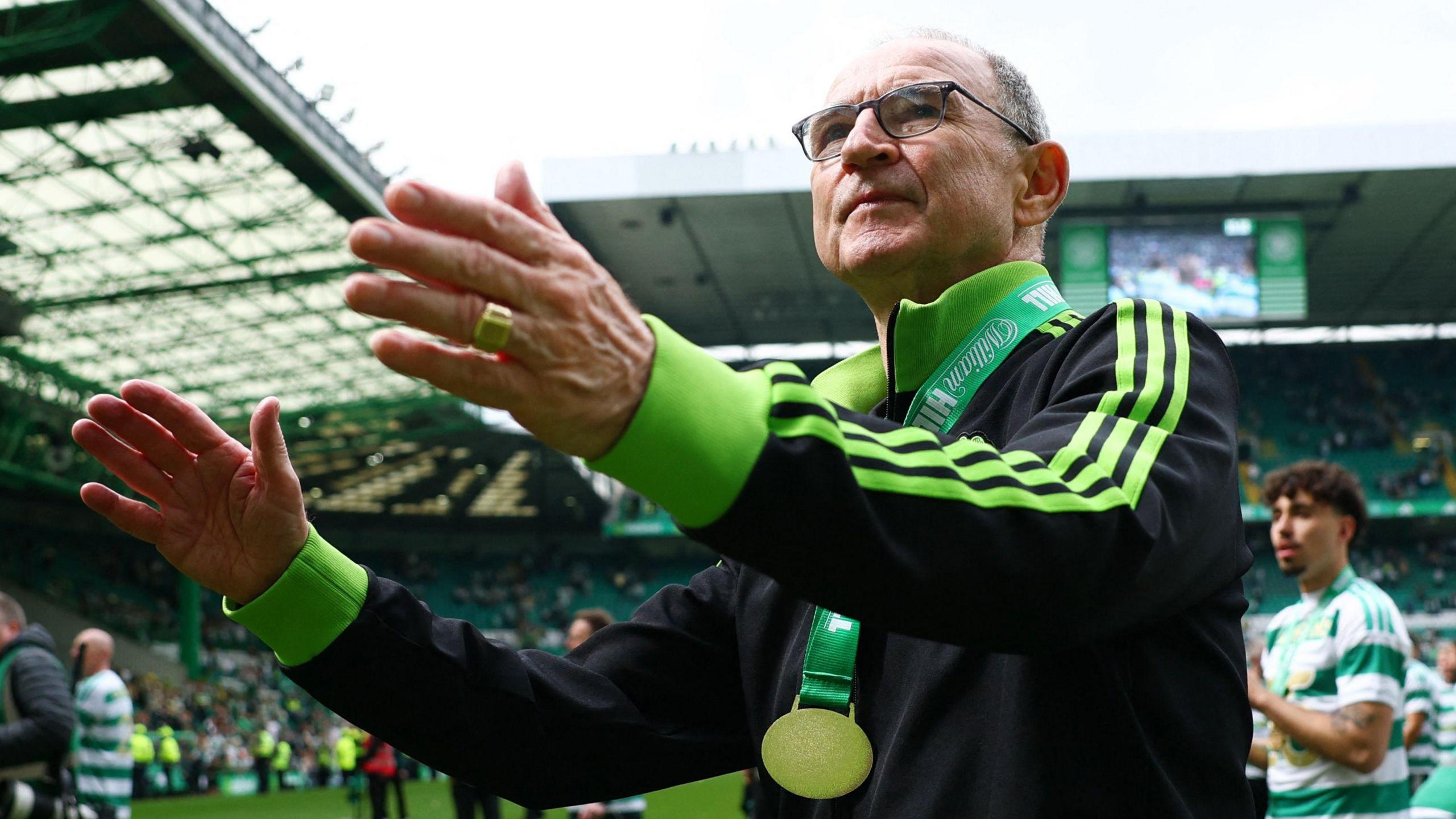
Martin O'Neill answered a phone call in October that would change everything—he had ten minutes to decide whether he wanted to return to Celtic, a club he had left two decades earlier. At 73 years old, the Northern Irish manager had been enjoying retirement as a radio pundit, yet Dermot Desmond's offer was irresistible: the club was in crisis following Brendan Rodgers' departure, the fanbase was in revolt over perceived transfer neglect, and a devastating Champions League play-off loss to Kazakhstan's Kairat Almaty had left morale shattered. O'Neill said yes, and in doing so, transformed a fractured club into champions.
What unfolded over the following months was nothing short of remarkable. In his first match in interim charge against Falkirk, O'Neill delivered a commanding 4-0 victory that set the tone for everything to follow. Over his initial five-and-a-half-week spell, he orchestrated five straight league wins, erasing an eight-point gap to Hearts and dispatching Rangers in the League Cup semi-finals. When Wilfried Nancy's ill-fated 33-day reign ended in disaster—six losses in eight games—O'Neill returned without hesitation, picking up exactly where he had left off.
The numbers tell the story of a manager who still possesses an almost magical touch. O'Neill has averaged 2.57 points per game this season, by far the best record of any manager in Scotland's top flight. That consistency, combined with his presence and pedigree, transformed not just the results but the atmosphere at Celtic Park itself. Working alongside coaches Shaun Maloney and Mark Fotheringham, O'Neill stripped things back to basics, prioritizing winning over the exhilarating football that had defined previous title runs under Ange Postecoglou and Brendan Rodgers.
The impact extended far beyond statistics. Captain Callum McGregor, reflecting on a season that culminated in Celtic's 14th league title in 15 years, articulated what O'Neill had accomplished: "He's pulled the club back together when it was fractured." Defender Alistair Johnston was more direct: "He is a winner. Build him a statue, it's as simple as that. He just finds a way to win." The Scottish Cup final against Dunfermline Athletic awaits, offering one final chapter to a season that seemed impossible just months earlier.
For younger Celtic supporters, O'Neill represents continuity with legend—a fourth league triumph under his stewardship, stories now to match the folklore of his previous three. Even the smallest details carried symbolic weight: when O'Neill left after his first spell, he took the tracksuit he had worn on the touchline as a memento. When he returned, so did the work clothes. Now there is a trophy alongside them.
What remains uncertain is whether the veteran manager has the appetite to continue. When asked directly about his future following the final-day victory over Hearts, O'Neill deflected with characteristic candor: "I genuinely don't know. Has anybody talked to me? No, but I wasn't expecting that. There will be time for conversations after the cup final. I'm pretty old so it does take it out of you." His record speaks eloquently to his ability; whether he chooses to pursue another chapter at Parkhead is a question only O'Neill can answer.