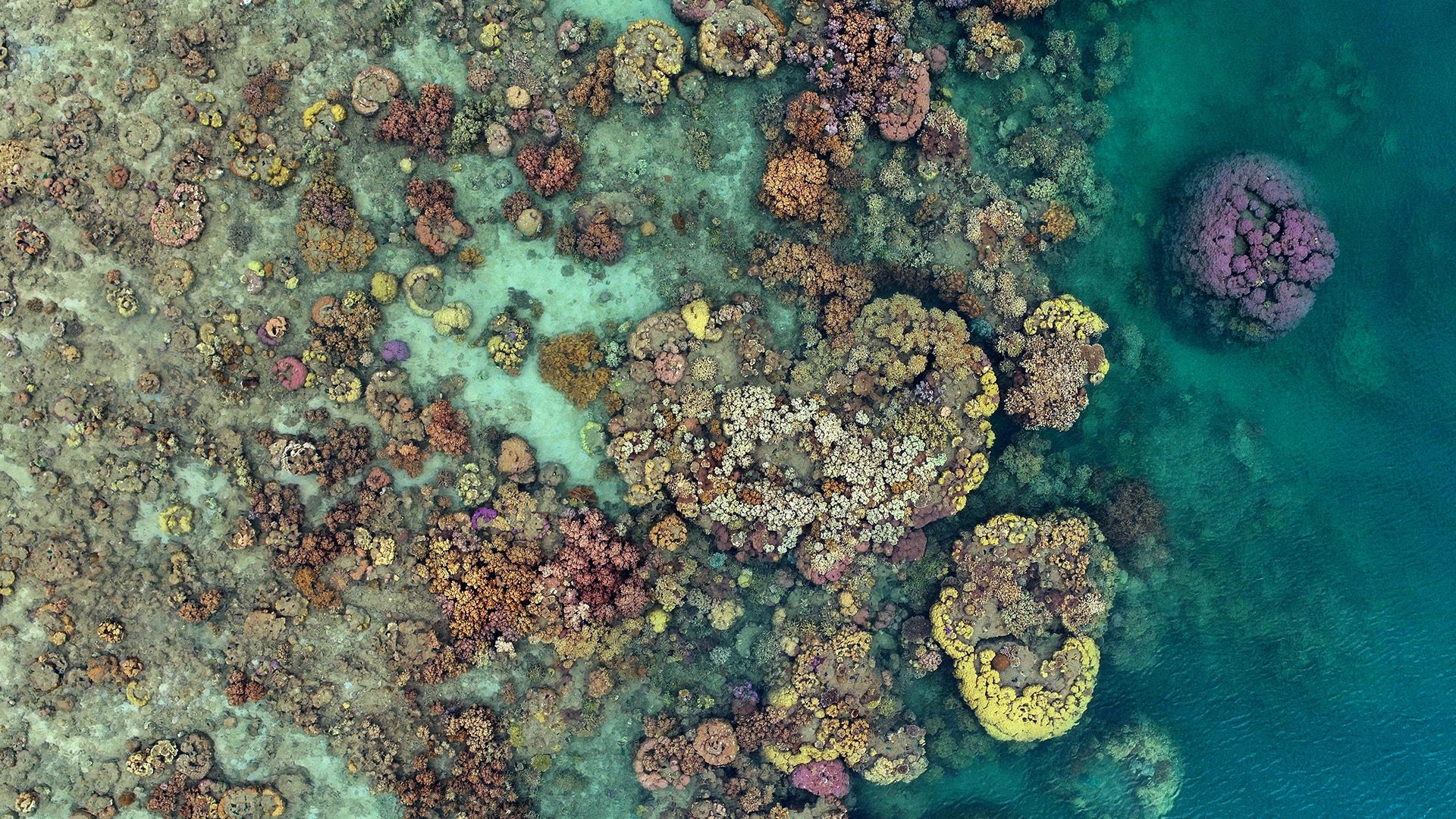
After years of heartbreaking headlines, the Great Barrier Reef just posted its best number in 36 years — coral cover climbed back to 36%. But walk into the lab of Konrad Hughen, a scientist at the Woods Hole Oceanographic Institution, and you won't hear anyone popping champagne corks. The recovery, it turns out, is real but fragile — and the type of coral doing the bouncing back matters more than you'd think.
Here's why. In 2022, the Australian Institute of Marine Science reported the highest coral cover across two-thirds of the Great Barrier Reef in more than three decades. That came after bleaching events in recent years that hit nearly 90% of Australia's corals)Skip. It would be easy to read this as a victory. "There's no question this is positive news — these data show reefs can recover rapidly from damage," says Hughen. Then he delivers the catch: the reef is still under serious threat.
The problem is which corals are leading the comeback. Most of the new growth is a weedy, fast-growing type called Acropora — think staghorn, elkhorn, and tabletop corals. They're prolific, sure, but they're brittle. A single cyclone can snap them apart, and storms are expected to get more frequent and intense as the planet warms. Worse, Acropora happens to be a favorite meal for crown-of-thorns starfish, a predator spreading comfortably through the reef's warming waters.
Hughen compares the shift to a forest. "Instead of a diverse, old-growth forest, [the reef] may now be like a monoculture of planted pulp trees." Less diversity means fewer kinds of homes and feeding grounds for fish and marine life. The parrotfish — a valuable grazer that keeps algae from smothering corals — has already declined across the northern third of the reef following bleaching that began in 2016.
So should we cheer or not? That depends on how you define "healthy." "Health depends on your perspective," Hughen says. A coral biologist might celebrate higher coral cover while a marine chemist spots troubling stress hormones on the same reef. Hughen and his colleagues on the Reef Solutions Initiative are building better diagnostic tools by blending many clues at once — soundscapes, microbial communities, biochemical signals, and biodiversity levels. They're trying to create baselines for what a truly healthy reef looks like.
Measuring all this takes serious effort. The reef spans more than 134,000 square miles, bigger than the U.K., Switzerland, and Holland combined. Besides aerial surveys, scientists use "manta tows," where a snorkeler is towed behind a boat to eyeball coral, bleaching, and predators.
The dip from a historic low of 27% back up to 36% is meaningful — it shows reefs can heal on their own if given a break. But the window may be closing: the Intergovernmental Panel on Climate Change projects a 70–90% die-off of global corals if the world hits 1.5°C of warming. The reef has always had natural ups and downs. The question is how low the lows go — and whether we act before the next sucker punch lands.