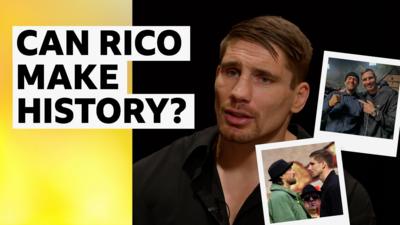
At the foot of one of the world's most enduring monuments, two combat sports titans will step into the ring on May 23 to settle something that has never been settled before. Rico Verhoeven, the former kickboxing world champion, will face Oleksandr Usyk, the unified boxing champion, in a historic cross-sport matchup staged at the Giza pyramids in Egypt—a venue as audacious as the fight itself.
The significance of this moment extends beyond the novelty of its setting. For decades, boxing and kickboxing have existed in separate spheres, with champions rarely crossing over to test themselves against the elite of another discipline. Verhoeven's journey to this fight is itself a testament to how far the sport has come in breaking down those barriers. Once relegated to niche audiences, kickboxing now commands enough respect that its greatest practitioners can challenge boxing's most dominant champions on a global stage.
Verhoeven carries the weight of kickboxing's reputation into this encounter. Having dominated the heavyweight division in his sport, he arrives at Giza not as an underdog seeking a payday, but as a champion intent on proving that his skills translate across the ropes. Usyk, meanwhile, brings the unified heavyweight title and a record that speaks for itself—a boxer at the absolute peak of his powers, undefeated and seemingly invulnerable.
What makes this moment truly remarkable is how it came about. The path to this matchup is unconventional: Verhoeven's connection to action star Jason Statham—a friendship born from their shared world of combat and athletic pursuits—helped open doors that might otherwise have remained closed. In a sport and industry often governed by traditional hierarchies and gatekeeping, this personal connection became the bridge between two worlds. It's a reminder that sometimes history is written not through formal channels alone, but through relationships and the willingness of fighters to step beyond their comfort zones.
The Giza pyramids provide more than just a spectacular backdrop; they offer a stage worthy of this unprecedented contest. Fighting at one of humanity's greatest architectural achievements transforms the event from a mere sporting spectacle into something with historical resonance. Athletes from both camps will be acutely aware that whatever happens in that ring, they will have been part of a moment that defines an era in combat sports.
For Verhoeven, the stakes are clear. He has said he intends to "write history" at Giza—not merely to participate in a historic event, but to author its outcome with his own hands. Whether that history will be written in victory or defeat remains to be seen, but the very fact that this moment exists at all signals a shift in how combat sports are evolving. The rigid boundaries between disciplines are eroding, replaced by genuine competition between the world's best fighters, regardless of the sport that shaped them.
The fight will be broadcast live, with BBC Radio 5 Live providing commentary from 22:00 BST on Saturday, making this historic moment accessible to audiences worldwide. As May 23 approaches, the question no longer is whether such a matchup could happen—it's what both men will do now that it's here.