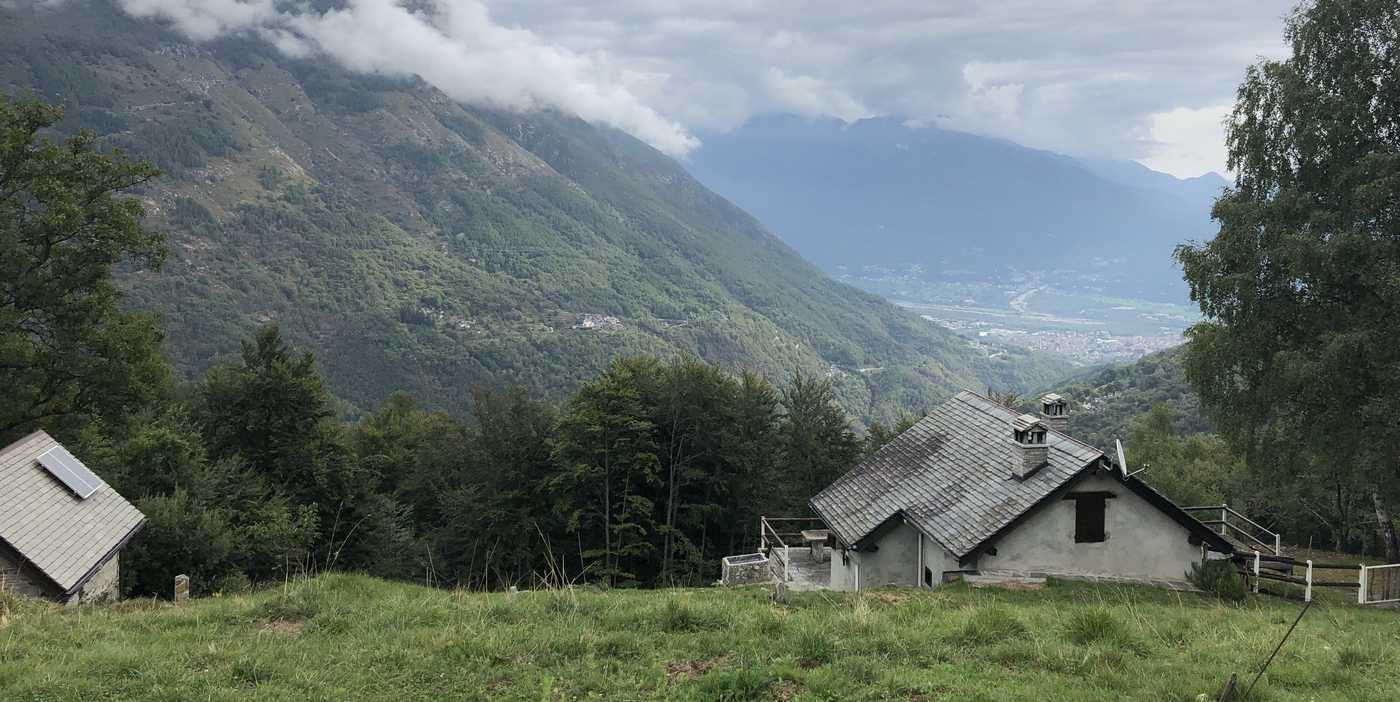
In the tiny municipality of Marcetelli, high in the Rieti Province, 94 percent of the land is blanketed by trees. The forests there do what no industrial plant could: they filter the water, purify the air, store carbon, and hold the soil in place against erosion. Economists from the National Union of Mountain Municipalities calculated that replacing all those natural functions with human-made systems would cost some $9.5 million every year. For Marcetelli, those trees are worth their weight in gold.
It turns out the rest of Italy is catching up. For the first time since the Middle Ages, Italy's forests now stretch across more land than its agricultural fields. As of 2020, woodland covers 60,000 square miles of the Italian Peninsula — a milestone only just revealed by a new report from the National Union of Mountain Municipalities and Entities. The reforestation is concentrated in mountain regions, where forests have been gradually reclaiming abandoned farmland for decades.
The numbers tell a striking story. The Alps, the pre-Alpine hills, and the Apennines — along with the 3,598 municipalities nestled within them — account for three-quarters of Italy's total forested area. Yet these same regions hold just 13.5 percent of the country's population. In other words, the people who live there are doing more than just watching the woods grow; they're benefiting from them in ways that defy easy measurement.
Perhaps the most unexpected benefit is a reversal of Italy's long-standing rural exodus. For two decades, young people fled mountain towns for the bright lights of Rome, Milan, and Naples, leaving behind ghost villages and fields that hadn't seen a plow in years. But since 2021, 932 Italian municipalities have recorded a net migration rate of 10 per 1,000 inhabitants — a figure more typical of booming urban centers than sleepy hilltop communities. Many of these municipalities are tucked inside heavily forested zones, suggesting that the promise of woodland living has quietly become a draw.
The wildlife is noticing too. As forests thicken, corridors open for species like the Marsican brown bear and the Apennine wolf, both endangered, both slowly reclaiming territory they lost generations ago. Meanwhile, populations of wild boar and red deer are expanding, supplying Italy's celebrated game restaurants with local meat and giving hunters new purpose in lands that once seemed destined for emptiness.
None of this means Italy's agricultural heritage is vanishing entirely. The report acknowledges that much of this new forest land was previously worked by farmers and herders whose families had tended it for centuries. But economists argue that when you zoom out, the math makes sense: demand for nature-close living has risen while demand for produce from marginal pastures has softened. It's a market signal, not a tragedy.
For travelers dreaming of walking beneath ancient canopies, the data points to some clear destinations. Of the five most-wooded municipalities in Italy, two lie in the province of Perugia and two more in Udine — each a gateway to some of the most unspoiled woodland in Europe. Whether through sustainable forestry, eco-tourism, or simply the quiet pleasure of watching a forest grow where a field once stood, Italy is writing a new chapter in its relationship with the land.