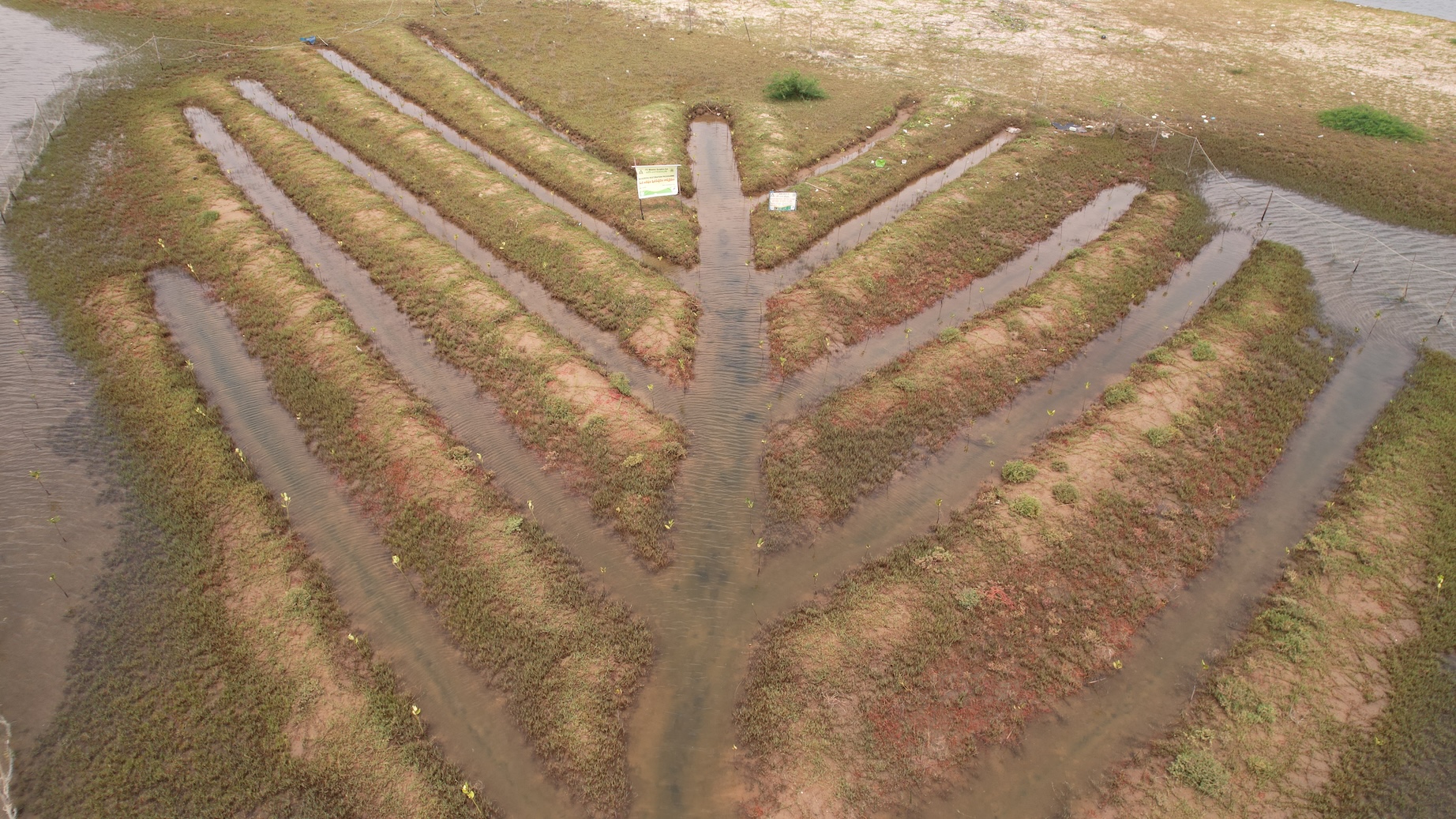
On a vulnerable stretch of Andhra Pradesh coastline, where a deadly tsunami once swallowed entire villages, mangrove seedlings are now taking root—and with them, a quiet revolution in how communities protect themselves from climate chaos.
ITC Ltd's mangrove restoration programme, launched in 2023, reveals something crucial about ecological action: when you protect one species and its habitat, you heal an entire ecosystem. In Andhra Pradesh, the company has restored nearly 1,500 acres of these salt-tolerant forests while simultaneously safeguarding over 250 Olive Ridley sea turtle nests. The numbers tell a story of scale and care: 23,700 turtle hatchlings have been released into the ocean, their survival secured by six beachside hatcheries managed by local youth and fishers trained as Sea Turtle Protection Forces.
This matters because mangroves are nature's climate insurance. Globally recognized as blue carbon ecosystems, they store between 7.5 and 10 times more carbon per acre than tropical forests—making them among Earth's most powerful carbon sinks. India's mangroves alone support over 4,000 species, from 920 plant varieties to more than 3,090 animal species, creating irreplaceable biodiversity hotspots. Yet these ecosystems face mounting pressure from cyclones, sea level rise, and coastal flooding—threats that will only intensify as climate change accelerates.
The Olive Ridley turtle, Earth's smallest sea turtle species, depends entirely on healthy mangrove ecosystems for survival. Classified as vulnerable by the International Union for Conservation of Nature, these creatures are known for their spectacular mass nesting events. By protecting their nesting grounds, ITC's programme preserves not just one species but entire marine food webs. Healthier coastal ecosystems mean more fish, which translates directly to improved livelihoods for fishing communities who have witnessed firsthand what happens when natural barriers vanish.
In villages like Yetimoga in Bapatla district, residents remember the 2004 tsunami—a scar that makes mangrove restoration deeply personal. Each restored acre becomes a living memorial and a practical shield against future disasters. The programme works because it is rooted in community leadership. Trained local youth and fishers patrol beaches during nesting season, monitor turtle activity, and manage hatcheries. This isn't conservation imposed from above; it's ecological stewardship born from lived experience.
ITC's approach extends far beyond this single initiative. The company's broader biodiversity programme, executed in collaboration with state governments and partners like Tree Foundation, now covers nearly 7.8 lakh acres (about 315,000 hectares) across 10 Indian states. By 2030, under its Sustainability 2.0 agenda, ITC aims to expand this to 1 million acres—a target that frames biodiversity not as a nice-to-have but as essential ecological infrastructure.
Prabhakar Lingareddy, ITC's Executive Vice President for Social Investments, emphasizes the philosophy underpinning this work: "Global environmental goals can only be achieved through strong local action and deep community participation." It's a reminder that climate resilience isn't built in boardrooms—it's built on beaches, in village meetings, and in the hands of communities protecting the ecosystems they depend on.
The hatchlings entering the sea today carry forward a future for both turtles and the people who share their coast.