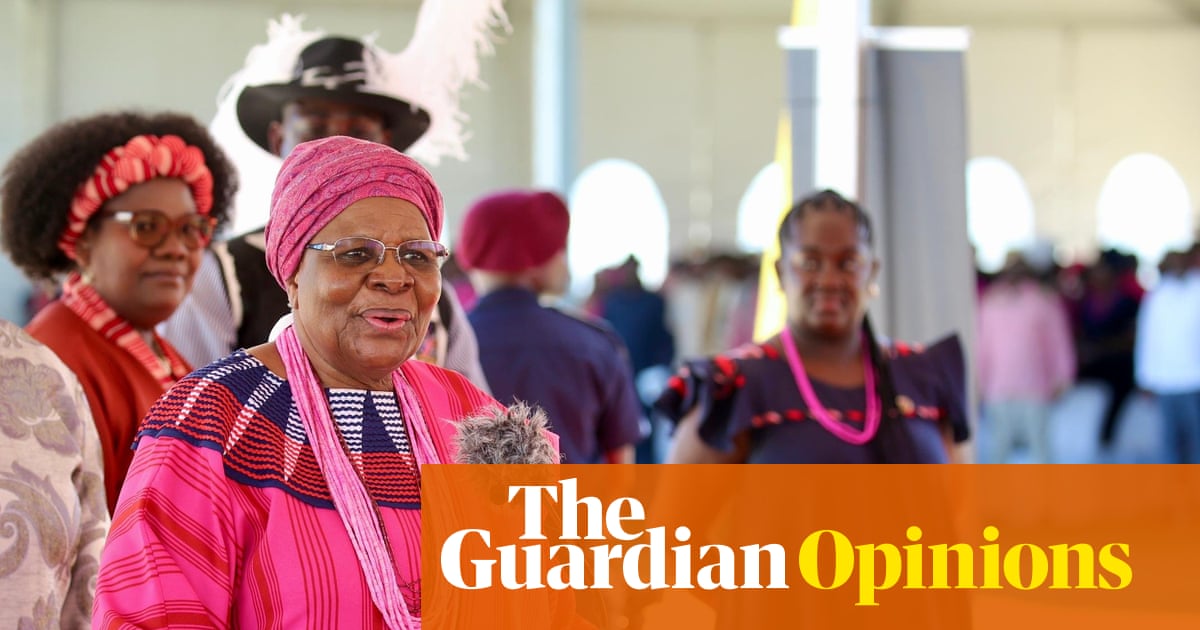
An AI-generated speech attributed to Namibia's President Netumbo Nandi-Ndaitwah swept across Africa and the Caribbean last year, travelling like a spark through social media—denouncing corruption, condemning foreign exploitation, and declaring that Africa's resources belonged to its people, not multinational corporations or closed-door politicians. It was fierce, defiant, unapologetically sovereign. Yet within days came a revelation: the president rejected it as a fabrication, an artificial creation with no trace of her voice or hand.
The speech's viral spread tells us something profound about the world's current moment. It was not embraced because people believed it was real, but because it articulated truths many citizens feel their actual leaders are too afraid or too compromised to speak aloud. The resonance exposed a leadership vacuum that stretches far beyond Namibia—a global hunger for moral clarity and the language of genuine decolonisation.
Decolonisation, in this context, means far more than the formal end of colonial rule. It speaks to the ongoing struggle to reclaim political agency, economic sovereignty and intellectual independence from the hierarchies that colonialism left behind. This is not a marginal concern. It sits at the centre of contemporary politics across much of Africa and the Caribbean, where formal independence often masked the continuation of colonial power structures in new forms.
The consequences are visible in recent events. In Jamaica, a parliamentarian was prevented from speaking in her native language—while foreign languages were accommodated in the nation's highest democratic chamber. A small act, perhaps, but symbolically devastating: the hierarchy remained even as the flag changed. Across the region and continent, governments have entered new security and economic arrangements shaped by geopolitical competition, negotiated from fundamentally unequal positions where foreign military infrastructure expands and economic agreements favour outside powers over local interests.
What makes this moment distinctive is that genuine leaders—figures as different as Burkina Faso's Ibrahim Traoré and Barbados's Mia Mottley—have begun to reclaim the language of sovereignty and self-reliance. Mottley has emerged as one of the Caribbean's most influential voices on debt injustice, climate vulnerability and global inequality. Traoré's rhetoric has tapped into widespread frustrations over dependency, foreign military presence and economic control, resonating particularly with younger Africans increasingly sceptical of inherited political arrangements.
These leaders understand something vital: sovereignty is not merely territorial. It is political, economic and psychological. It demands the moral courage to ask difficult questions that powerful nations would prefer left unasked. When Trump invoked the Monroe Doctrine and embraced transactional diplomacy, he exposed something many preferred not to acknowledge: the colonial instincts—control, extraction, strategic obedience—remain startlingly familiar and readily deployed when great powers feel their interests threatened.
The fake Namibian speech resonated not because it offered illusions, but because it echoed the voices of the 20th century's greatest anti-colonial thinkers—CLR James, Walter Rodney, Frantz Fanon, Kwame Nkrumah, Patrice Lumumba, Thomas Sankara—all of whom understood that true liberation required moral courage as much as political independence. That an artificial speech could move millions suggests the world is waiting for leaders willing to speak these truths as lived reality, not clever fiction.