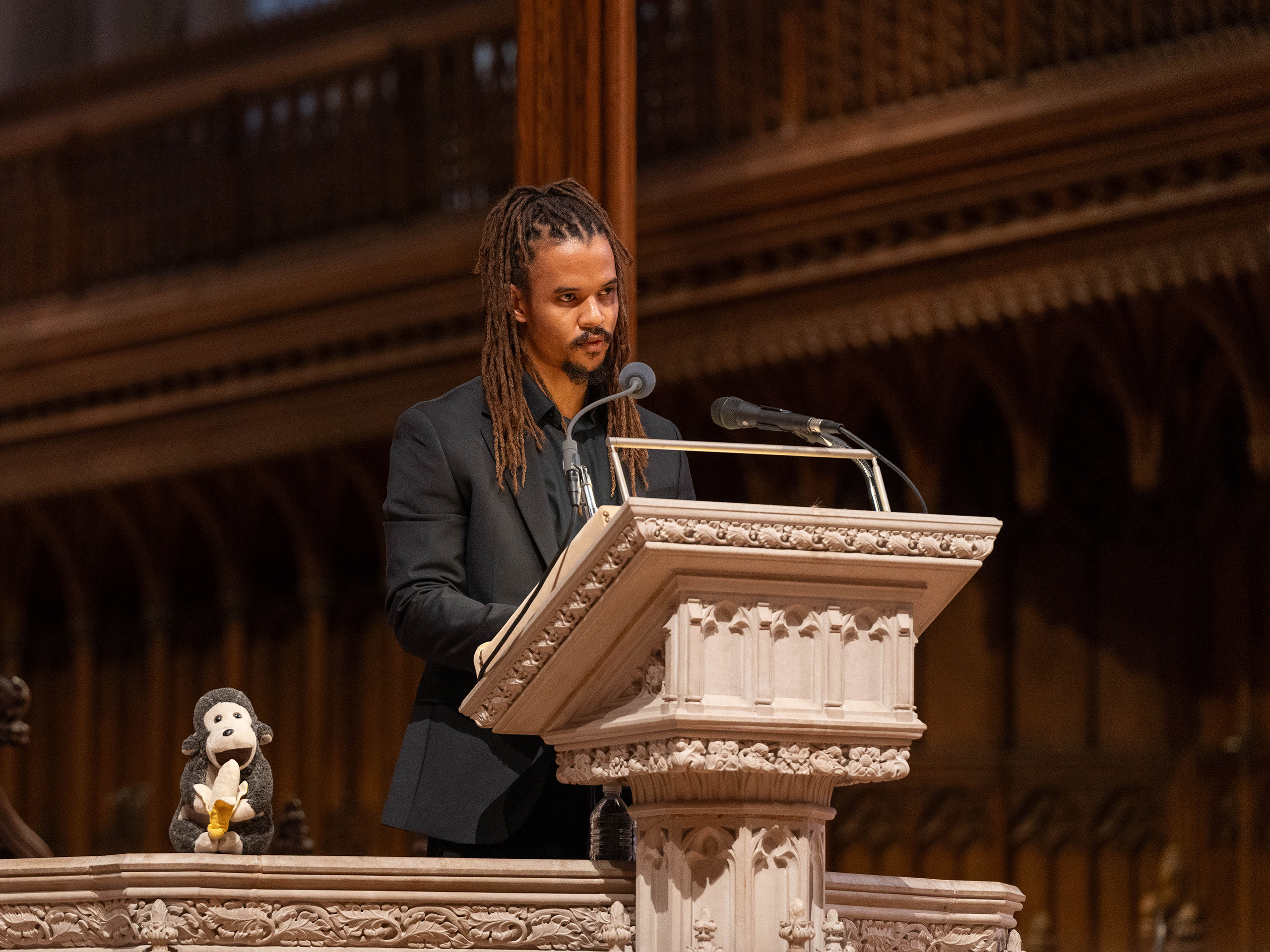
Five months after Jane Goodall's death, her grandson Merlin Van Lawick stood at the ChangeNOW environmental forum in Paris carrying something both public and personal: not a memorial, but a living philosophy of how to move forward when the future feels uncertain.
Goodall's greatest gift to the world was not a warning—it was a definition of hope. As Van Lawick describes it, hope is not a feeling that descends upon you. It is a discipline. His grandmother used the image of a dark tunnel with a light at the end. The light does not come to you. You have to crawl toward it, over obstacles and under them. "Hope is rooted in action," he said—a phrase that carries far more weight when you consider the decades of work behind it.
Goodall's career began with field research at Gombe in Tanzania, where she fundamentally changed how science understood chimpanzees, seeing them not as subjects but as individuals with distinct personalities and lives. That insight rippled outward into everything that followed: a lifetime spent asking people to recognize animals as individuals, ecosystems as living communities, and young people not as passive observers of the future, but as participants in creating it. The message was radical because it was simple. It did not demand grand gestures. It demanded attention.
In Van Lawick's telling, what made Goodall's influence so durable was not prescription but example. She did not push people into service. Instead, she made them aware of the consequences of their choices and then left the decision to them. Even with her own grandchildren, the pressure was gentle. Van Lawick once dreamed of becoming a footballer. His grandmother told him she thought he would become a conservationist. She did not insist. The seed did its own work.
This distinction matters now more than ever. The conservation movement does not lack warnings. Scientists have sounded alarms with increasing urgency for decades. What the movement often struggles with is how to keep people engaged without overwhelming them, how to make the future feel neither inevitable nor hopeless. Goodall's answer was not optimism in the sentimental sense. It was agency—the simple power to act—practiced in small acts and carried by many people.
That philosophy became crystallized in Roots & Shoots, the youth program Goodall founded, which has become central to how her legacy continues. The program's premise is both simple and demanding: young people should identify problems in their own communities and act on them. The scale can grow, but the starting point is always local. A child plants a tree. Protects an animal. Cleans a stream. Speaks to neighbors. None of these acts is sufficient by itself. That is not the point. The point is that each action creates an opening—a chance for others to see what is possible, and to make their own choice to act.
Despair asks nothing of us. It is a kind of surrender. Hope, as Goodall taught it, requires something harder: the belief that our choices matter, and the willingness to make them anyway, knowing that small acts ripple outward in ways we may never fully see.