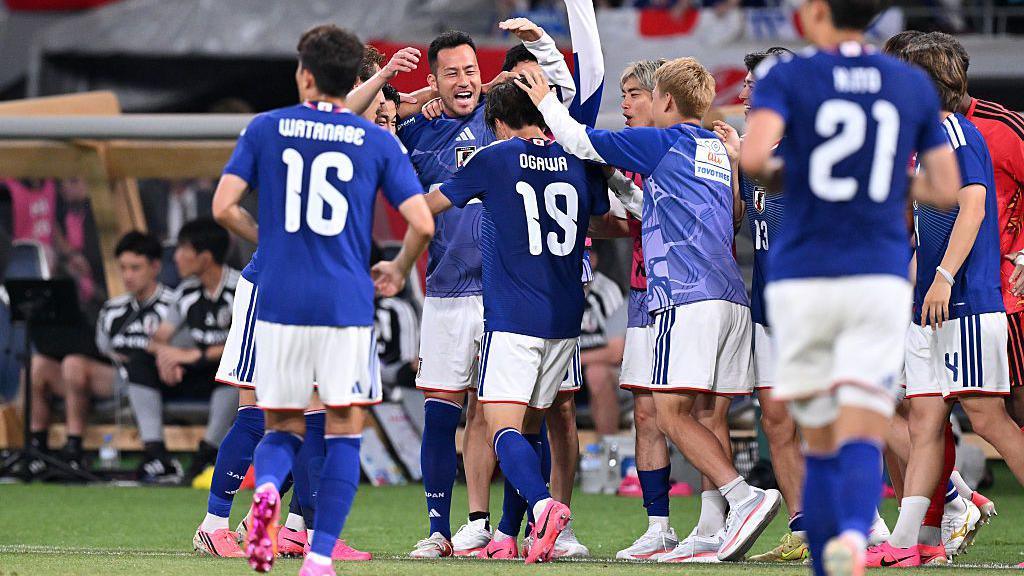
Japan's Koki Ogawa rose above Iceland's defence in the 87th minute and planted a header past the goalkeeper — a routine finish that would have been forgotten within days, except for one thing: his team had just engineered a world football first by scoring while the opposition had only 10 players on the pitch, courtesy of a rule that didn't exist a week earlier.
This moment during a friendly on Sunday in Japan reveals how profoundly international football is reshaping itself ahead of this summer's World Cup. The International Football Association Board (Ifab) has introduced a time-limited substitution rule designed to combat the deliberate stalling tactics that have become standard in modern matches. Under the new protocol, players being substituted have just 10 seconds to leave the field at the nearest point. Fail to do that, and the substitute cannot enter play for at least one minute until the next stoppage — forcing their team to soldier on with only 10 players.
Iceland discovered this harsh new reality when winger Isak Thorvaldsson was unable to come on due to the substitution delay. While Iceland's 10 players scrambled, Ogawa's header found the net 1 minute and 54 seconds later, securing Japan a 1-0 victory and a valuable lesson in the rulebook weeks before facing the Netherlands in their World Cup opener.
Japan's manager Hajime Moriyasu emerged from the match visibly focused on the implications. "Under the new rules, players won't necessarily be able to get back on the pitch as quickly as before. That's something we need to be mindful of," the 57-year-old explained. "Whether it's during substitutions or in other moments, we need to avoid creating openings that give the opponent a chance." His warning signals that this isn't just a footnote to the rules — it's a tactical consideration that could reshape how teams manage their benches and personnel throughout matches.
The substitution countdown is one piece of a broader overhaul aimed at eradicating time-wasting. Throw-ins now have a five-second countdown; goal-kicks face the same pressure. Players treated by physiotherapists must sit out for one full minute. Fifa referees' chief Pierluigi Collina hopes these changes will shrink stoppage time beyond the infamous 14 minutes that dragged out the 2022 World Cup. Every half will include a guaranteed three-minute hydration break — a new pocket of time that Moriyasu stresses demands crisp communication. "In those three minutes, we have to organise the key points we need to get across and communicate them clearly to the players," he said. "I felt that how well we use those three minutes could have a major impact on the outcome of matches."
For Japan, Sunday's friendly provided more than just a win. It offered a dress rehearsal in an era where the game's rhythm is being recalibrated — where a moment of inattention at the bench can cost your team a chance to respond. As they prepare to face the Netherlands on June 14, then Tunisia and Sweden, Japan's squad now carries that hard-won understanding. The new rules aren't just changing football's rules; they're changing how managers think.