When the SLIM lander touched down near the Shioli crater on the Moon in January 2024, it carried a passenger no bigger than a tennis ball—and that tiny robot just might change how humanity explores space forever.
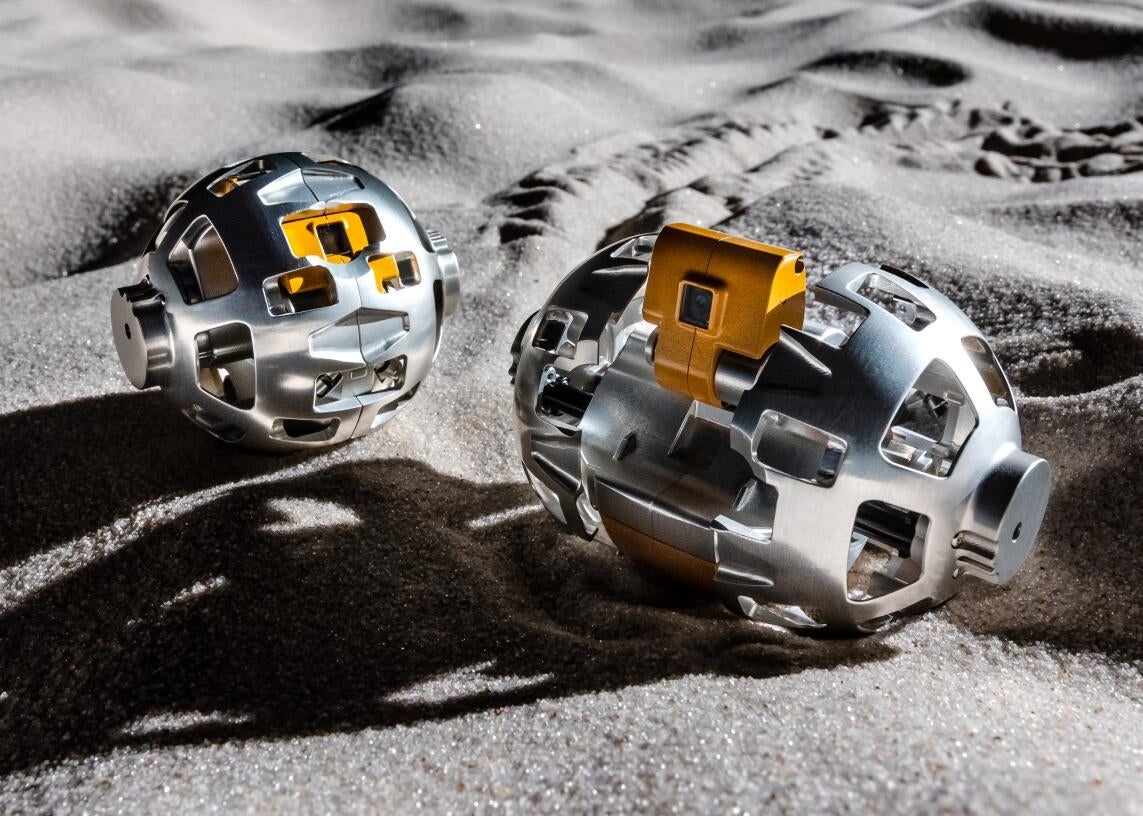
LEV-2, nicknamed SORA-Q from the Japanese words for space and sphere, became the first transformer-inspired rover to autonomously navigate another world. Developed by Japan's space agency JAXA in partnership with Sony and toymaker TOMY, the 3-inch-wide sphere weighs just eight ounces. Upon landing, its shiny metal shell splits open and its two hemispheres unfurl into wheels that spin around a central shaft, revealing a front-facing camera and stabilizing tail.
The little rover operated for more than 100 minutes, traveling an estimated 24 meters across the lunar surface and transmitting images back to Earth. But SORA-Q didn't just send photos for novelty's sake—its observations proved genuinely useful. One of the images showed the SLIM lander sitting at an odd angle with its solar panels facing the wrong direction, giving ground teams critical information to diagnose the spacecraft's operational status. Around seven minutes after activation, the rover had moved roughly five meters from the lander, selected the two best images from 12 it had captured, and relayed them home.
The achievement, detailed in a paper published in Science Robotics, demonstrates something bigger than a single mission's success. Traditional lunar rovers are expensive, heavy, and risky to lose. By contrast, swarms of small, cheap robots could cover more ground, access tricky terrain, and provide redundancy if one fails. "Although the capabilities of an individual small rover are inherently limited, the results highlight the potential of such platforms as independent explorers, capable of accessing environments beyond the reach of a primary large spacecraft," the researchers noted.
Designing for the Moon's harsh environment meant solving tricky problems. Lunar dust, or regolith, is fine and powdery—hard for small wheels to grip. The team offset the wheel rotation point slightly from center, creating a lopsided spin that lifts the rover slightly on each turn, helping it dig in and maintain traction. Power and mass constraints forced the engineers to equip SORA-Q with a low-power chip, so the rover uses a simple but clever image-processing trick: it detects the SLIM lander's distinctive gold insulating material and prioritizes photos where that appears prominently in frame.
Because SORA-Q is too small to communicate directly with Earth, it paired with a hopping robot called LEV-1 that could transmit data. The system wasn't perfect—some data was lost due to LEV-1's hopping disrupting the wireless link and shifting antenna orientations. Still, it worked well enough to prove the concept.
This demonstration suggests a future where fleets of pint-sized explorers scout terrain ahead of human landings, investigate sites too risky for large rovers, and build redundancy into ambitious missions. The Moon is about to get a lot more crowded—and a lot more curious.