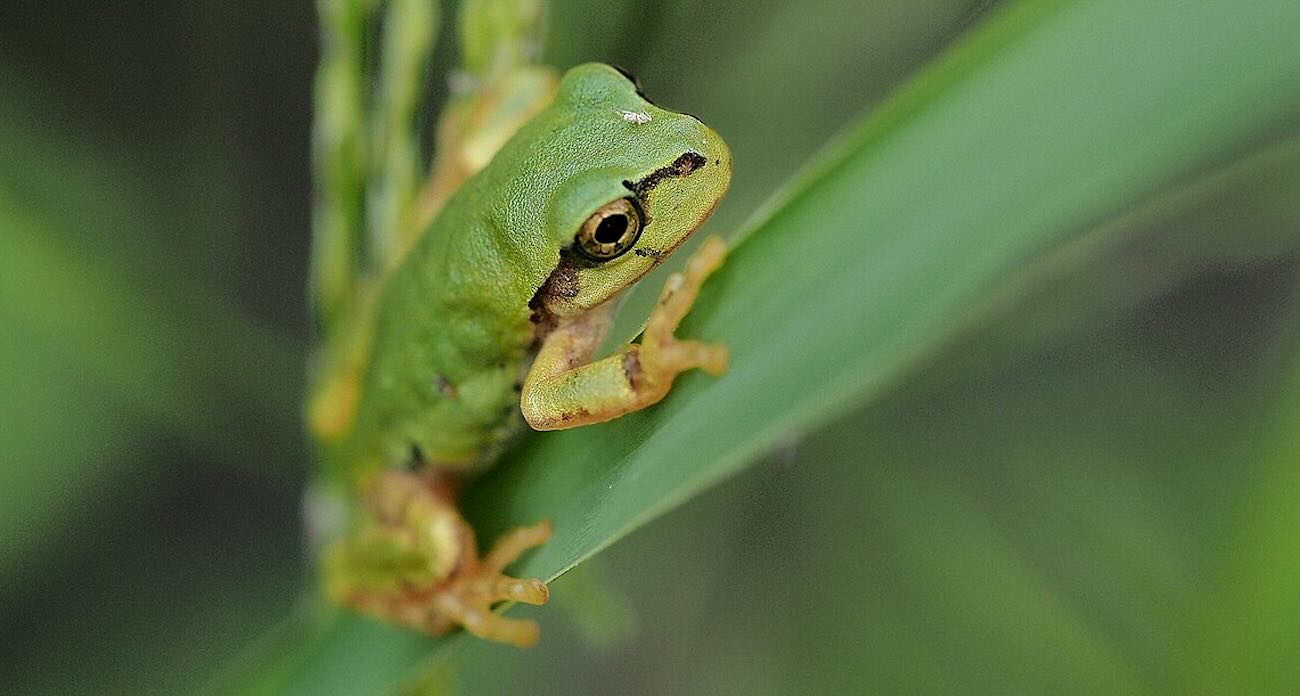
In a lab in Nomi, a small city in Ishikawa Prefecture, Japan, a scientist made a discovery that could change how we fight cancer. Professor Eijiro Miyako and his team at the Advanced Institute of Science and Technology found a type of bacteria living inside the gut of a Japanese tree frog that can destroy cancer tumors all by itself. In fact, just one dose wiped out colorectal tumors completely in mice — every single time. That's a 100% success rate. No chemotherapy required. No complex drug cocktails. Just one injection of bacteria from a frog's intestine. "These findings suggest that gut microbiomes of lower vertebrates harbor numerous uncharacterized bacterial species with exceptional therapeutic potential," the researchers wrote in their published study.
The team didn't stumble onto this by accident. They carefully collected bacteria from three different amphibian and reptile species — Japanese tree frogs, fire belly newts, and grass lizards — and tested 45 different bacterial strains in the lab. Nine of those strains showed the ability to fight tumors. But one stood out far above the rest: a bacteria called Ewingella americana, found in the Japanese tree frog's gut. When injected directly into mice with colorectal cancer, it didn't just slow the tumors down. It eliminated them entirely, in a single treatment. The results were dramatically better than what doctors see with current standard treatments like immune checkpoint inhibitors or chemotherapy drugs. "Our study underscores the critical importance of microbial biodiversity in advancing cancer treatment strategies," the authors noted.
What makes this approach different from other microbiome cancer studies is the method. Most research in this field tries to influence cancer indirectly — changing the gut bacteria through diet or pills in hopes of helping the body fight back. Miyako's team went straight to the source. They isolated individual bacterial strains and injected them straight into the bloodstream to attack tumors directly.
The safety results also stood out. The bacteria cleared from the blood quickly — half of it disappeared within about 1.2 hours, and none was detectable after 24 hours. It didn't settle in healthy organs like the liver, spleen, lungs, or kidneys. Any mild inflammation from the treatment returned to normal within three days. And over a 60-day observation period, researchers found no signs of lasting toxicity. That's a promising sign for a therapy that would need to be safe enough for human patients.
The road from mouse results to human treatments is long and uncertain. The team plans to test the bacteria next on breast cancer, pancreatic cancer, and melanoma. They'll also explore better ways to deliver the treatment, including injecting it directly into tumors and testing whether it works even better when combined with existing immunotherapy or chemotherapy drugs. "Unexplored biodiversity represents a treasure trove for novel medical technology development," the researchers wrote. The humble Japanese tree frog may have just given science one of its most promising leads yet.