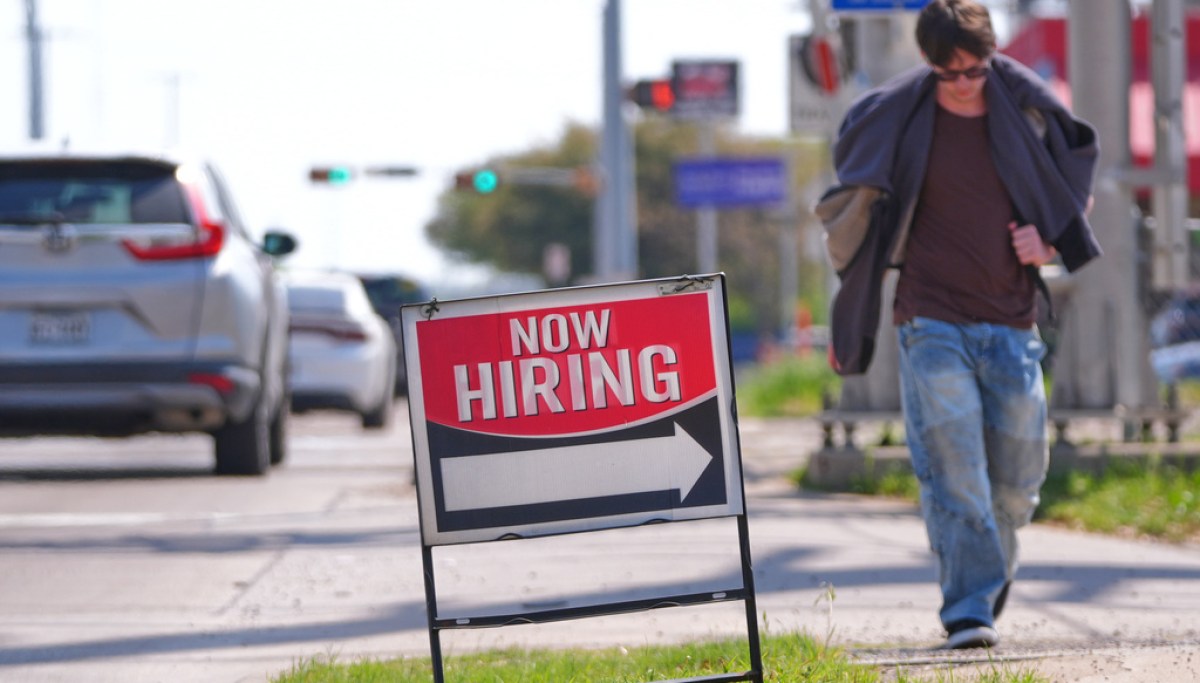
The US labor market surprised economists with unexpected vigor in April, as job openings surged to 7.6 million—the highest level since May 2024—defying predictions that the numbers would remain flat. The Tuesday update from the Bureau of Labor Statistics' Job Openings and Labor Turnover Survey revealed that openings had jumped by 731,000 from March's 6.9 million, a gain so substantial that most economists had anticipated the opposite direction entirely.
This rebound marks a significant turning point after months of declining job openings. Since peaking in March 2022, the number of available positions had largely retreated, reaching a recent low of 6.6 million in December. The April surge suggests resilience in a labor market that continues to function with remarkable strength despite broader economic pressures.
"This report tells us that openings remain ample in a time of full employment," noted Carl Weinberg, chief economist for High Frequency Economics, in his analysis of the figures. "That suggests that labor availability is throttling employment"—a clear signal that companies have jobs to fill, but workers to match them remain constrained. The unemployment rate held steady at 4.3% in April, while employers added 115,000 jobs, exceeding forecasters' expectations.
Yet the fuller picture reveals complications beneath the headline strength. The number of actual hires fell by 419,000 to 5.1 million in April, and the hiring rate dropped to 3.2%. These figures reflect gross hiring and firing rather than the net employment changes more commonly cited in monthly reports. Meanwhile, the quits rate—the share of people voluntarily leaving their jobs—edged slightly downward to 1.9%, suggesting workers are holding onto the positions they currently occupy rather than making confident moves to new opportunities.
The labor market's resilience comes against a backdrop of mounting inflationary pressure that is reshaping economic policy conversations. Energy prices have shot up dramatically in recent months due to international tensions, with a barrel of oil rising from roughly $65 to more than $90. These higher energy costs are pushing headline inflation well beyond the Federal Reserve's 2% target, with the personal consumption expenditures price index—the Fed's most closely watched gauge—reaching 3.8% for the year ending in April.
The tension is palpable for policymakers. President Donald Trump has long advocated for lower interest rates, but the rising inflation picture has many economists expecting the Federal Reserve to hold rates steady throughout the year—or even raise them further. The stronger JOLTS report, with its signals of enduring labor market strength, actually provides the Fed with support for maintaining higher rates longer, even as inflationary headwinds intensify.
The April data tells a nuanced story: companies have plenty of job openings and continue hiring, yet the pace is moderating, and workers are becoming more cautious. This is a labor market still fundamentally sound but showing early signs of constraint, operating in an environment where inflation is pulling policy in directions that may ultimately cool both hiring and wage growth in coming months.