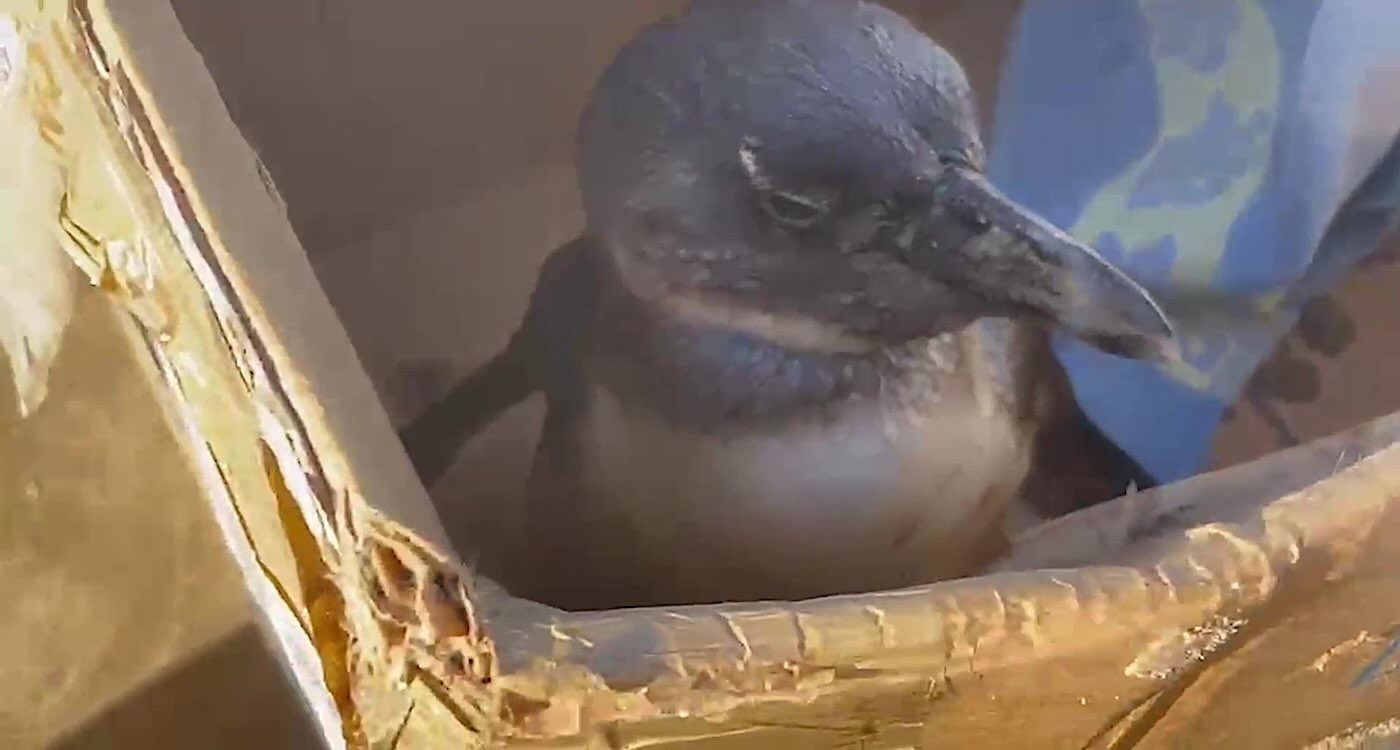
A jogger's sharp eyes and quick thinking saved the life of an African penguin found face-down with its beak buried in the sand at Brenton-on-Sea, South Africa. Two weeks ago, wildlife veterinarian Catherine Hauw, a 35-year-old medic from Paris, France, received an urgent call: a critically endangered bird lay helpless on the beach, motionless and weak. She rushed to the scene with a medical assistant, armed with nothing but a towel and a box, ready to move fast.
What makes this rescue remarkable is not just the speed of response, but the fragility of the species itself. The African penguin, also known as the "jackass penguin" for its distinctive, donkey-like braying call, is the only penguin species native to the African continent. With their iconic tuxedo markings and unique chest dot patterns, they are instantly recognizable—yet their populations have collapsed in the wild. Habitat destruction, overfishing, and warming ocean currents that alter fish migration patterns have forced these birds to swim longer distances to hunt, pushing a species already on the brink further toward extinction.
The penguin lying on that beach was more than a casualty of circumstance. It was a victim of a predator attack that had left it with a small abdominal wound—a seemingly minor injury that had devastating consequences. The wound slowed the bird down and separated it from its colony, leaving it stranded and unable to fend for itself. Without the jogger's intervention, the story would have ended on that beach.
"We had no idea how long the penguin had been lying there and we just really wanted to make sure it was alive," Hauw recalled. "Once it lifted its head, we knew that was a good sign—but it still needed our help." That moment of uncertainty gave way to decisive action. The rescuers carefully transported the bird to a nearby veterinary clinic, where it received immediate treatment for dehydration using electrolytes. The good news: the penguin was not malnourished, suggesting it hadn't been stranded for too long.
But the rescue didn't stop at the clinic. The bird was transported to a specialist sanctuary for full rehabilitation, where trained experts would nurse it back to health before returning it to the wild. What sets this rescue apart from a simple recovery is the philosophy behind the release: the penguin would not be set free alone. Instead, wildlife rescuers would release it back into the wild as part of a colony, giving it the social structure and family unit it needs to truly thrive.
Hauw emphasized the importance of public engagement in wildlife rescue: "It's really important in these situations that if a member of the public discovers the animal that they contact professionals. We were able to assess the penguin's health on the beach and safely take it to a general vets clinic nearby." Her message underscores a broader truth—that saving critically endangered species requires more than professional expertise. It requires vigilance from ordinary people, the willingness to act, and the knowledge that a single phone call can change an animal's fate. One jogger, one call, one penguin given a second chance: it's a small victory in a much larger fight to save a species on the edge of extinction.