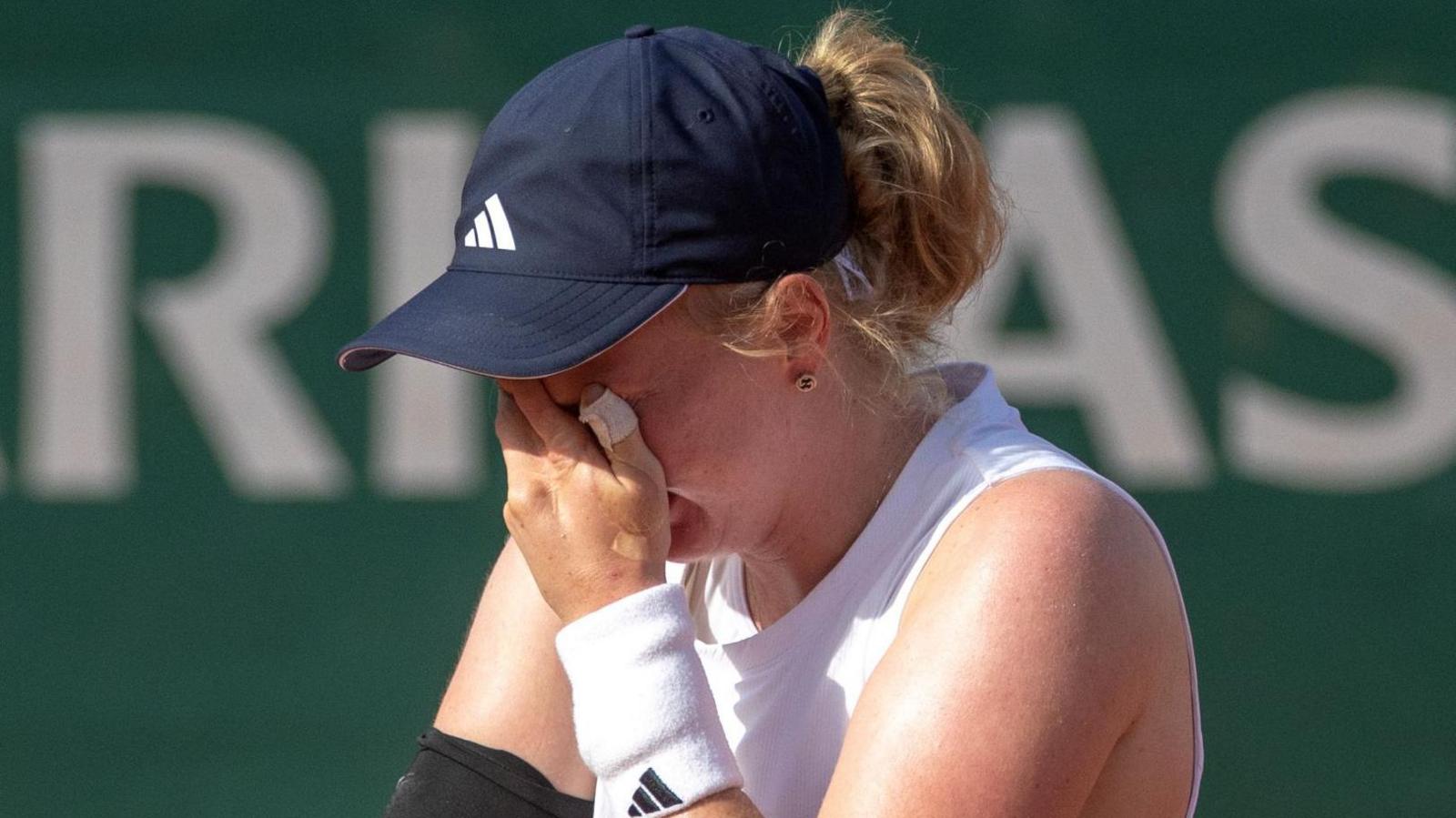
Francesca Jones came back from a set and a break down to beat Brazil's Beatriz Haddad Maia 1-6, 7-6 (7-4), 6-2 on a Paris clay court, crossing a finish line she had been chasing for years. The 25-year-old British tennis player had never won a Grand Slam first-round match before — despite six previous attempts across the four majors — but her breakthrough at the French Open this season felt like far more than a statistical milestone.
Jones was born with Ectrodactyly Ectodermal Dysplasia (EEC), a rare genetic condition that affects her hands, and plays with a modified racquet grip. Doctors once advised her against pursuing elite-level tennis altogether. Yet she has spent her career defying those verdicts, moving from Bradford to Barcelona at age 10 to develop on the clay courts where she would eventually find her greatest success. The French Open was her first main-draw appearance at Roland Garros, but the path to Sunday's victory wound through considerably harder terrain than the court itself.
Earlier this year, a 45-kilogram weight from a failed leg-press machine at a gym crashed onto Jones's head and knee. The accident left her with a wound to her scalp and triggered lingering concussion symptoms — headaches, dizziness — that her doctors said could have been catastrophic. "The hospital said to me I was lucky not to be in surgery or have a brain bleed with the way it happened," she told BBC Sport. The recovery was slow and uncertain, coming just as she was returning to full fitness after tearing a muscle in her hip that forced her to retire from her opening match at the Australian Open in January.
The emotional weight of the year's setbacks pressed harder than the physical injuries. Jones described 2024 as a relentless cycle of hope and disappointment — two steps forward, two steps back. For an athlete accustomed to pushing forward, the forced stillness became its own form of pain. "For someone with my character, if I feel unproductive it's a huge difficulty for me," she said. Yet she kept working, kept finding "a way forward," as she put it, playing what she called "chess with myself" to navigate each new obstacle.
Her victory over Haddad Maia, fought out over nearly three hours on Roland Garros' red clay, carried the weight of all those comebacks compressed into a single match. Trailing after the first set, Jones clawed back through a tiebreak and then took control of the decider. The second-round berth that followed was less about the rankings points and more about what it proved — that resilience and adaptation could outlast even the adversities she had faced.
"I would say this has been arguably the hardest moment of my career, this year," Jones reflected afterward. "Having clawed my way back, it kind of makes it better." The breakthrough was hers at last.