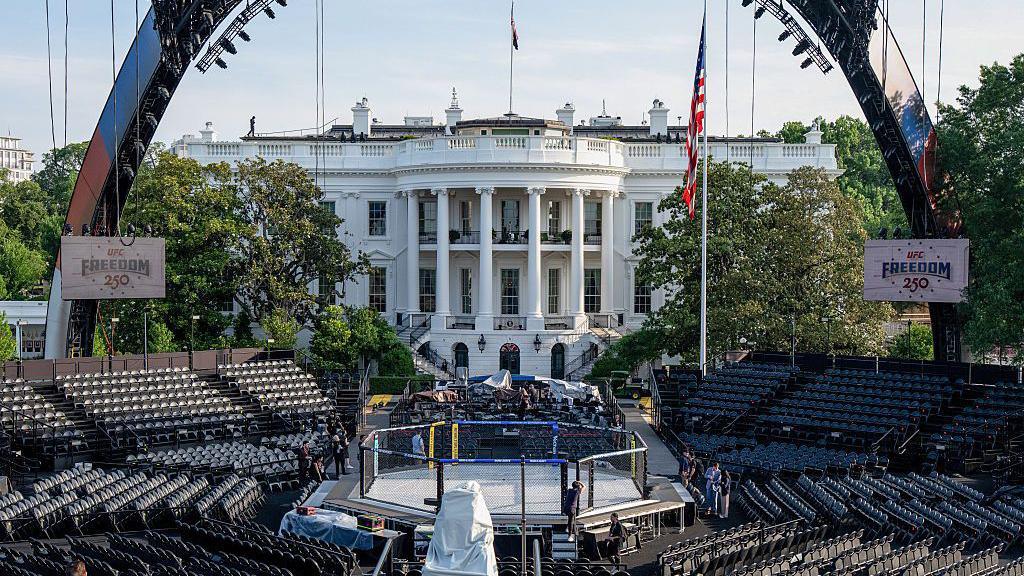
The UFC Freedom 250 will light up the South Lawn of the White House on Donald Trump's 80th birthday—and after a federal judge's decision this week, nothing will stop it. It's a historic moment wrapped in American symbolism: 250 years of independence, a sitting president's milestone birthday, and the first professional live sporting event ever hosted on the White House grounds. On Sunday, lightweight champion Ilia Topuria will face interim champion Justin Gaethje in a unification fight under the historic colonnade, with interim heavyweight champion Alex Pereira squaring off against Ciryl Gane in the co-main event.
The UFC's vision of bringing elite combat sports to America's most recognizable lawn stirred controversy, but not from sports fans. Last week, the Public Integrity Project filed a federal lawsuit asking for an emergency restraining order, arguing that staging a private sporting event on public property violated National Park Service rules and constituted a "profound misuse of sacred national monuments for private gain." The group sought to block what they saw as a troubling precedent—the commercialization of the White House for private enterprise.
But Judge Amit P. Mehta of the US District Court in Washington DC rejected the challenge. His reasoning was sharp and practical. The event, he noted, had been public knowledge for nearly a year, yet the Public Integrity Project didn't file its lawsuit until June 7, 2026—more than two weeks after visible preparations had already begun on the White House grounds. That delay, the judge wrote, "undercuts their claims of irreparable harm." Mehta also observed that the plaintiffs failed to establish they would suffer any irreparable injury, and noted that the temporary claw-shaped structure built specifically to host the event made "risk of any significant environmental damage doubtful." The legal path was clear.
The Public Integrity Project has made a pattern of challenging Trump administration decisions, having filed suits to undo the TikTok sale and to stop a billion-dollar "anti-weaponisation" fund. When reached by the BBC, the Trump administration responded with confidence: "This is an obstructionist, baseless and dilatory lawsuit brought simply to prevent President Trump from hosting what will undoubtedly go down as one of the most historic sporting events in our nation's history during our semiquincentennial celebration."
The UFC has invested roughly $60 million in Freedom 250, betting that the symbolism and spectacle of combat sports on such an iconic stage will resonate with viewers. The White House has welcomed recreational sports and events before—but never a professional live sporting event of this caliber. That boundary, once crossed, opens questions about what other events might one day grace those grounds.
What emerges from the judge's decision is not a statement about whether the event should happen, but rather a recognition that in a democracy, last-minute legal objections must clear a high bar. The UFC will fight on, literally and symbolically, as American independence and athletic excellence converge on the South Lawn.