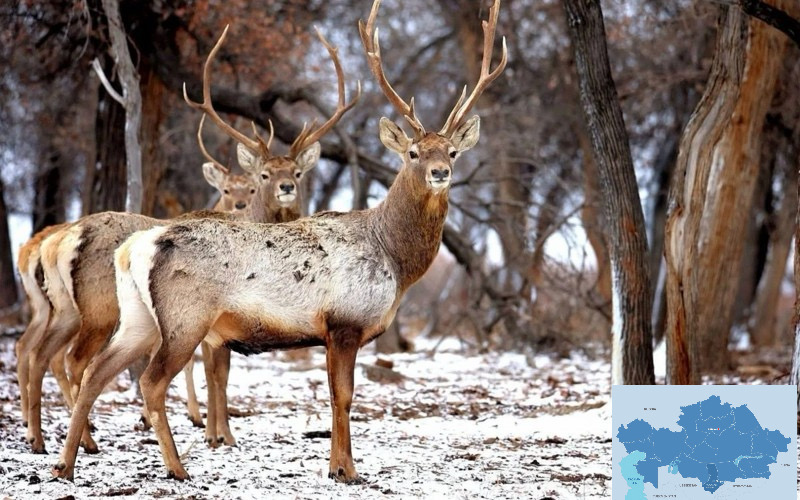
In the shadow of the Boraldai Mountains, where the Syr Darya River winds through southern Kazakhstan, a species once hunted to the edge of extinction is reclaiming its place in Central Asia's wild. The Bukhara deer, an antelope-like creature that historically roamed the river valleys and desert regions of the Amu Darya, Syr Darya and Kyzylkum, vanished almost entirely by the mid-20th century. Yet at the Syrdarya-Turkistan State Regional Natural Park, a remarkable restoration effort has transformed six desperate animals in 1999 into a thriving population of 319 today — a quiet triumph that speaks to what patience, science, and protected land can achieve.
The park's work matters beyond the deer themselves. This nearly 120,000-hectare refuge along the Syr Darya and Arys rivers has become Kazakhstan's only active site for Bukhara deer restoration, but it is also one of Central Asia's most biodiverse sanctuaries. The territory hosts 309 bird species — more than half of all birds recorded across Kazakhstan — alongside 59 mammal species, 715 invertebrate species, and 992 plant varieties. Stone martens, Karatau argali sheep, jackals, wolves, and occasionally Tian Shan brown bears move through mountain forests, wetlands, steppes and semi-deserts woven together in a mosaic that few protected areas can match.
The Bukhara deer program itself reveals the method behind this success. Working with the World Wildlife Fund and zoologists from Almaty and Moscow, Kazakhstan launched its restoration initiative in 2000 with a strategy of careful, adaptive management. Around 50 deer live under protective care and are fed daily, while the growing population is periodically released into the wild. Every two years, part of the captive population takes to the natural landscape. Winter feeding supports animals living in less protected conditions, a detail that reflects the program's willingness to intervene when survival is at stake. "Around 50 Bukhara deer are kept under special care and receive daily feeding," explains Gani Nazarbek, the park's senior researcher. "Every two years, part of the growing population is released into the wild. During winter, additional feed is also provided to animals living in natural conditions."
The park itself was consolidated into its current form in 2012, when the Arys, Boraldai and Turkistan forestry and wildlife protection institutions merged. Today, more than 350 employees — scientists, monitoring specialists, and rangers — steward the land with the aid of drones, camera traps, and rigorous oversight. One state inspector is assigned for every 1,000 hectares, a ratio that reflects the seriousness of the work.
The restored ecosystem has become more than a conservation success; it is drawing visitors. Eight carefully developed tourist routes now wind along the Syr Darya River and through the Boraldai Mountains, where guests can stay in wooden lodges and experience the landscape that Bukhara deer once roamed freely. Weekend visits surge with ecotourism activity, bringing both economic benefit and deeper public connection to conservation.
From six animals on the edge of oblivion to 319 thriving in a landscape restored to health — the Bukhara deer's return is a reminder that extinction is not always final, and that protection, patience and scientific care can turn the tide.