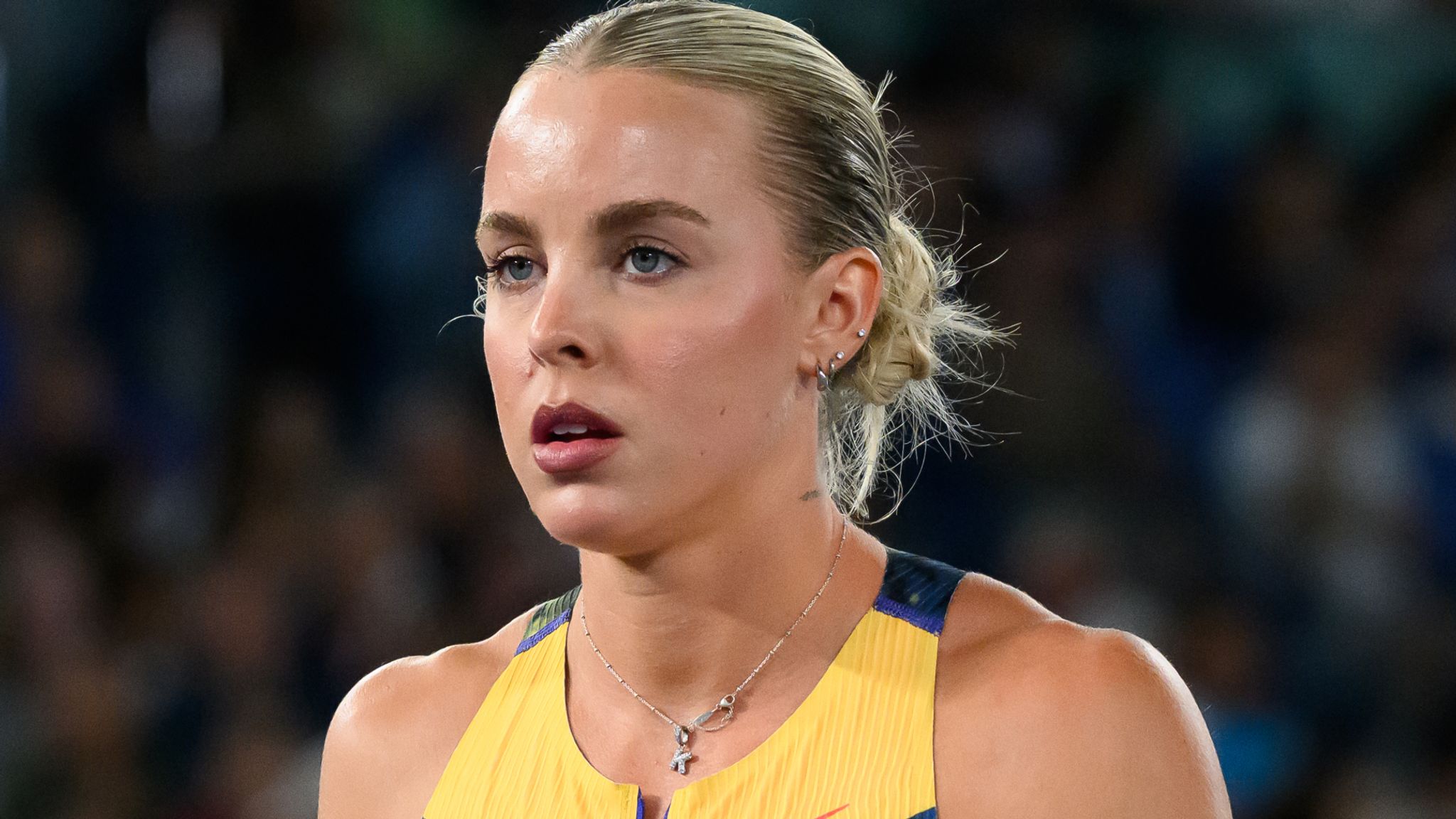
Keely Hodgkinson ran the fastest 800 metres of her life on Sunday in Stockholm—and still came home in second place. The British Olympic champion clocked 1:54.33, a new British record that would have won most races. But in the rarified air of elite women's middle-distance running, it wasn't quite enough. Switzerland's Audrey Werro pulled away down the stretch with a time of 1:53.98, the third-fastest women's 800m ever recorded and the quickest run anywhere in 2026.
The loss stings partly because Hodgkinson had endured a frustrating few days. Just three days earlier in Rome, the 27-year-old finished a disappointing seventh in the 400 metres, a rare stumble for an athlete accustomed to winning. Returning to the 800m—her signature event and the distance where she claimed Olympic gold—felt like a chance to reset. Yet Werro, hunting hard and running with precision, had other plans.
For much of the race, Hodgkinson and Werro ran together, pulling clear of the field with their sustained pace. The British runner matched her rival's rhythm through the middle stages, but in those final crucial metres, she couldn't find the extra gear needed to pass. It was a humbling reminder that even record-breaking performances don't guarantee victory when the competition is this fierce.
What's striking is how Hodgkinson has reframed the loss. Rather than dwell on the defeat, she's chosen to view the race as a learning opportunity and, oddly, a confidence boost. "When Audrey went off I was like 'just chill', but massive respect to her," Hodgkinson said afterward. "That was a great race and it will motivate me more in training to make sure that doesn't happen again." She acknowledged that her rival was simply better on the day, while noting that the experience of running at such a high level—and matching it for nearly four minutes straight—gives her valuable data for future improvements. "I can build on this great start," she reflected. "It's still very early."
The Stockholm Diamond League proved a night of upsets. Later in the evening, Swedish pole vault sensation Armand Duplantis suffered a shock loss to American Kurtis Marschall after failing to clear 6.05 metres. It was Duplantis's first defeat in 40 consecutive events—a stunning drought of dominance snapped in front of his home crowd. "I felt a bit unfocused today and I really did not want to lose here in front of my family and fans," Duplantis admitted, adding graciously: "Hats off to Kurtis today who beat me fair and square."
British sprinter Amy Hunt also tasted second place on the night, though she could take solace in a personal best in the 200 metres. World champion Melissa Jefferson-Wooden proved too strong.
The evening in Stockholm reinforced a simple truth: even the greatest athletes in the world face nights when someone else is simply better. What matters is how they respond. For Hodgkinson, a British record in defeat may prove more valuable than a slower winning time.