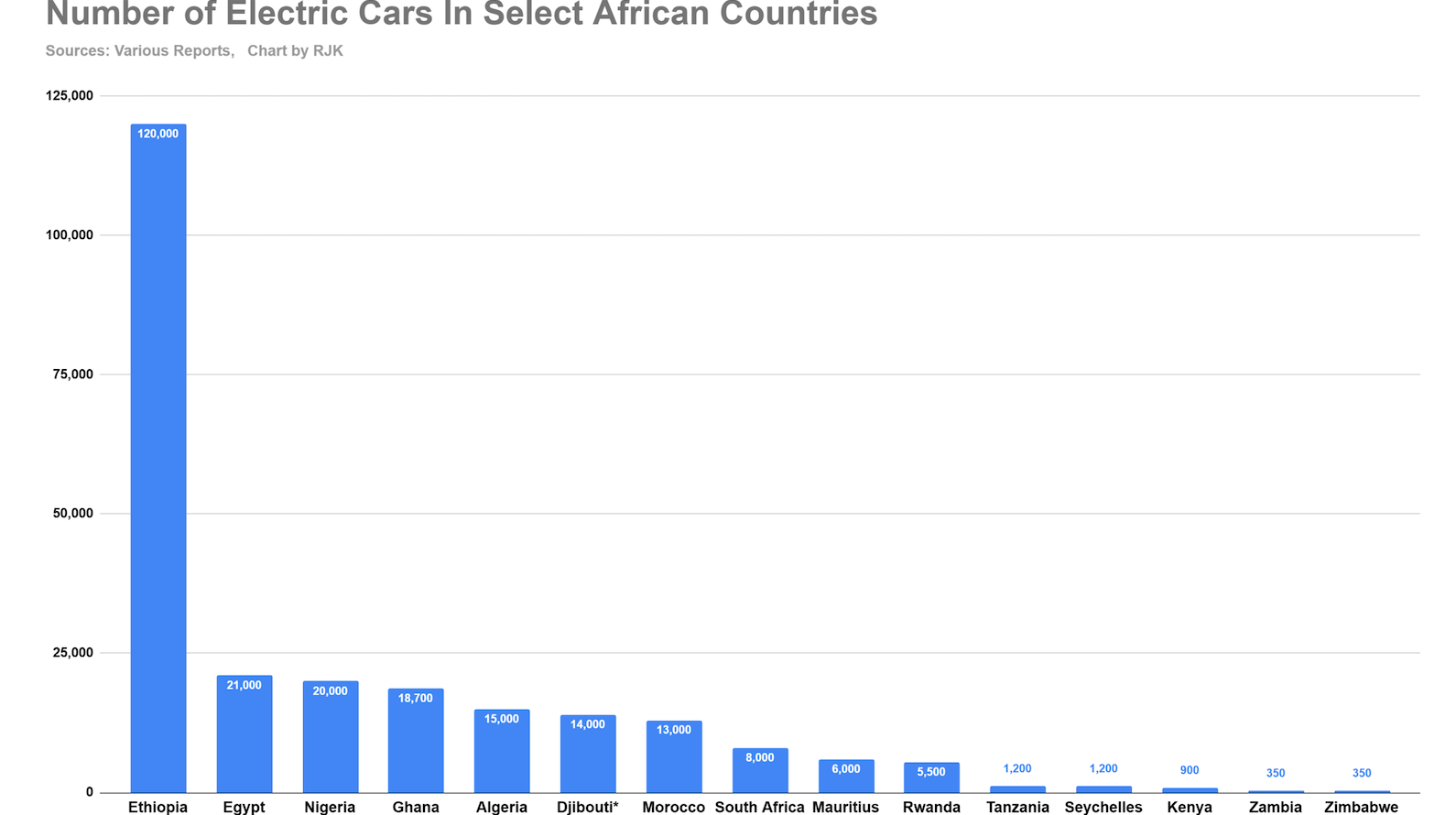
When it comes to electric motorcycles, Kenya is quietly blazing a trail — more than 15% of all new motorcycle sales in the country are now electric, a figure that would make many industrialized nations envious. Yet the same country that pioneered mobile payments and clean cooking solutions finds itself in an unexpected position: the slowest market in Africa for electric car adoption, with fewer than 1,000 fully electric vehicles on its roads. Neighboring Rwanda, a country with a fraction of Kenya's economic size, already has over 5,500.
The contrast is all the more striking because the continent is experiencing an EV boom. Ethiopia stunned the world in 2024 by becoming the first country to effectively ban imports of internal combustion vehicles — and the results have been dramatic. According to Ethiopia's Transport Ministry, electric car imports surged from just 7,000 in 2022 to a remarkable 115,000 by 2025, most of them arriving from Chinese manufacturers. Egypt sold 11,500 electric cars in 2025 and projections suggest sales will double this year. Overall, African nations imported more than 44,000 electric vehicles from China in 2025 alone, nearly triple the 19,000 imported just a year earlier — a trend accelerated by rising fuel prices.
The gap between Kenya and its neighbors comes down to policy. Rwanda has implemented a comprehensive package of fiscal and regulatory incentives: electric vehicles, spare parts, batteries, and charging equipment are exempted from import duties and value-added tax. Charging station operators benefit from capped electricity tariffs at industrial rates, while the government has mandated that at least 30% of all vehicles purchased by ministries must be electric. Kenya, by contrast, applies the same high import duties and taxes to electric cars as to conventional vehicles — meaning a car purchased abroad can cost nearly twice as much once registered in Kenya.
But signs of change are emerging. Kenya's government recently announced plans to waive import duties for 100,000 electric vehicles — the largest fiscal commitment to e-mobility in the country's history, according to the Electric Mobility Association of Kenya. No timeline has been set, and the proposal awaits full legislative approval, but the signal is clear: Kenya is waking up to the electric future that its neighbors are already driving toward. Given Kenya's track record of embracing transformative technologies quickly, the question may not be whether it will catch up, but how fast.