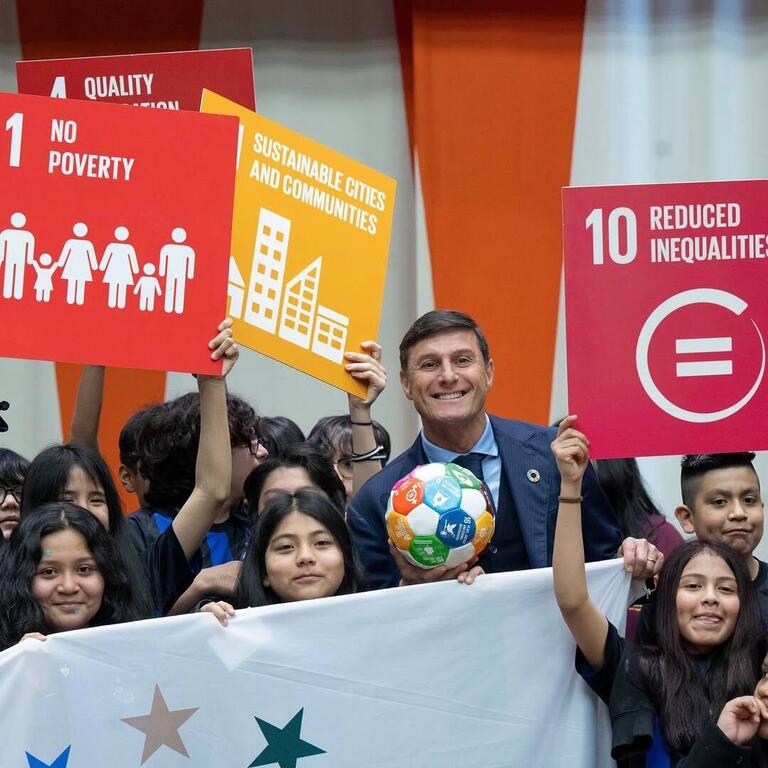
On World Football Day, 16 of the sport's most decorated players and coaches stepped into a new role: ambassadors for the future. From Carlo Ancelotti, the managerial master of cup wins, to Eni Aluko, who has dominated both the Women's Super League and Serie A, to Inter Milan's Javier Zanetti and the exiled Afghan women's national team captain Khalida Popal, these football icons have been appointed Football for the Goals (FFTG) Champions, tasked with wielding their global influence to advance the United Nations' Sustainable Development Goals.
The timing could not be sharper. As the World Cup approaches, the UN recognizes that football is more than sport—it is the world's most popular and accessible communications platform, reaching audiences across every region, generation, and community. By lending their voices to sustainability, gender equality, inclusion, and human rights, these 16 champions can reach billions of fans who might never encounter these messages anywhere else.
The FFTG Champions program launched in 2022, but the formal appointment of this year's cohort marks a growing commitment to leveraging football's unmatched cultural power. UN Deputy Secretary-General Amina J. Mohammed captured the vision clearly: "The United Nations recognises the powerful voice football carries in the global community and the role it can play in raising awareness of the SDGs through the popularity of the game." The appointment comes at a moment when the sport has become a proving ground for global cooperation. The UN General Assembly passed a resolution establishing World Football Day on May 25, chosen to commemorate the 100th anniversary of 1924, when the first international football tournament featuring representation from all regions was held during the Summer Olympics in Paris.
What makes this initiative particularly significant is the deliberate inclusion of voices from the margins—Khalida Popal's appointment stands out especially. As a member of Afghanistan's women's national team who has been exiled, her presence among these champions sends a powerful message about using platform and privilege to advocate for those who have lost their own. Alongside her are names synonymous with on-field excellence: Ancelotti, a tactical genius who has won elite trophies across multiple continents; Zanetti, whose career at Inter Milan made him a living bridge between South America and Europe; and Aluko, who has broken barriers in both domestic and international women's football.
The ambassadorial assignment is deliberately informal, designed to integrate advocacy naturally into the work these figures already do. They speak at matches, engage with fans, build communities around the game—now they do so with explicit focus on the SDGs, on climate action, health, education, and the transformative power of inclusion. In a world where football stadiums hold hundreds of thousands and matches are watched by billions, these 16 champions become vessels for a message that transcends language: that sport can heal, unite, and inspire action toward a more equitable world.
The appointment reflects a maturing understanding that sustainable development is not solely the work of governments and NGOs. It requires voices that resonate in living rooms and pubs and streets around the globe. Football provides that voice. And now, with 16 of its brightest stars explicitly committed to the cause, the beautiful game has become something more: a platform for building the world we need.