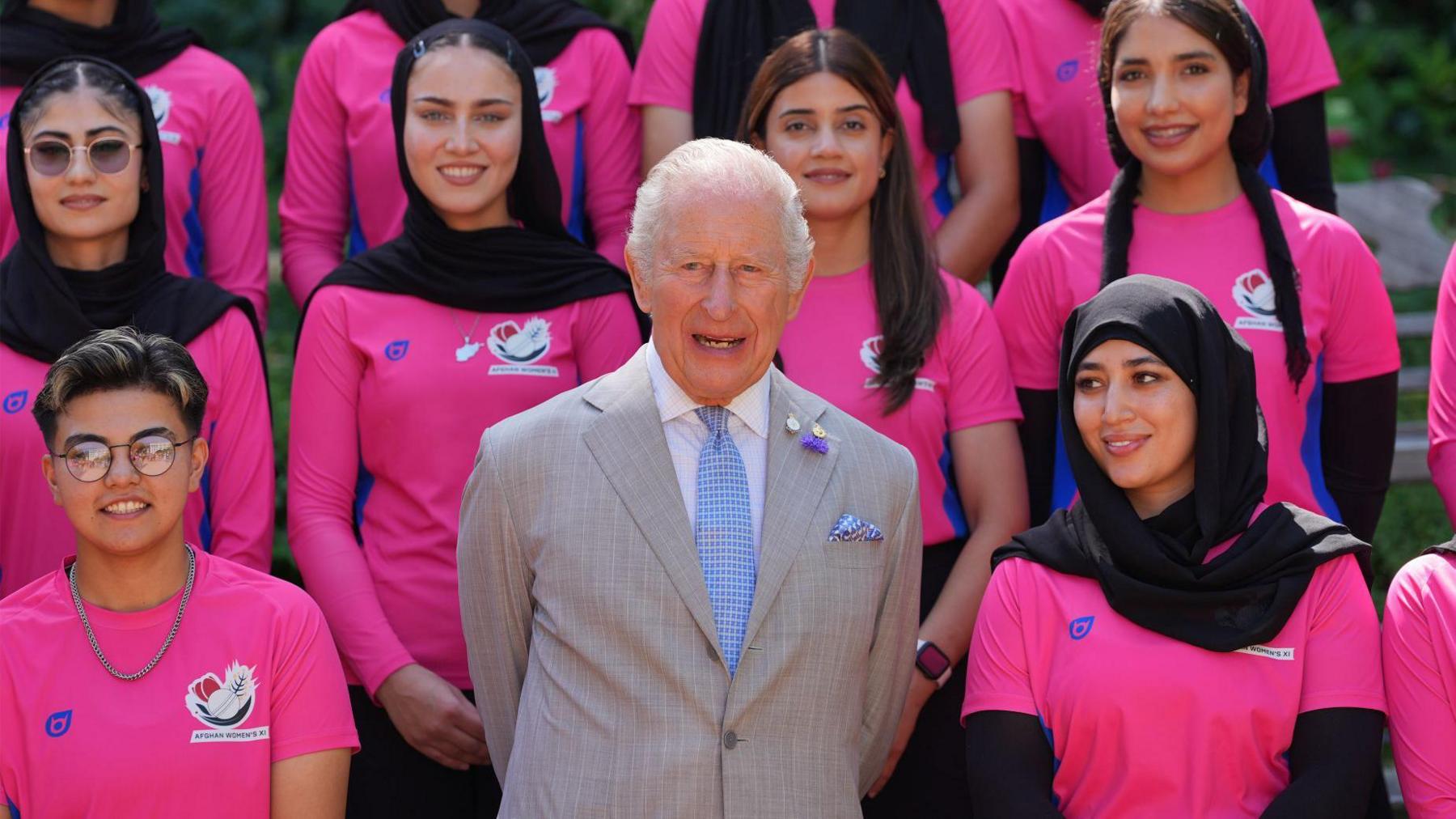
On a blistering summer morning at Clarence House, King Charles stood in the gardens beneath a canopy of plane trees as Ekil Latifi, a 20-year-old cricketer who fled Afghanistan at 17, pinned a handmade badge onto his lapel — "Afghan Women's XI." The moment was quiet, symbolic, and charged with defiance. These women, once barred from playing cricket in their homeland, now stood as refugees and ambassadors, welcomed not as an official national team — because the Taliban has erased their right to exist as one — but as a living protest against oppression. Most of the team now lives in Australia, where they’ve rebuilt their lives in exile after escaping Taliban checkpoints in chaotic evacuations. Yet they remain united by a single purpose: to play cricket, to speak for the millions of Afghan women silenced, and to one day wear their national flag on a global field once more.
The Taliban’s 2021 ban on women’s sports erased Afghanistan’s women’s cricket team from official competition, dissolving training programs, shuttering facilities, and extinguishing dreams. But the team survived in spirit and in secret, then in exile. Their meeting with the King was not ceremonial — it was political, personal, and profoundly human. As Latifi told him, "It’s all about the Afghan women back in our country," her voice steady despite not having seen her family in five years. Teammate Shabnam Shahsan echoed the sentiment: "We’re here to fight for them."
During the visit, the players presented the King with a signed cricket shirt and shared stories of their escapes — the fear, the disguises, the silence required to pass through Taliban lines. He asked gentle, curious questions: about their languages, their lives, the protests they faced. They told him that before the ban, cricket was celebrated, not scorned — but now, even stepping outside without a male guardian is forbidden for women in Afghanistan. The King, who once played cricket “not very well,” as he joked, listened intently. When Latifi playfully asked him for a posh word — suggesting “lavatory” — he laughed, momentarily flustered, then said, “I’d need advance warning of that.”
Yet beyond the warmth and wit lay a stark truth: this team should not have to be in exile. They should be competing in the Women’s T20 World Cup this summer, not watching from afar. Instead, they’re preparing for exhibition matches in England, using every platform to amplify their message. Latifi, now a cricket coach, says the game taught her resilience: "In life, you get one chance. In cricket, if you’re a batter, you might just bat once." Their fight is no longer just for sport — it’s for education, freedom, dignity. And as long as they keep playing, they say, they carry the hopes of those who cannot.