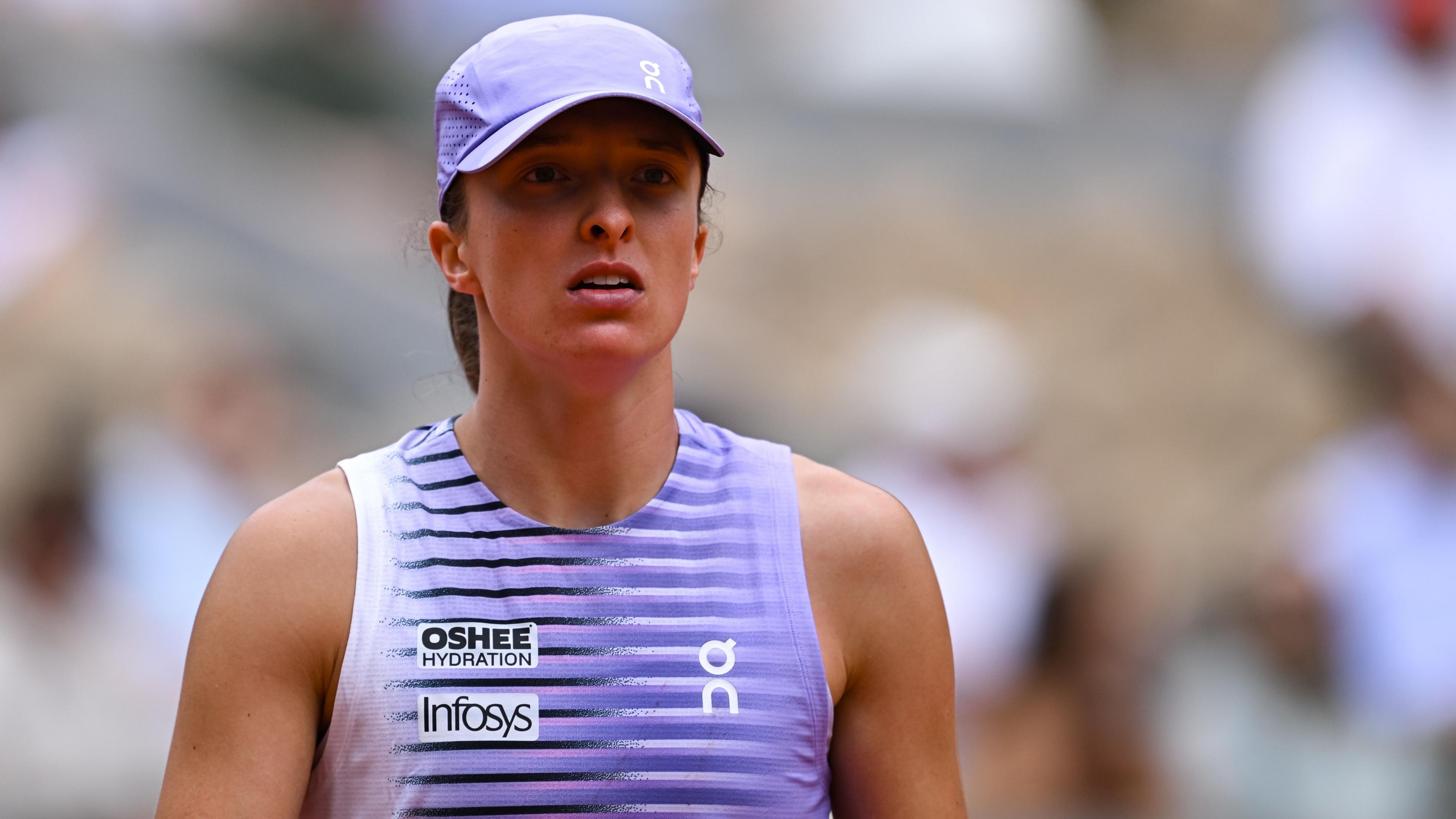
Marta Kostyuk has done what she had never managed before: she beat Iga Swiatek on a tennis court that mattered. The 23-year-old Ukrainian defeated the four-time French Open champion in the fourth round at Roland Garros, breaking through a mental barrier that had held firm across three previous tour-level meetings. It was a performance that carried weight beyond the scoreline—a testament to Kostyuk's rising confidence and a reminder that even the most dominant players can be dethroned.
The match itself was tightly contested at the start, with both players trading breaks in the first set. But Swiatek's power game, normally so reliable, began to crack under pressure. Unforced errors crept in, compounded by two double faults that handed Kostyuk the opening set with a crisp backhand winner. From there, the momentum shifted decisively. Kostyuk's powerful groundstrokes, relentless and precise, wore Swiatek down as she ran away with the second set. The scoreline doesn't fully capture how thoroughly Kostyuk took control; this was a 23-year-old seizing her moment and converting it into her first quarter-final appearance at Roland Garros.
For Swiatek, the defeat marks a significant rupture in her French Open dominance. The Pole had not failed to reach the quarter-finals at Roland Garros since her debut tournament in 2019—a six-year streak of consistency at her most favored Grand Slam. Now, at an event where she has won four titles, she finds herself among a wave of big names exiting unexpectedly. Men's world number one Jannik Sinner departed in recent days, as did 24-time Grand Slam champion Novak Djokovic. Even defending women's champion Coco Gauff could not hold her ground. It's the kind of tournament chaos that reminds us why tennis, for all its predictability, still carries genuine surprise.
In the midst of this upheaval, another story was unfolding at the clay courts of Roland Garros. Romanian 18th seed Sorana Cirstea, at 36 years old, reached her second French Open quarter-final—17 years after her first appearance in the last eight at the same tournament. She defeated Chinese qualifier Wang Xiyu 6-3, 7-6 (7-4) in a match that felt almost improbable given the timeline. More striking still is what comes next for Cirstea: she has announced plans to retire at the end of the year, making this run at Roland Garros a poignant late-career flourish.
What emerges from these results is a picture of shifting fortunes in professional tennis. Kostyuk's breakthrough over Swiatek wasn't just a win—it was the culmination of relentless work against an opponent who had always had her measure. Her powerful game, refined over years, finally found its expression at the moment that mattered most. For Swiatek, Djokovic, Sinner, and Gauff, the defeats are reminders that consistency, even excellence, has limits. And for Cirstea, nearing the end of her career, there's an unexpected gift: one more chance to compete at the highest level, one more unlikely victory to add to a resilient professional journey.