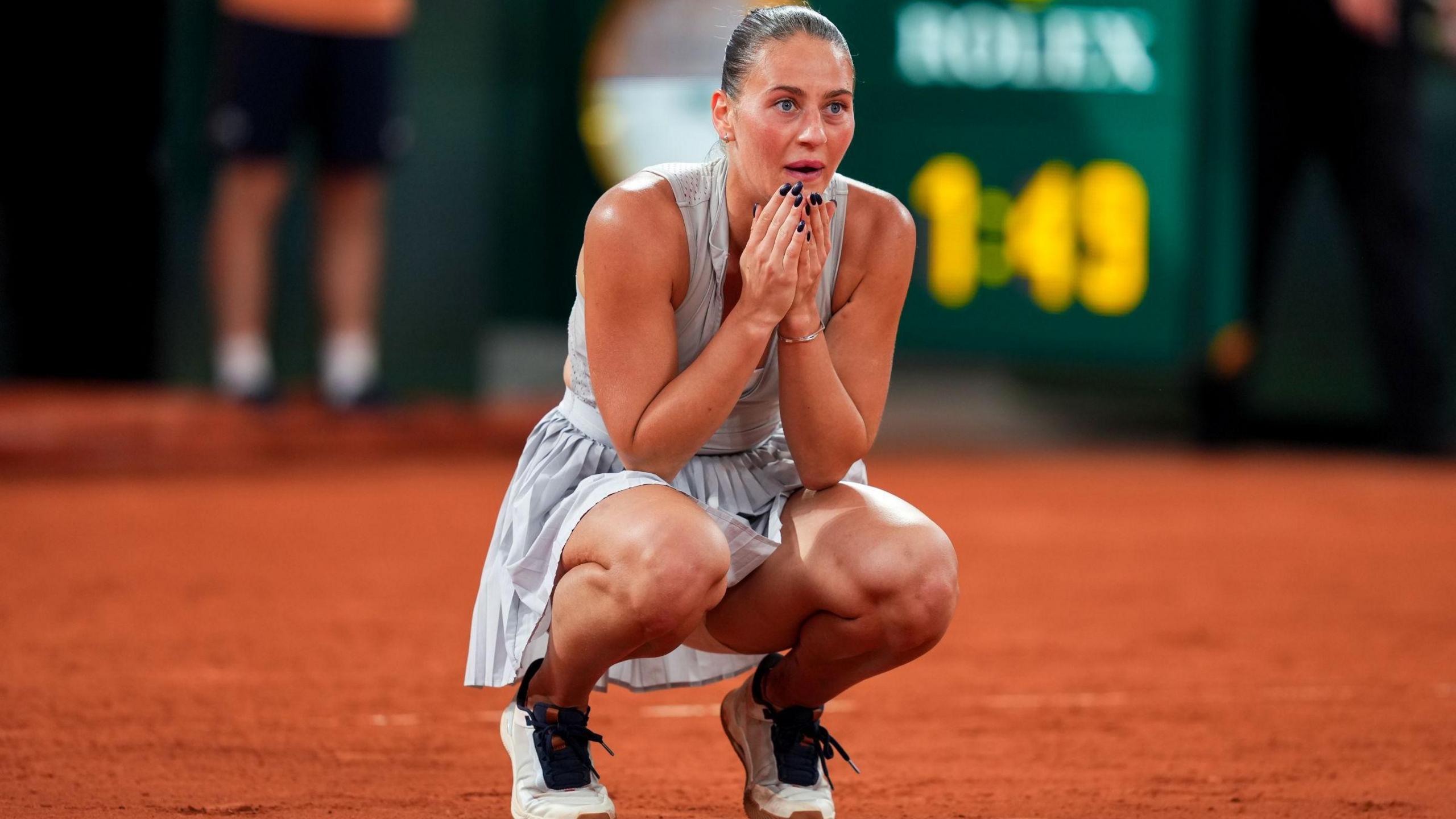
Through tears on Court Philippe Chatrier, Marta Kostyuk dedicated her historic victory to Ukraine, her voice breaking as she spoke of the missile and drone attack that killed at least 18 people across her country the night before. The 23-year-old had just made history, becoming the first Ukrainian woman in the Open era to reach the singles semi-finals at Roland Garros—and she did it by defeating her own compatriot, seventh seed Elina Svitolina, in a deciding set.
The quarter-final matchup itself was unprecedented: the first major quarter-final between two Ukrainian women ever played. Kostyuk claimed the win 6-3 2-6 6-2, outlasting a four-time major semi-finalist and what she called "a legend of Ukrainian tennis." When interviewer Marion Bartoli approached her after the match, Kostyuk was overcome, and Bartoli stepped in to embrace her as the crowd on Court Philippe Chatrier rose to their feet.
"We had another difficult night in Ukraine, especially in Kyiv where so many people died, so I want to give this match to Ukraine," Kostyuk said, her emotion reflecting the weight of playing at the highest level of sport while her country endures an ongoing Russian invasion. She then pivoted to honor her opponent with remarkable grace: "I want to point out Elina's incredible impact on tennis, Ukrainians and me. She is incredible." The crowd responded with sustained applause and Ukrainian flags waving throughout the stadium.
This victory carries profound significance beyond the court. Kostyuk is only the first Ukrainian singles player to reach the last four at the French Open since Andrei Medvedev achieved the feat in 1999—a 25-year gap that speaks to the disruption and challenge of competing at the elite level during decades of geopolitical instability. Now, riding a 17-match winning streak on clay this season, she advances to Thursday's semi-final against Russian player Mirra Andreeva, with a place in Saturday's final at stake.
Kostyuk has been uncompromising in her activism off the court, maintaining a policy of not shaking hands with Russian and Belarusian opponents—a stance that reflects her broader criticism of Russian players who have not publicly denounced the war. When asked about the apparent reluctance of her Russian counterparts to speak out, she was measured but unflinching: "For me, it's not frustrating anymore. They are all grown-ups. They are clearly aware of what's going on. If this is something that they want to avoid talking about, they have to live with this, not me. I don't know how you can sleep at night peacefully when you know that this is going on and you have nothing to say about it."
Her focus now turns to the matches ahead. When addressing the crowd after her win, she was clear-eyed about the work remaining: "I still think it is very far. I have two matches to play and hopefully you will come and support me on Thursday." The standing ovation and waving flags that followed suggested Paris is ready to stand behind her. Last month, after winning the Madrid Open, Kostyuk performed a backflip in celebration—a promise she's made to repeat only when she claims a Grand Slam title. For now, she has two more chances to make history.