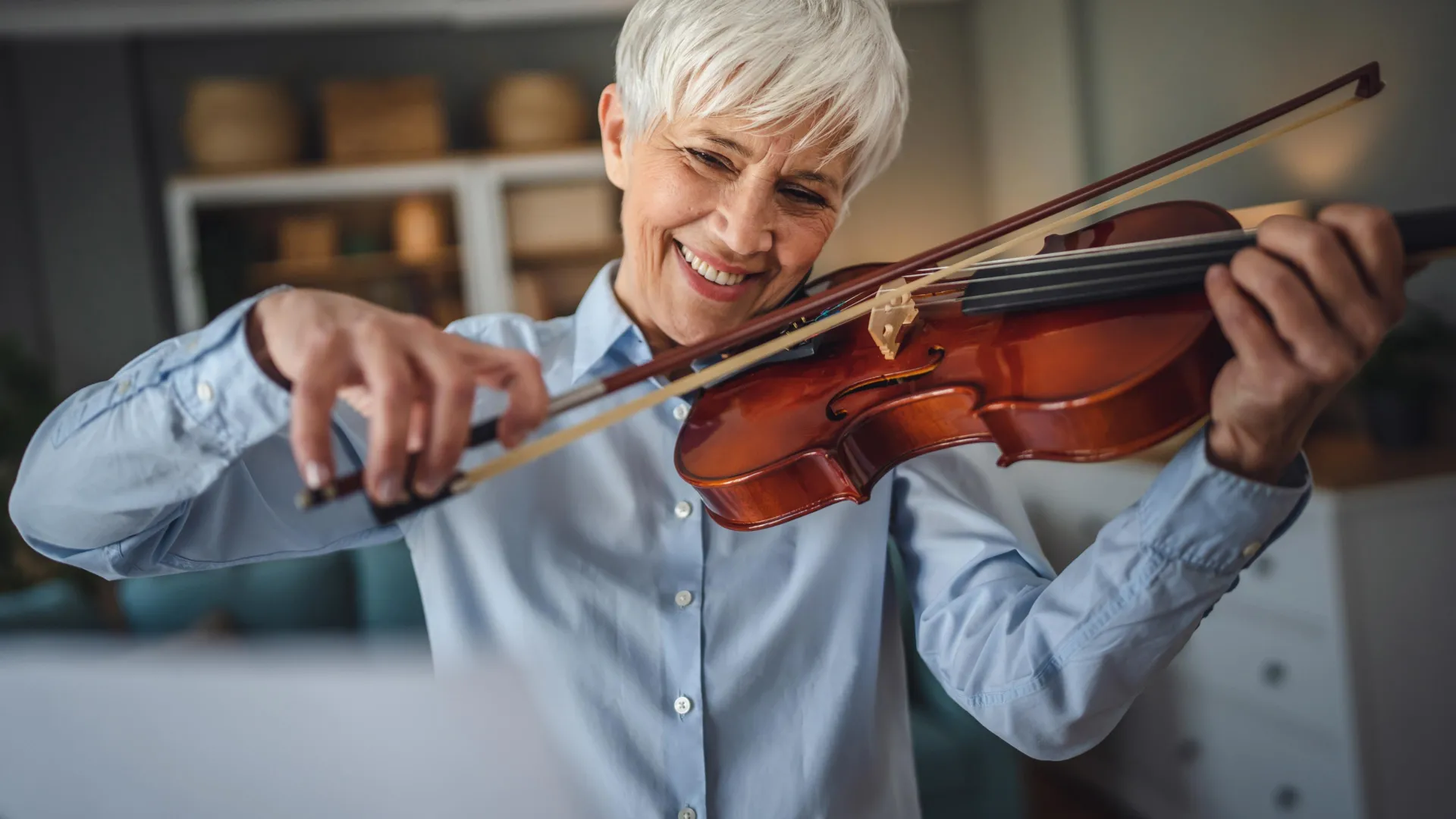
Kaoru Sekiyama and her team at Kyoto University made a discovery that challenges everything we think we know about learning and aging: picking up a violin, piano, or guitar in your 70s isn't too late—it might actually be one of the most powerful things you can do for your brain.
The brain naturally shrinks with age, and cognitive abilities fade in ways that feel inevitable. Working memory—that mental scratchpad we use for everyday thinking—is particularly vulnerable to decline. Two regions in particular, the putamen and cerebellum, typically diminish in both size and activity as the years accumulate. Yet neuroscience has long known something interesting: these exact same areas light up and strengthen when people learn to play music, even if most research has focused on younger brains.
To test whether older adults could experience the same benefits, Sekiyama's team conducted a landmark four-year study beginning in 2020. They enrolled participants with an average age of 73 who had never played an instrument before and gave them four months of training. The initial results were promising: memory improved and their putamen function strengthened. But the real question was whether these gains would stick. After the training period ended, about half of the participants continued practicing their instruments regularly for more than three years. The other half stopped and took up different hobbies instead.
Four years into the study, the researchers brought everyone back for MRI brain scans and cognitive testing. The differences were stark. Those who had stopped playing showed measurable declines in verbal working memory and gray matter volume in the right putamen—the expected signature of normal aging. But the group that kept playing? They showed none of that decline. Their memory performance held steady, their putamen stayed intact, and they demonstrated greater activity across broader areas of both cerebellums compared to those who quit.
Sekiyama was struck by the specificity of the findings. "We were surprised to find that the effects on the brains of elderly people who start and continue practicing an instrument were also concentrated in these two areas of the brain, and that this was an effective way to prevent age-related decline," she reflected on the results.
What makes this research resonate is its accessibility. You don't need a gym membership or the physical ability to run—obstacles that might sideline older adults with chronic pain or mobility issues. Music offers an alternative path to brain health that's equally powerful. "For those who struggle to engage in physical activity due to body pain or other problems, playing musical instruments can be a great alternative," Sekiyama noted. "How fortunate that practicing music has such a positive impact on the brain and cognitive function!"
The message is simple and profound: it's never too late. Whether you've always dreamed of playing or never thought about it before, your 70s—or 80s, or beyond—might be exactly the right time to start. The brain, it turns out, remains remarkably plastic and responsive to challenge, regardless of when that challenge arrives.