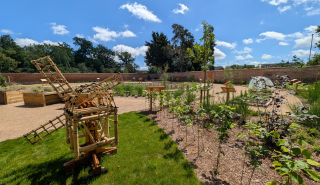
When 12-year-old Amina Patel stepped into the University of Reading’s new Learning Garden during the Reading Climate Festival, she didn’t just see flowers and trees—she saw a classroom without walls, alive with possibility. Nestled within the historic walled garden of the Harris Garden on Whiteknights campus, this £1 million 'living laboratory' is more than a centenary gift; it’s a bold statement of purpose as the university turns 100 in 2026. Designed to ignite curiosity in students and schoolchildren alike, the Learning Garden stands as a testament to the power of environmental education in an era defined by climate urgency.
For a university with a century-long legacy in climate and environmental research, the garden is both a celebration and a commitment. It reflects the institution’s ambition to equip future generations with the knowledge and green skills needed to tackle biodiversity loss, water scarcity, and food insecurity. Made possible through a combination of university investment and donor support via the Centenary Fund, the project underscores how philanthropy continues to shape transformative educational spaces. Its five immersive zones—focused on climate change, biodiversity, water systems, food production, and practical environmental action—offer hands-on learning for all ages, turning abstract ecological concepts into tangible experiences.
Since its pilot phase, the garden has already welcomed over 1,500 school pupils, a number set to grow as bookings open for the 2026/27 academic year. This expansion aligns with the University’s broader Nature Park initiative and its new affiliation with the National Education Nature Park programme, led by the Natural History Museum in partnership with the Royal Horticultural Society and funded by the Department for Education. With nearly 10,000 educational settings across England already involved in the national programme, the Learning Garden positions Reading as a regional hub for nature-connected learning.
Professor Robert Van de Noort, the University’s Vice-Chancellor, sees the garden as both an inheritance and an invitation: 'This remarkable space is designed to inspire curiosity, build understanding and empower young people to take action.' More than just a green space, it’s a living curriculum—one where students measure soil moisture, track pollinators, and design sustainable food systems. Its impact will ripple outward, enriching not only university teaching but also the environmental literacy of local communities.
As the UK prepares for a future shaped by climate resilience, spaces like the Learning Garden offer something essential: hope rooted in action. In the rustle of leaves and the buzz of bees, a new generation of environmental stewards is beginning to grow.