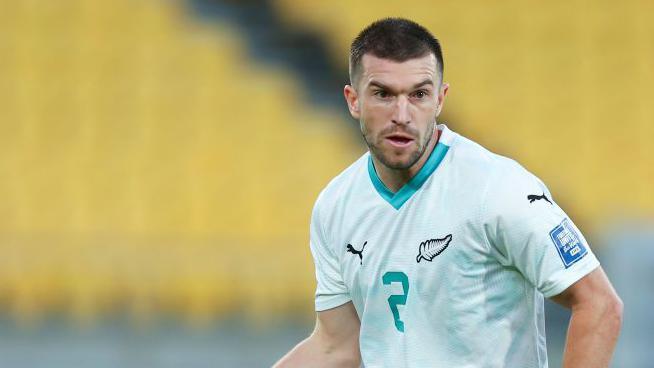
Tim Payne was checking his phone one ordinary day in 2022 when his social media accounts began to behave strangely—thousands of notifications flooding in, followers climbing faster than he could track, all because an Argentine influencer had decided he was worth knowing about. The 32-year-old New Zealand defender, who had spent years quietly building his career at Blackburn Rovers and for the All Whites, suddenly found himself thrust into the viral spotlight through an audacious social media campaign—not because he'd scored a dramatic goal or made a record-breaking play, but simply because Valen Scarsini had identified him as the World Cup's most anonymous player.
Scarsini, who operates online as 'elscarso' and commands an audience of nearly 1.2 million followers across TikTok and Instagram combined, launched his mission with characteristic conviction. He'd systematically analyzed every team competing in the World Cup, searching for the least-known player. When he settled on Payne, the Wellington Phoenix defender whose 50th international appearance earlier that year had gone largely unnoticed, Scarsini knew he'd found his subject. In a video that has since accumulated over six million views, the influencer called on his followers to make Payne famous: follow him, comment on his posts, create content celebrating him, turn an unknown defender into a legend.
The response was staggering. Within 48 hours, Payne's Instagram followers surged from fewer than 5,000 to 600,000—more than New Zealand's all-time leading goalscorer, Chris Wood, and even more than the country's own prime minister, Christopher Luxon. By Friday, that number had climbed to 1.4 million and continued rising. A post commemorating his 50th cap accumulated over 50,000 comments. What had begun as a curious experiment in internet culture had become a genuine phenomenon.
Payne's response revealed a player equal parts bewildered and gracious. When Scarsini shared a follow-up video showing Payne's direct message—"Was wondering why my socials were blowing up and found your post, man. Appreciate the love! Gracias, hermano"—it humanized the moment in a way that resonated across platforms. Speaking from New Zealand's pre-World Cup training camp in Florida, Payne addressed the surge in his own video, pausing to apologize for his Spanish before delivering his thanks. "It's been a pretty crazy 48 hours to say the least," he said, his voice carrying genuine gratitude. "I just wanted to also express that I'm very grateful to represent my country at this World Cup, and I appreciate all the love from all around the world."
For a defender facing the daunting task of helping New Zealand—the tournament's lowest-ranked side and a nation that has never won a World Cup match—earn their first victory, the global support felt like something more than an internet joke. Payne and his teammates would face Iran first before taking on Egypt and Belgium in Group G. Whether the attention translated into on-pitch success remained uncertain, but in that moment, an obscure New Zealand defender had become momentarily famous, a reminder that in our interconnected digital age, obscurity itself can be the thing that finally makes someone visible.